
Reviewed · TOURS
Official World Famous Belfast Taxi Tour ™
Belfast’s political murals are not museum pieces. They sit on ordinary streets, beside homes, schools, pubs, churches, and memorial gardens. This private taxi tour takes you into the Falls and Shankill districts, where a local guide explains how The Troubles shaped the city and why the divisions have not fully disappeared.
I like two things here. First, you see both sides of Belfast’s divide, including Republican murals on the Falls Road and Loyalist murals around the Shankill Road. Second, the private vehicle lets you stop for photos and questions instead of being tied to a large group. The main consideration is that this is a serious, sometimes painful history tour, and the standard route can feel rushed if you want long periods at each mural.
Key points at a glance
- Local voices matter: Guides such as Paula, Barry, Billy, Neil, Joe, and Lorraine explain Belfast through local experience, including what it was like to grow up during The Troubles.
- Both communities are included: The route visits Republican and Nationalist areas as well as Loyalist and Unionist districts.
- You can get out and look closely: Stops at murals, gardens, and Peace Walls give you time for photographs and questions.
- The route covers difficult subjects: Hunger strikes, paramilitary groups, civilian deaths, prison deaths, and attacks are part of the story.
- Private transport saves time: Your group rides in an air-conditioned vehicle, with hotel pickup available in Belfast city centre for an extra charge in most locations.
- The experience is short but full: Allow roughly 90 minutes to two hours, with several brief stops rather than one long walking tour.
Why Belfast’s murals are the real starting point
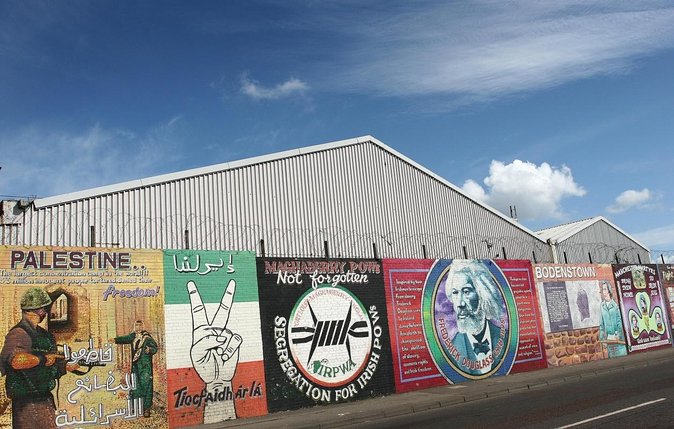
If you know little about Belfast, the murals give you a quick visual guide to its political past. Republican murals may feature Bobby Sands, the 1981 hunger strike, international solidarity, or specific events such as the Ballymurphy Massacre and the McGurk’s Bar bombing.
Loyalist murals often honor members of the Ulster Defence Association or Ulster Volunteer Force. Others focus on King William of Orange, the Battle of the Boyne, the First World War, and the 36th Ulster Division.
The important point is that these murals are not all saying the same thing. They show what each community chose to remember, defend, or mourn. A good guide helps you read them without reducing Belfast to a simple Catholic versus Protestant story.
This tour is useful because you move through the neighborhoods where those messages were created. You are not just looking at painted walls from a bus window. You can step out, take a closer look, and ask why a certain image or name appears there.
Other Belfast days worth putting on the list:
- Titanic Belfast Entrance Ticket: Titanic Visitor Experience Including SS Nomadic
★ 4.5 · 3,698 reviews - Cab Tours Belfast Famous Black Taxi Tours
★ 5.0 · 3,633 reviews - Giant’s Causeway Day Trip from Belfast
★ 5.0 · 3,480 reviews
From the Bobby Sands mural to the International Wall
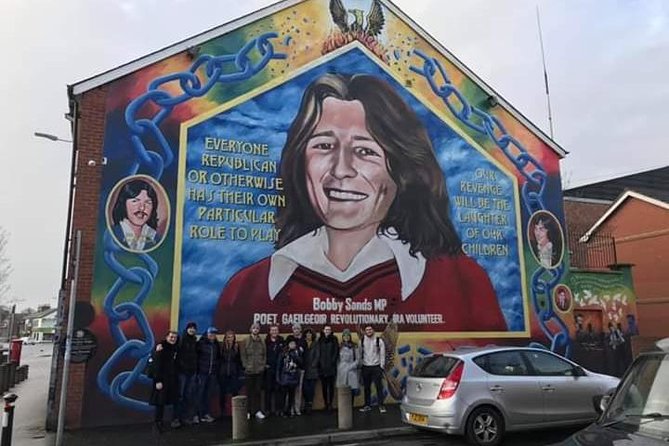
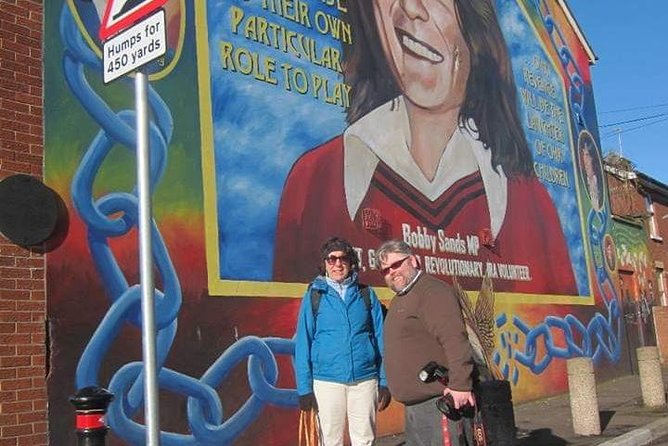
The tour begins with one of Belfast’s best-known political images, the Bobby Sands mural. Sands was an IRA member and the leading figure in the 1981 hunger strike at the Maze Prison. His death made him an international symbol for the Republican cause.
The mural is visually striking, but the story behind it is not simple. Your guide will place Sands within the wider conflict, explaining the political demands, the role of imprisonment, and the way the hunger strike is remembered in Republican areas.
The International Wall on Divis Street adds another layer. Its murals have often expressed support for political struggles around the world, alongside local events and Republican themes. You get about 10 minutes at this stop, so use the time well. Ask your guide to point out the images with the strongest local meaning, then take photos from a respectful distance.
The short stop works for people who want an overview. If you are especially interested in street art, you may wish for more time to study the details.
The Peace Wall and the meaning of a signed message
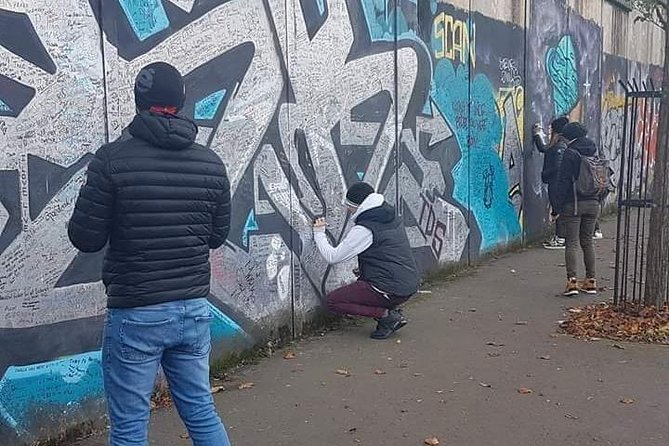
The Peace Wall is one of the most powerful parts of the route because it makes the division physical. These barriers separate mainly Republican and Nationalist Catholic neighborhoods from mainly Loyalist and Unionist Protestant neighborhoods.
Some peace lines are made from brick, steel, or iron and reach up to 25 feet high. Gates in some walls allow passage during the day but may close at night. The barriers were built to reduce violence in areas where communities meet, but their continued presence also shows how incomplete the peace process remains.
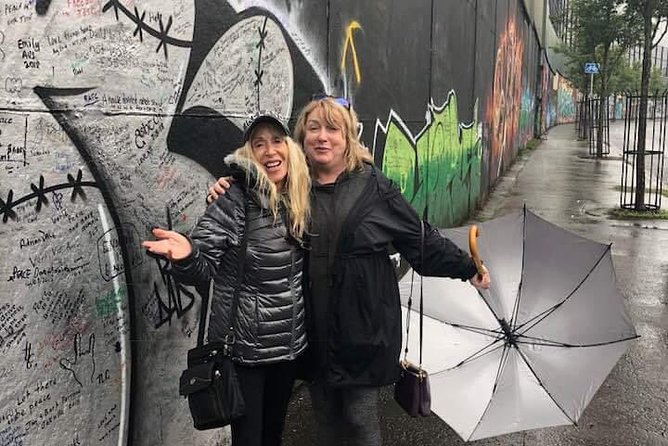
You can write your name and a message of hope on the wall. This is a small act, but it gives you a personal connection to a place usually seen only in news photographs. Names associated with the wall include former US President Bill Clinton and the Dalai Lama.
One practical tip: the Peace Wall stop may be brief. If signing the wall and taking photos matter to you, say so early. A private tour gives you some flexibility, but the driver still has many locations to cover.
Clonard Monastery and the streets of Clonard
Clonard Monastery sits near the interface between the Falls and Shankill areas. Its position helps explain why the surrounding streets became so tense. You are looking at a religious building located near what was once treated as no-man’s land.
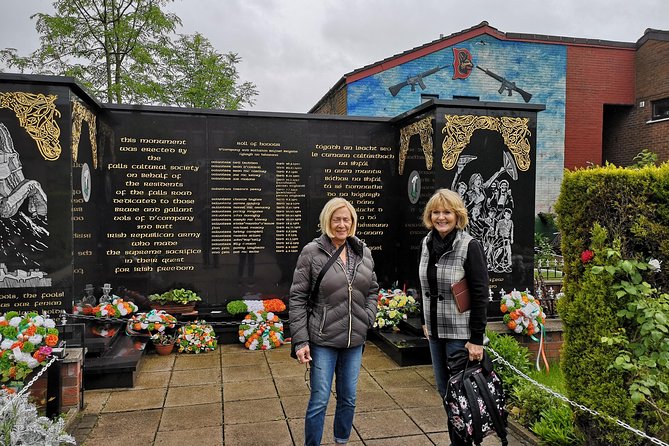
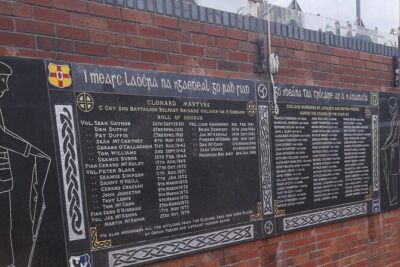
The tour also visits Clonard Gardens and the Clonard Martyrs Memorial Garden on Bombay Street. The memorial honors fallen volunteers from IRA C Company, civilian casualties from the Greater Clonard area, and Republican prisoners who died between 1916 and 1970.
The memorial was unveiled in 2000, with additional plaques added in 2001. The site is still part of annual commemorative activity. Your guide can explain how memorial gardens work within Belfast communities, where public memory is often tied to family, neighborhood, and political identity.
This is where the route becomes more personal and less like a quick mural-spotting trip. The names and dates connect major events to local people. You should expect the tone to turn sober, particularly if your guide shares personal memories of growing up in Belfast.
Same city, a completely different kind of day:
- A History of Terror – Belfast City Centre Walking Tour
★ 5.0 · 2,883 reviews - Game of Thrones and Giant’s Causeway Full-Day Tour from Belfast
★ 5.0 · 2,291 reviews - Private Black Taxi Belfast City Tour
★ 5.0 · 2,188 reviews - City Sightseeing Belfast Hop-On Hop-Off Bus Tour
★ 4.5 · 2,012 reviews
Shankill Road and the Loyalist side
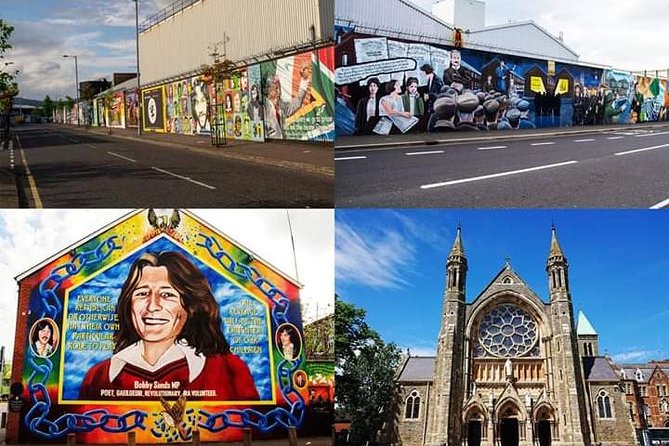
Crossing into the Shankill area gives you a different set of symbols and memories. Here you see murals connected with the UDA and UVF, along with images of King William of Orange, also known as King Billy.
For someone unfamiliar with Northern Ireland, these murals can be difficult to read. The guide’s job is to explain the difference between unionism, loyalism, British identity, and paramilitary symbolism. Those ideas overlap in some places but are not identical.
The tour also stops at the Bayardo Memorial Garden on the Loyalist side. This memorial relates to the Bayardo Bar attack of August 13, 1975. An IRA unit attacked the pub in the Shankill area because it was said to be frequented by UVF members. Four Protestant civilians and one UVF member were killed, and more than 50 people were injured.
The subject is grim, and the stop is not presented as entertainment. It is part of the difficult work of understanding how violence affected ordinary neighborhoods. You may see memorials from one side that feel unfamiliar or uncomfortable. That is precisely why seeing both communities matters.
Divis Street, St Peter’s Cathedral, and Republican memory
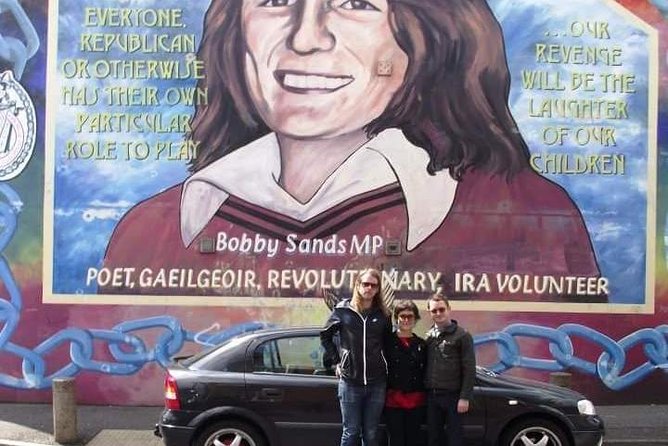
Back around Divis Street and the Falls Road, the tour returns to Republican history. St Peter’s Cathedral is the Roman Catholic cathedral for the Diocese of Down and Connor. Construction began in the 1860s, and the cathedral is also home to St Peter’s Schola Cantorum choir.
Its location in the Falls area gives it importance beyond architecture. It sits within a district strongly associated with Irish Nationalist identity and the political history of Belfast.
The route includes more Bobby Sands imagery, the Welcome Wall, and Divis Tower. The tower is described as the heart of former IRA territory, and the tour explains its connection with a British Army sniper position during The Troubles.
You may also see armed Loyalist murals at 56 Sherbrook Close and visit the IRA Belfast Brigade D Company Garden of Remembrance. These sites show how the conflict was remembered through local memorials rather than only through official monuments.
The repeated Bobby Sands stops can seem redundant on paper. In practice, each image may be used to explain a different part of the story, from the hunger strike to Republican identity and the way Sands became a symbol far beyond Belfast.
What the driver-guide adds
The vehicle is only half the experience. The guide makes the difference.
Guides named Paula, Barry, Billy, Neil, Joe, and Lorraine have led this tour. Several guide profiles emphasize that they were born or raised in Belfast and lived through The Troubles. That can add detail you will not get from a standard history lecture, such as how tension affected school buildings, streets, families, and daily routines.
Personal experience can also bring bias. The strongest guides handle this by showing both sides, separating fact from personal memory, and allowing you to ask direct questions. The tour is intended to explain British Loyalist Protestant and Catholic Irish Republican communities, not to present only one political case.
You should feel free to ask how a particular neighborhood identifies itself, why a mural remains, or how the Good Friday Agreement changed daily life. One guide, Neil, is described as willing to stop the cab when needed, while Paula is praised for combining serious history with humor and conversation.
That mix of openness and restraint is valuable. The subject is heavy, but a guide who can speak naturally and answer questions keeps the experience from becoming a list of dates.
How the private taxi format affects the day
The tour lasts about 90 minutes to two hours. You stay in a private, air-conditioned vehicle with only your group, then get out at selected stops.
This format is practical in Belfast. The Falls and Shankill areas are spread across several streets, and a taxi lets you cover more ground than a walking tour in the same time. It also helps if the weather turns wet, which is always possible in Northern Ireland.
The trade-off is depth. Most stops last around five or 10 minutes. That is enough for a short explanation and photographs, but not enough for extended reading or quiet reflection at every memorial.
Pickup is free from the Leonardo Hotel Belfast on Great Victoria Street. Belfast city-centre hotel or Airbnb pickup and drop-off can be requested, with extra charges applying in some locations. Pickup or drop-off at the Titanic Museum, Crumlin Road Gaol, Lanyon Train Station, Queen’s University, Botanic Gardens, and Ulster Museum costs extra.
Cruise passengers should budget carefully. Pickup from the cruise ship costs an additional £25, and return drop-off costs another £25, paid directly to the guide. Cruise timing also leaves less room for delays, so confirm the meeting arrangement before booking.
Is $90.98 a fair price?
At $90.98 per person, this is not the cheapest way to see Belfast’s murals. The value depends heavily on the size of your group.
For one or two people, the price is a premium for a private vehicle, personal questions, hotel convenience, and a route tailored to your interests. For a family or group, the cost becomes easier to justify because you are not paying for several separate seats on different activities, and everyone shares the same guide.
You are also paying for time. The driver handles navigation, takes you between districts, and brings you to places you might not find easily on your own. That matters if you have only one day in Belfast or want to combine this with other sightseeing.
Tips are not included. Optional upgrades include a top-range Mercedes-Benz V-Class for £20 when available. The tour does not include entry tickets to a major attraction because the focus is on streets, murals, walls, and memorials.
I would compare this price with the cost of a standard group black cab tour, but the private format is the key difference. If you want a fixed, low-cost introduction, another option may suit you. If you want conversation and control over short stops, this one offers a stronger case.
Who should book this Belfast taxi tour?
I would choose this tour if you want to understand Belfast rather than simply photograph it. It suits first-time visitors, families with older children, couples, and anyone with limited time.
It is particularly useful if you have read little about The Troubles. The guide supplies the basic political background while showing you the locations where events and identities remain visible.
The subject matter is not suitable for every child. Some displays and stories are graphic, and the history includes murder, imprisonment, hunger strikes, and civilian deaths. Parents should decide based on the maturity of their children.
This also suits people who prefer a car to a long walk. You can step out at key points, but you are not walking from one end of the city to the other. The private setup also makes it easier to ask questions without speaking in front of a large group.
If your main interest is architecture, shopping, the Titanic, or Belfast’s food scene, this is not the right tour. It is tightly focused on political history, murals, memorials, and the continuing effects of division.
Practical details before you book
Tour start times are offered from 8 a.m. through 5 p.m., with several slots during the day. The meeting point is the Leonardo Hotel Belfast, and the activity returns there unless another arrangement has been made.
The tour is offered in English. A mobile ticket is provided, and confirmation is received when you book. Most people can participate, and the starting point is near public transport.
Book ahead if your Belfast dates are fixed. This experience is often reserved about 36 days in advance. Free cancellation is available if you cancel at least 24 hours before the local start time. Changes or cancellations inside that period are not accepted for a refund.
Wear shoes you can comfortably use for short walks and bring a rain jacket. You will spend most of the time in the taxi, but the experience is better when you are ready to get out at murals, walls, and memorial gardens.
Should you book it?
Book this tour if you want a direct, local explanation of Belfast’s divided past, with access to both Republican and Loyalist districts. The combination of private transport, short photo stops, and guides who grew up in the city gives you more context than a quick drive past the murals.
The best reason to choose it is the chance to ask questions and hear how the conflict affected ordinary life. The main weakness is the pace. With many stops packed into two hours, you may wish for more time at the Peace Wall or a favorite mural.
For a first visit, I consider it a strong use of half a day’s sightseeing time. Go with an open mind, expect difficult material, and tell your guide what interests you most. That is how you get the most from the private format.
FAQ
How long does the Official World Famous Belfast Taxi Tour last?
The tour lasts approximately 1 hour 30 minutes to 2 hours.
Where does the tour start and end?
The standard meeting point is the Leonardo Hotel Belfast on Great Victoria Street. The activity ends back at the meeting point.
Is hotel pickup available?
Free pickup and return are offered from the Leonardo Hotel Belfast. Belfast city-centre hotel or Airbnb pickup and drop-off can be requested, with extra charges for some locations.
Does the tour visit both sides of Belfast’s divide?
Yes. The route includes Republican and Nationalist areas around the Falls Road and Divis Street, as well as Loyalist and Unionist areas around the Shankill Road.
Can I write a message on the Peace Wall?
Yes. The tour includes the opportunity to write your name and a message of hope on the Peace Wall.
What happens if I need to cancel?
You can cancel for a full refund if you do so at least 24 hours before the experience start time. Cancellations or changes made less than 24 hours in advance are not accepted for a refund.
Just added around Belfast
- This is Belfast Walking Tours. Our history, our culture.★ 5.0 · 7 reviews
- Giants Causeway Private Tour★ 5.0 · 3 reviews
- The Single Cask Whiskey Experience★ 5.0 · 6 reviews
- Epic Escape Room Adventure to Save King’s Landing in Belfast★ 5.0 · 3 reviews
- Belfast City Sightseeing Tour Including Titanic Museum | 6 Hours★ 4.5 · 9 reviews
- 4 Hours Private Belfast City Tours★ 5.0 · 10 reviews
- Private Guided Walking Tour in Belfast★ 3.5 · 3 reviews
- Private Departure Transfer: Hotel to Belfast Airport★ 5.0 · 9 reviews
Tours, compared.
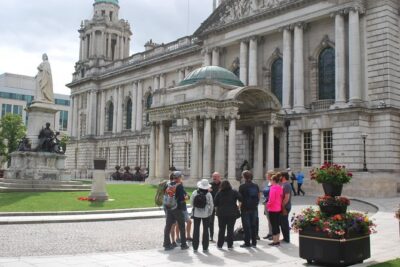
A History of Terror – Belfast City Centre Walking Tour
Read our review →
Game of Thrones and Giant’s Causeway Full-Day Tour from Belfast
Read our review →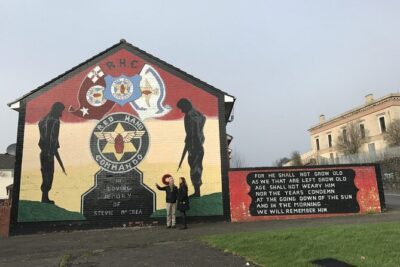
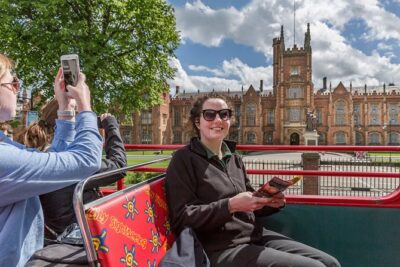
City Sightseeing Belfast Hop-On Hop-Off Bus Tour
Read our review →
Giants Causeway & Castles Tour from Belfast: Guided tour
Read our review →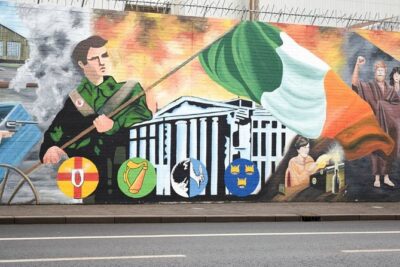
Browse the lists this tour appears in