
Reviewed · BELFAST BLACK TAXI TOURS
Belfast black taxi tours
Belfast’s black taxi tours take you straight into the city’s divided neighborhoods, where murals, memorials, and concrete peace walls still shape daily life. In about 90 minutes, you visit places that are difficult to understand from a standard sightseeing bus, with a local guide explaining what happened and why these streets still matter.
I like two things right away: the private format, which lets you ask questions and adjust how much time you spend outside, and the chance to hear the story from guides who grew up in Northern Ireland. Mark, Robert, Cecil, Jim, Jimbo, Paul, and Mike are among the guides praised for clear, balanced storytelling.
The main caution is that this is a serious political and personal tour, not a light city ride. One passenger found the commentary too packed with dates and facts, with too little conversation. You may love the detail, but it helps to read a short introduction to the Troubles before arriving.
Key points to know before booking
- You visit both sides of Belfast’s divide: The route includes Clonard and Shankill, with a stop at the Peace Wall separating largely Catholic and Protestant areas.
- The tour is private: Only your group rides together, so questions and pacing are easier than on a large coach tour.
- The guides make the difference: Mark, Robert, Cecil, Jim, Jimbo, Paul, and Mike are all praised for local insight, fairness, and personal storytelling.
- You get out at important sites: The planned stops include the International Mural Wall, Clonard Martyrs Memorial Garden, the Peace Wall, and Shankill Road.
- It works well on a tight schedule: The tour lasts about 1 hour and 30 minutes and begins and ends at the listed meeting point, the Leonardo Hotel Belfast.
- The subject matter can be confronting: Murals and memorials refer to violence, political conflict, and loss. This is a history tour that asks for attention and respect.
Why a black taxi is the right way to see Belfast’s Troubles
A regular city tour can point out Belfast’s major buildings and explain its industrial past. It usually cannot show you how quickly the city changes from one community to another. In a black taxi, you move through streets where political identity is still written on walls, gates, memorial stones, and painted kerbs.
That closeness is the point. You are not simply looking at a display in a museum. You are sitting in a vehicle with a local guide, passing through neighborhoods that lived through the worst years of the Troubles. The guide explains the background, identifies the groups and symbols represented in the murals, and gives the places a human setting.
The private setup adds real value. If your group wants more context about the IRA, loyalist groups, religion, British rule, or the peace process, you can ask as you go. If the subject becomes heavy, you are not stuck in a large group waiting for a scripted stop.
The tour has a five-star rating from 1,166 reviews, with 99 percent recommending it. That strong response makes sense when the guide strikes the right tone. The best version of this experience is neither a political argument nor a simple list of dates. It is a careful explanation of why Belfast developed as it did, what the murals mean, and how the conflict affected ordinary people.
More belfast black taxi tours in Belfast:
- Cab Tours Belfast Famous Black Taxi Tours
★ 5.0 · 3,633 reviews - Private Black Taxi Belfast City Tour
★ 5.0 · 2,188 reviews - Iconic Belfast Black Cab Tour
★ 5.0 · 449 reviews
International Mural Wall on Divis Street
The first listed stop is the International Mural Wall on Divis Street. You spend about 15 minutes here, and there is no admission charge.
These murals support other countries involved in conflicts or political struggles. That makes this wall different from a purely local memorial. It shows how Belfast’s political art connects Northern Ireland with wider movements around the world.
Your guide can help you read the wall as political communication rather than decoration. The images and slogans reflect republican viewpoints and international causes, so you should expect a strong point of view rather than a neutral public-art display.
Fifteen minutes is enough for photographs and a basic explanation, but not for a long study of every mural. If you want to remember the visit, take a moment to look at the details before listening to the wider political context. The value is in connecting the artwork to the community and events that produced it.
The stop also gives you a useful starting point. Instead of hearing about the Troubles as an abstract conflict, you begin with the way political identity was presented publicly. That helps the later memorials and murals make more sense.
Clonard Martyrs Memorial Garden
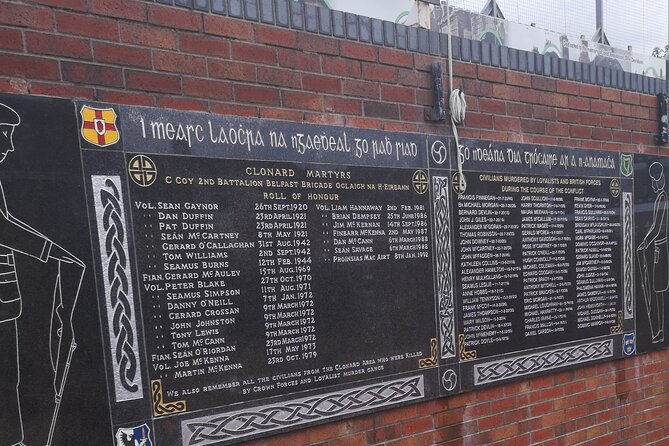
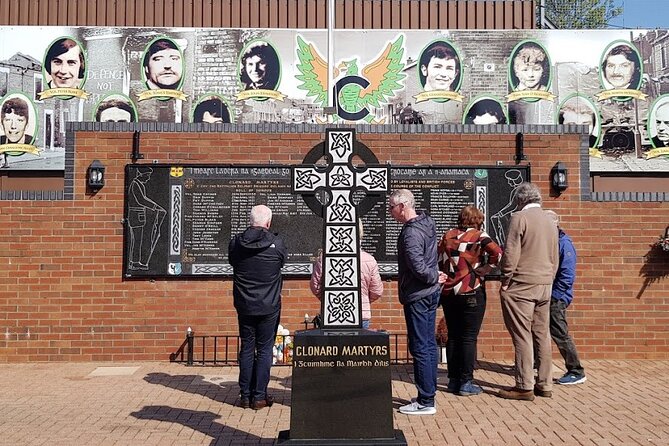
The tour then visits the Clonard Martyrs Memorial Garden for roughly 15 minutes. Admission is free.
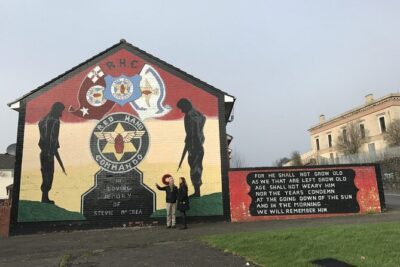
This memorial garden honors IRA members and civilians from the Clonard district. It is an important stop because it shows how one community remembers those it considers victims or fallen members of its struggle.
The wording and symbols may be unfamiliar or uncomfortable if you come from outside Northern Ireland. I recommend listening closely to the guide’s explanation rather than trying to judge the memorial from a quick photograph. Memorials reveal what a community wants remembered, but they do not always tell the whole story on their own.
This is also one of the points where a guide’s tone matters most. Mark is repeatedly praised for presenting difficult subjects with balance and for answering questions clearly. Robert is described as offering a broad account of Belfast and the Troubles, while Cecil is praised for explaining each place in a calm, professional way.
The garden is not simply another photo stop. It lets you see how political conflict becomes personal. Names, local connections, and community memory bring the scale of the conflict down from national politics to individual streets and families.
The Peace Wall and Belfast’s divided streets
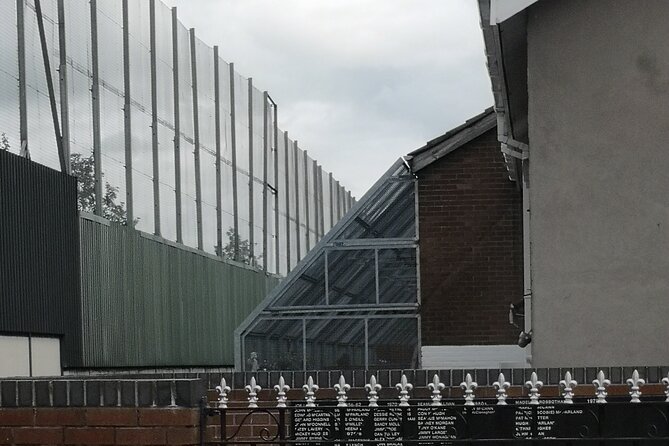
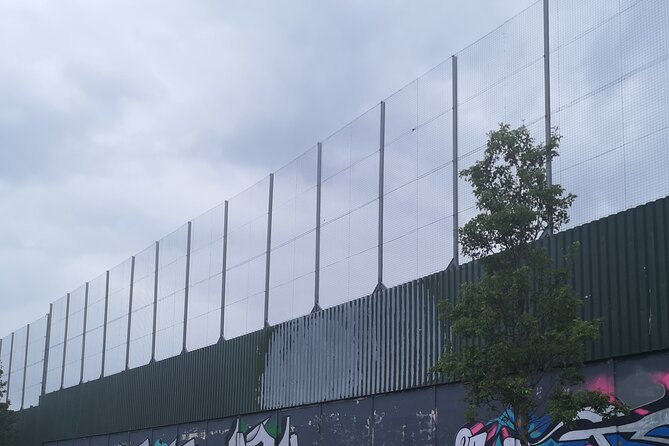
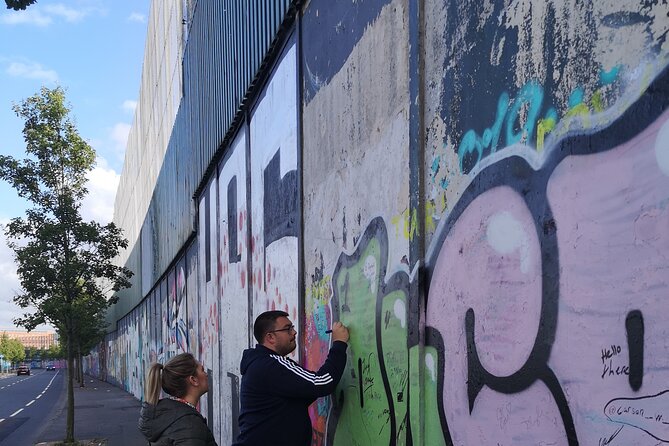
The route includes a Peace Wall separating Protestant and Catholic communities. The wall is one of the most recognizable symbols of Belfast’s troubled past, but seeing it in person gives you a more complicated impression than a photograph can.
The wall was built to reduce direct conflict between neighborhoods. Its presence also shows that separation did not vanish when the worst violence ended. It remains a physical reminder of fear, mistrust, and the difficulty of creating a shared civic life after years of conflict.
Your guide will explain where the wall fits into the wider story. Pay attention to the difference between a ceasefire, a political agreement, and genuine reconciliation. They are not the same thing, and a good explanation helps you avoid reducing the Troubles to a simple dispute between two sides.
You may be able to get out for photographs, depending on the timing and conditions. One group chose to remain in the taxi because it was chilly, and the guide allowed that choice. That flexibility is useful, especially when the weather is poor or someone in your group finds the subject matter emotionally difficult.
The taxi itself also varies. One passenger noted that Mark drove an older-style black cab, while not every vehicle necessarily has the same classic look. If the traditional cab matters to you, ask at booking, but do not assume the exact vehicle can be guaranteed.
Same city, a completely different kind of day:
- Titanic Belfast Entrance Ticket: Titanic Visitor Experience Including SS Nomadic
★ 4.5 · 3,698 reviews - Giant’s Causeway Day Trip from Belfast
★ 5.0 · 3,480 reviews - A History of Terror – Belfast City Centre Walking Tour
★ 5.0 · 2,883 reviews - Game of Thrones and Giant’s Causeway Full-Day Tour from Belfast
★ 5.0 · 2,291 reviews
Shankill Road and loyalist murals
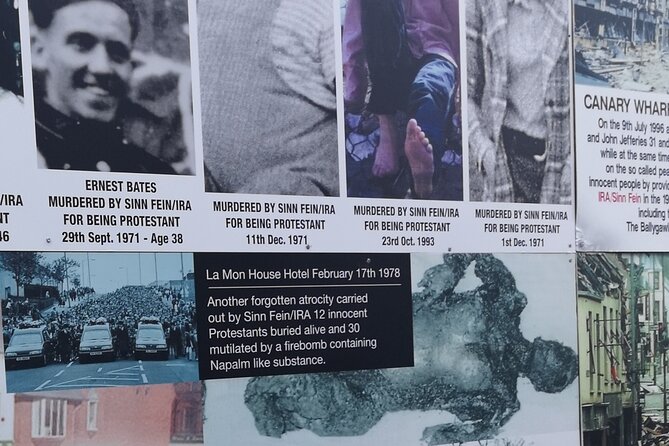
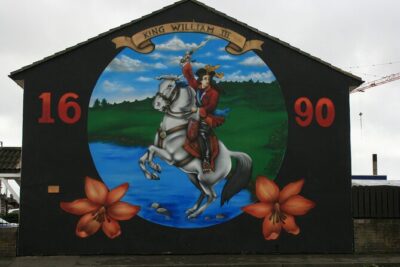
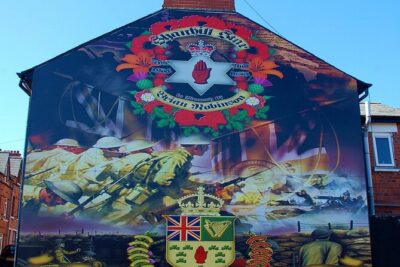
The Shankill Road stop lasts about 30 minutes, making it the longest listed stop. The guide points out murals depicting atrocities carried out by republican paramilitary forces.
Shankill gives you the chance to hear how the conflict is remembered from a loyalist and Protestant perspective. That balance matters. A tour that only visited republican memorials would give you an incomplete picture of Belfast, just as a tour focused only on loyalist murals would leave out half the story.
The murals here can be direct and disturbing. They refer to killings, political allegiance, and the fear felt by people living in neighborhoods affected by paramilitary violence. You may find some images confronting, especially if you arrive without much background.
This is where the private format is especially helpful. You can ask what a symbol means, why a mural has been painted in a certain style, or how the neighborhood changed after the conflict. You can also ask the guide to slow down if several dates and names begin to blur together.
A few people praised Mark for giving an unbiased overview of the IRA conflict, the Troubles in the 1970s, and the situation today. Others praised Jim and Jimbo for making the material clear and engaging. The strongest guides appear to combine facts with a sense of place, rather than reciting a political script from the front seat.
The guides shape the whole experience
This tour depends heavily on the individual guide. The route is important, but the same murals can feel either vivid or flat depending on how they are explained.
Mark is the name praised most often. He is described as especially strong on Northern Irish history, the Troubles, and the political effects that remain today. One passenger appreciated that he adjusted the tour to specific interests, while another noted that he allowed time to stop, ask questions, and even visit a church.
Robert is praised for giving a fascinating overview of Belfast and for showing how quickly the city can feel different only a few minutes from the center. Cecil is noted for being friendly, professional, and willing to stop at each location for questions and photographs. Jim and Jimbo are praised for knowing how to present difficult material to people who may have little prior understanding of the conflict.
Paul worked with Mark when a larger party of eight needed two taxis. That detail is useful if you are traveling with a bigger group: the private format does not necessarily mean everyone fits in one vehicle.
Do not expect every guide to tell the story in exactly the same way. One critical experience described a punctual, pleasant guide who delivered too many dates and facts with too little interaction. That is the clearest warning here. If you prefer a conversational tour, say so early and ask questions rather than waiting for the guide to finish the full explanation.
How much history should you know first?
You do not need a university course in Northern Irish politics. You will get more from the tour, though, if you know the basic outline of the Troubles.
At minimum, understand that the conflict involved competing national identities, religion, political control, and community divisions. Republicans and many Catholics generally supported a united Ireland, while unionists and many Protestants generally supported Northern Ireland remaining part of the United Kingdom. That summary is only a starting point, not a complete explanation.
The tour adds the local detail. You see where the conflict happened, how communities marked their territory, and why the Peace Wall still matters. You also hear how violence affected civilians as well as paramilitary members.
I would avoid arriving with a fixed political verdict and expecting the guide to confirm it. The most useful approach is to listen for how each neighborhood remembers the past. You can ask direct questions, but respectful curiosity will serve you better than trying to win an argument in the back seat.
Price, timing, and what you actually receive
The price is $55.48 per person for about 90 minutes. That is not the cheapest way to see Belfast, but the comparison is not really with a standard sightseeing bus. You are paying for a private vehicle, a dedicated guide, local access to several politically important neighborhoods, and the ability to shape the conversation around your own questions.
For one or two people, the cost may feel high. For a family or small group, the private setup can be better value because the price buys the whole vehicle experience rather than a seat on a large shared tour. The price includes the guided tour but not alcoholic drinks.
The schedule works well if you have only a few hours in Belfast. You can see major Troubles sites without spending half a day moving between them. The tradeoff is pace. Ninety minutes gives you a strong introduction, not a full study of the conflict or every mural in the city.
Pickup and drop-off are described as hotel based, with the Leonardo Hotel Belfast on Great Victoria Street listed as the start and end point. Confirmation is provided when you book. Service animals are allowed, the location is near public transportation, and most people can participate.
The experience is offered in English. It is commonly booked well ahead, with an average booking time of 64 days before the tour. If your Belfast schedule is fixed, I would reserve early rather than assume a convenient time will remain open.
Free cancellation is available up to 24 hours before the start time for a full refund. Changes or cancellations inside that window are not refunded, and the tour can be canceled if its minimum number is not reached. In that case, you are offered another date or experience, or a full refund.
Who will get the most from this tour?
This is a strong choice if you want to understand Belfast rather than simply photograph it. It suits first-time visitors, families with older children, and anyone interested in politics, oral history, or the way public memory shapes a city.
It is also useful for a short Belfast visit. The route checks off several major sites in a compact period, and the private vehicle means you do not lose time organizing a larger group.
You should think twice if you want a cheerful, general city tour with little political discussion. The murals and memorial garden refer to death, violence, and paramilitary activity. The experience can be moving, but it is not casual entertainment.
It may also be less satisfying if you dislike sitting in a vehicle for long stretches. The itinerary includes stops outside the taxi, but much of the commentary takes place from the seat. Ask questions and request time for photographs if you want the ride to feel more interactive.
Should you book the Belfast black taxi tour?
I would book it if the Troubles are a major reason you want to visit Belfast, or if you have only a short window to understand the city’s divided communities. The combination of a private cab, local guide, murals, memorials, and the Peace Wall gives you far more context than a quick walk past the same places.
Try to request a guide such as Mark, Robert, Cecil, Jim, Jimbo, Paul, or Mike if the booking system allows it, but understand that availability may vary. The exact quality of the experience will depend on who takes the wheel and how much conversation develops.
Bring patience, sensible questions, and a willingness to hear more than one community’s memory. If you do, the $55.48 price buys a focused and worthwhile introduction to Belfast’s recent past.
FAQ
How long is the Belfast black taxi tour?
The tour lasts approximately 1 hour and 30 minutes.
Is the tour private?
Yes. Only your group participates in the activity.
Where does the tour start and end?
The listed meeting point is the Leonardo Hotel Belfast on Great Victoria Street. The tour ends back at the meeting point.
What places does the tour visit?
The route includes the International Mural Wall on Divis Street, Clonard Martyrs Memorial Garden, the Peace Wall, and Shankill Road.
Is the tour offered in English?
Yes. The tour is offered in English.
Can I cancel for a full refund?
Yes, if you cancel at least 24 hours before the experience start time. Cancellations made less than 24 hours in advance are not refunded.
Just added around Belfast
- Giants Causeway Private Tour★ 5.0 · 3 reviews
- This is Belfast Walking Tours. Our history, our culture.★ 5.0 · 7 reviews
- The Single Cask Whiskey Experience★ 5.0 · 6 reviews
- Epic Escape Room Adventure to Save King’s Landing in Belfast★ 5.0 · 3 reviews
- Belfast City Sightseeing Tour Including Titanic Museum | 6 Hours★ 4.5 · 9 reviews
- Private Guided Walking Tour in Belfast★ 3.5 · 3 reviews
- 4 Hours Private Belfast City Tours★ 5.0 · 10 reviews
- Private Giants Causeway Tour Tour For Up to 15 People★ 4.0 · 5 reviews
Belfast Black Taxi Tours, compared.
2 Hour Private Belfast Taxi Cab Tour of Troubles & Peace walls
Read our review →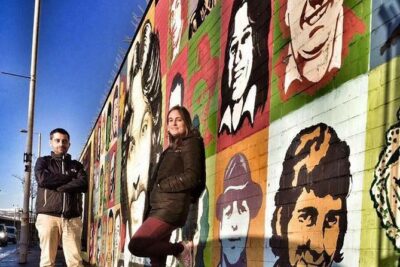
2 hours Belfast Original Drivers The Troubles Black Taxi Tour
Read our review →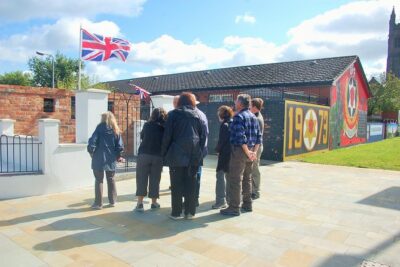
World Famous Belfast City Centre Black Cab/Taxi Tour 2 Hours
Read our review →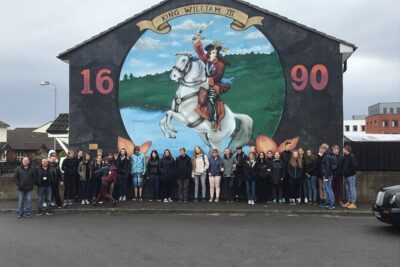
Black Taxi Tour and Crumlin Road Gaol tour Combo
Read our review →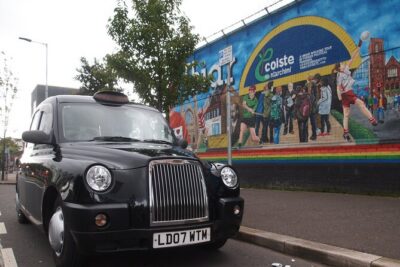
Browse the lists this tour appears in