
Reviewed · BELFAST CITY WALKING TOURS
This is Belfast Walking Tours. Our history, our culture.
The best thing about Belfast Walking Tours is the way it uses ordinary city streets to explain big changes. You begin beside the Big Fish, where the hidden Farset river, shipbuilding, Belfast Lough, and local legend all meet, then walk through the city’s commercial, political, and social story to City Hall.
I like the compact route, which links eight central sights without requiring transport, and I like the small group limit of 15 people. The tour also gives you more than a quick parade of landmarks, with time for the 1798 rebellion, Presbyterian opposition to slavery, Belfast punk, the Troubles, and the Titanic Memorial.
The main consideration is the pace and setting. This is a two-to-three-hour outdoor walk, with no admission included for the First Presbyterian Church, so you should be ready to walk and should not expect an inside tour at every stop.
Key points at a glance
- The Big Fish begins the story: Learn how the Salmon of Knowledge, the River Lagan, Belfast Lough, and the hidden Farset connect.
- Eight central stops form one easy route: The walk goes from Donegall Quay to City Hall, covering Belfast’s waterfront and core streets.
- The story reaches beyond shipbuilding: Expect local politics, the 1798 rebellion, Presbyterian reform, commerce, music, and conflict.
- The Cathedral Quarter adds present-day Belfast: Pubs, food, punk history, the Merchant Hotel, and the cathedral bring a different tone.
- The final stop is reflective: City Hall leads to the Titanic Memorial, where the tour closes on loss and the city’s future.
- A small English-speaking group keeps it personal: The maximum is 15 people, and the mobile ticket makes entry and meeting simple.
Starting beside Belfast’s Big Fish
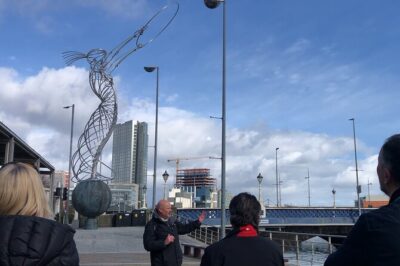
Meet at the Big Fish on Donegall Quay, Belfast BT1 3NG. This large mosaic-covered salmon is an amusing landmark, but it is not just a photo stop. Its scales tell parts of Belfast’s story, and the fish points you toward the city’s relationship with water, trade, and work.
The salmon is linked to the old tale of the Salmon of Knowledge. Locally, its plain nickname is simply the Big Fish, which tells you something about Belfast’s sense of humor. Beneath the area flows the Farset, a hidden river whose name helped give Belfast its name.
I like this opening because it avoids beginning with a grand civic building. You start with a local symbol, then move naturally into the forces that shaped the city. The River Lagan and Belfast Lough help explain why this site became important, while shipbuilding connects the waterfront to Belfast’s industrial identity.
Allow about 15 minutes here. You will have time to look at the salmon and hear the opening story before moving toward the Customs House. The meeting point is near public transportation, but the experience itself is a walking tour, not a bus circuit.
More belfast city walking tours in Belfast:
- A History of Terror – Belfast City Centre Walking Tour
★ 5.0 · 2,883 reviews - Private Black Taxi Belfast City Tour
★ 5.0 · 2,188 reviews - Best of Belfast Walking Tour
★ 5.0 · 399 reviews
Customs House and the making of industrial Belfast
The Customs House introduces Belfast as a commercial city. Here, the guide explains how Belfast grew far beyond what you might expect during the Industrial Revolution and how trade helped change its size, wealth, and influence.
The building also carries a public role. It has been used for meetings and gatherings, and today the area can serve as an outdoor amphitheatre for summer music. That shift from commerce and public business to open-air entertainment gives you a useful sense of how city spaces change use over time.
You spend about 10 minutes here. That may sound brief, but it works well as part of a moving route. You are not being asked to study every architectural detail. Instead, the stop supplies the economic background needed for the later sights on Royal Avenue and around City Hall.
Albert Memorial Clock and its famous secret
The Albert Memorial Clock Tower is one of Belfast’s clearest landmarks. It was built after the death of Prince Albert, Queen Victoria’s husband, and its memorial purpose reflects the close link between civic pride and the British monarchy in nineteenth-century Belfast.
The guide also points out the clock’s big secret. The supplied information does not spell out that secret, so you will need to hear the explanation on the walk. That is part of the appeal of this stop, since the tower is more than a quick photograph.
Plan on about 10 minutes. The stop works especially well for anyone who likes small details in familiar monuments. Rather than treating the clock as background scenery, the tour uses it to show how Belfast marked public figures and expressed its growing confidence.
Joy’s Entry and the rebellion of 1798
At Joy’s Entry, the focus shifts from civic buildings to the narrow lanes and entries that helped shape Belfast High Street. This is described as the birthplace of the city, and the location lets the guide move from broad industrial development to the people who challenged political power.
The central figure here is Henry Joy McCracken, a Presbyterian leader of the United Irishmen during the rebellion of 1798. His story adds a political edge to the walk. Belfast was not simply a place of merchants, factories, and grand memorials. It also produced liberal and revolutionary ideas, along with people prepared to act on them.
You spend about 15 minutes at Joy’s Entry. That extra time matters because the story involves a person, a movement, and a period of upheaval. The route also gives you a chance to see how Belfast’s famous entries fit into the city rather than hearing about them as isolated curiosities.
A few more Belfast trips to weigh up
- Private Political History & Murals Tour Belfast
★ 5.0 · 182 reviews - Belfast Political/history/troubles private taxi/cab tour
★ 5.0 · 69 reviews - Belfast Walking Tour: City Centre History, Troubles & Stories
★ 5.0 · 39 reviews - 1 Hour Express Belfast Taxi/Cab Tour History, Murals, Troubles
★ 5.0 · 17 reviews
Presbyterian Belfast and a challenge to slavery
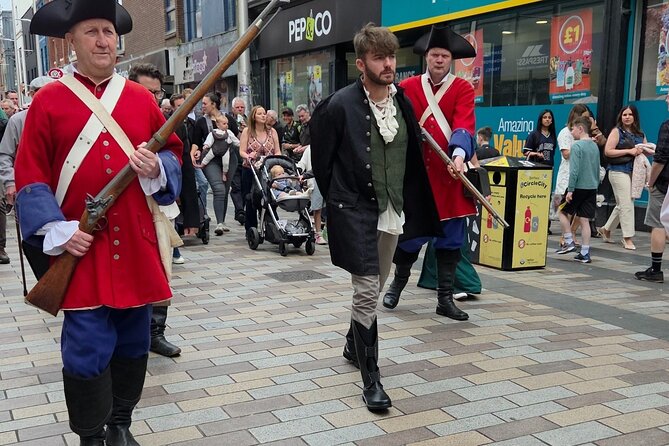
The First Presbyterian Church presents another side of the city’s past. It sits in the heart of Presbyterian Belfast, a community associated here with liberal thinking and with commercial and social development.
The tour highlights one Presbyterian’s brave stand against slavery. This is a valuable addition because it prevents the city’s religious history from becoming a simple account of buildings and denominations. You get a story about moral choice and public action, tied to a community that helped shape Belfast’s civic life.
About 10 minutes is planned for this stop. Admission is not included, so you should treat the church as an exterior stop unless your booking details tell you otherwise. That point matters if you hope to spend time inside. The tour price covers the walking experience, but not every possible site entrance.
Cathedral Quarter, from decline to nightlife
The Cathedral Quarter changes the mood. The area moved from being rundown and overlooked to becoming a major food and entertainment center. The tour uses that change to show how Belfast can reuse old streets and buildings for a new generation.
You will hear about the origins of Belfast punk music and pass the Duke of York pub and the Merchant Hotel. The Duke of York brings traditional pub culture into the story, while the Merchant Hotel represents the area’s polished redevelopment. The nearby cathedral adds an older and more solemn architectural note.
This section is scheduled for about 15 minutes, enough to connect several nearby points. You should not expect a full food tour, pub crawl, or music performance. The value is in understanding how one quarter gathered different layers of Belfast life, from neglected streets to nightlife and restored buildings.
I especially like this stop for first-time visitors because it gives you ideas for returning later. After the walk, you may want to explore the quarter at your own pace, but the tour gives you an initial map and a reason to look beyond the most obvious sights.
Royal Avenue and Victorian ambition
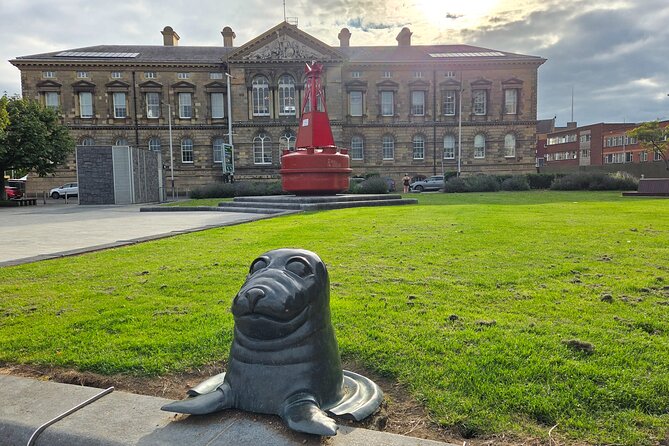
Royal Avenue brings the story back to civic and commercial confidence. Its Victorian grandeur reflects a time when Belfast was one of the world’s major economic powers.
That claim is best understood through the scale and character of the avenue. The guide ties the buildings and street to a city growing in wealth, influence, and ambition. It is a useful bridge between the earlier stories of trade and the final approach to City Hall.
You spend about 15 minutes here. The route does not require you to enter a museum or pay an extra fee, so the focus remains on the street itself and the buildings around you. If architecture interests you, this is one of the places where you will want to look up and take your time, even though the group must keep moving.
City Hall, public memory, and the Titanic Memorial
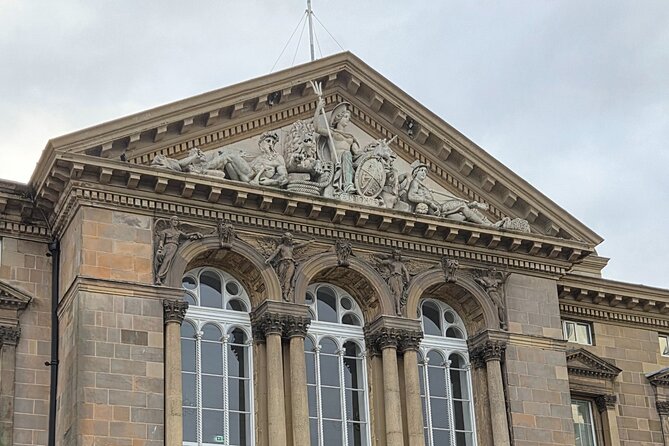
The final main stop is Belfast City Hall, in the center of Belfast. It is the city’s civic focal point, connected to protests, meetings, commemorations, and celebrations.
The guide also uses City Hall to discuss the Troubles and Belfast’s more hopeful future. This is an important part of the walk because it places recent conflict beside everyday civic life. You are not left with an old-fashioned story of industrial success. The route acknowledges the painful parts of Belfast’s past and then points toward what comes next.
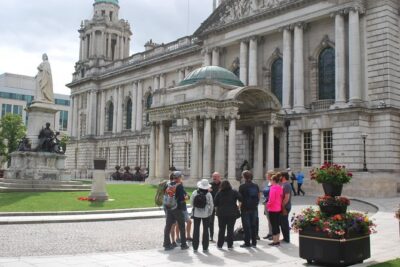
The tour finishes in the grounds of City Hall, at the Titanic Memorial. The setting offers a quieter end after the commercial streets and entertainment district. Statues, the war memorial, and the Titanic Memorial Garden add layers of public remembrance.
The final stop is scheduled for about 15 minutes. I find that a good closing point for a city walk. You finish near a central landmark rather than being left in a distant neighborhood, and you can continue exploring Belfast from there.
What the two-to-three-hour format means
The stated duration is approximately two to three hours. That range likely reflects the pace of the group, questions, and time spent at each stop. The listed stop times add up to about 105 minutes, leaving room for walking between locations and for the guide to connect the stories.
You should wear comfortable shoes and expect to remain outdoors for most of the experience. The route is central, but a city walk still means pavement, crossings, and time on your feet. The tour is offered in English, so it suits you best if you are comfortable following a spoken historical explanation in English.
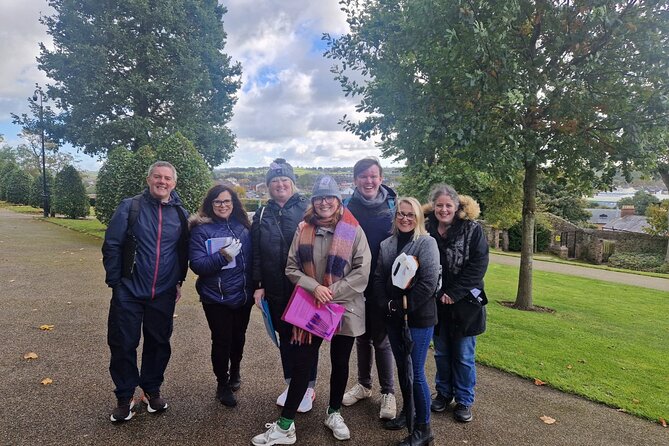
The group maximum is 15. That is small enough to make questions practical and to keep the guide from having to speak to a large crowd. It also means the experience may feel more like a guided conversation than a major sightseeing procession.
The mobile ticket is useful for a simple city visit. You can keep the confirmation on your phone, meet at the Big Fish, and avoid handling a paper voucher. Confirmation is provided when you book.
Is $27.15 a fair price?
At $27.15 per person, the tour is priced as an affordable introduction to central Belfast. Nearly all the listed stops are free, so you are paying mainly for the guide’s route, explanations, local connections, and the time saved in working out how the sights fit together.
That value is strongest if you are visiting Belfast for the first time. The tour gives you a basic city framework in one sitting: the river and waterfront, industrial growth, Victorian confidence, political rebellion, Presbyterian influence, the Cathedral Quarter, the Troubles, and Titanic remembrance.
It is less compelling if you already know central Belfast well or prefer to read plaques and walk alone. You will not be paying for museum entry, a meal, or a private vehicle. The First Presbyterian Church is specifically listed with admission not included, so you should keep that in mind when comparing the price with longer tours that include indoor sites.
For a short orientation, the cost is reasonable. You get eight connected stops, an English-speaking guide, and a small group rather than a large crowd. The strongest value comes from the interpretation, not from paid access to monuments.
Who will get the most from this walk?
I would recommend it to first-time visitors who want context before exploring Belfast on their own. The route covers enough ground to help you understand the center, while the final stop at City Hall leaves you in a useful place for further sightseeing.
It also suits you if you like political and social history. The tour does not stop at architecture. Henry Joy McCracken, the United Irishmen, Presbyterian reform, opposition to slavery, Belfast punk, the Troubles, and Titanic memory all appear in the story.
Families and mixed-age groups may appreciate the variety. The Big Fish and clock tower offer memorable visual points, while the entries, church, quarter, and civic center keep the route changing. Still, you should judge your group’s comfort with two to three hours of walking and listening.
This is a good choice for visitors with limited time. It does not require a full day, and the start and finish are both in central Belfast. It may be less suitable if you need a fully indoor activity, a private guide, or a tour with extensive access to interiors.
Service animals are allowed, and most people can take part. The tour is near public transportation, which helps if you are arriving from elsewhere in Belfast. Specific details about step-free access, seating, or restroom stops are not provided, so you should ask before booking if those needs affect your plans.
Booking and cancellation details to keep in mind
You receive confirmation at the time of booking, and the ticket is mobile. The meeting point is the Big Fish at Donegall Quay, Belfast BT1 3NG. The walk ends at City Hall, Belfast BT1 5GS, in the grounds around the building and memorials.
Free cancellation is available if you cancel at least 24 hours before the experience start time. Cancellations made less than 24 hours before the start are not refunded, and changes inside that same period are not accepted. The cut-off uses local Belfast time.
Should you book Belfast Walking Tours?
Book this tour if you want a clear, affordable introduction to Belfast that connects industrial growth with political and social change. The route has enough variety to keep a first visit interesting, and the small group limit makes the guide’s explanations easier to follow.
I would especially choose it early in a Belfast stay. Start at the Big Fish, learn the city’s basic structure, then return to the Cathedral Quarter, Royal Avenue, or City Hall with better context. Skip it if you want extensive indoor access, a private experience, or a specialist tour focused only on the Titanic or the Troubles.
For $27.15, the tour earns its value through the story it builds across the city. You finish not just knowing where several landmarks are, but understanding how Belfast’s river, trade, religion, politics, music, conflict, and public memory share the same streets.
FAQ
Where does Belfast Walking Tours begin?
The tour begins at the Big Fish on Donegall Quay, Belfast BT1 3NG.
Where does the tour finish?
It finishes at Belfast City Hall, Belfast BT1 5GS, in the grounds near the statues, war memorial, and Titanic Memorial Garden.
How long does the walking tour last?
The experience lasts approximately two to three hours.
What language is the tour offered in?
The tour is offered in English.
How much does the tour cost?
The listed price is $27.15 per person.
How many people can join the tour?
The maximum group size is 15 people.
Are admission tickets included?
The listed stops are generally free, but admission for the First Presbyterian Church is not included.
Is the tour suitable for most people?
Most people can participate, and service animals are allowed. The experience takes place on a walking route, so you should be comfortable walking for two to three hours.
Can I cancel for a full refund?
Yes. You can cancel for a full refund if you cancel at least 24 hours before the experience start time. Cancellations or changes made less than 24 hours before the start are not accepted for a refund.
More Walking Tours in Belfast
- Belfast Political Tour-Conflicting Stories Walking Tour
★ 4.5 · 459 reviews - Belfast Eclectic Walking City Center Experience, The Marti Way
★ 5.0 · 348 reviews - Belfast Troubles Murals Street Art and Peace Wall Walking Tour
★ 5.0 · 163 reviews - The Real Eclectic Belfast City Walking Tour/Experience.
★ 5.0 · 152 reviews
Just added around Belfast
- Giants Causeway Private Tour★ 5.0 · 3 reviews
- Belfast City Sightseeing Tour Including Titanic Museum | 6 Hours★ 4.5 · 9 reviews
- The Single Cask Whiskey Experience★ 5.0 · 6 reviews
- Epic Escape Room Adventure to Save King’s Landing in Belfast★ 5.0 · 3 reviews
- Private Guided Walking Tour in Belfast★ 3.5 · 3 reviews
- 4 Hours Private Belfast City Tours★ 5.0 · 10 reviews
- Private Departure Transfer: Hotel to Belfast Airport★ 5.0 · 9 reviews
- Full-Day Private Tour of Giants Causeway with Pick Up★ 4.5 · 11 reviews
Belfast City Walking Tours, compared.
A History of Terror – Belfast City Centre Walking Tour
Read our review →
Shore Excursion: Giant’s Causeway Tour Including Belfast City Tour
Read our review →
Shore Excursion from Belfast: Including Giants Causeway and Belfast City.
Read our review →
Giant’s Causeway and Belfast City Murals Tour inc Game of Thrones Dark Hedges
Read our review →
World Famous Belfast City Centre Black Cab/Taxi Tour 2 Hours
Read our review →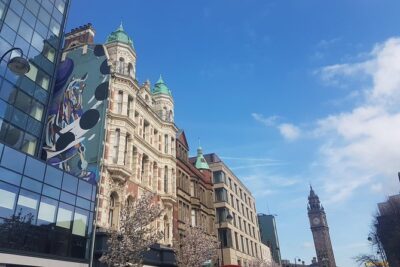
The Real Eclectic Belfast City Walking Tour/Experience.
Read our review →Browse the lists this tour appears in