
Reviewed · BELFAST BLACK TAXI TOURS
World Famous Belfast City Centre Black Cab/Taxi Tour 2 Hours
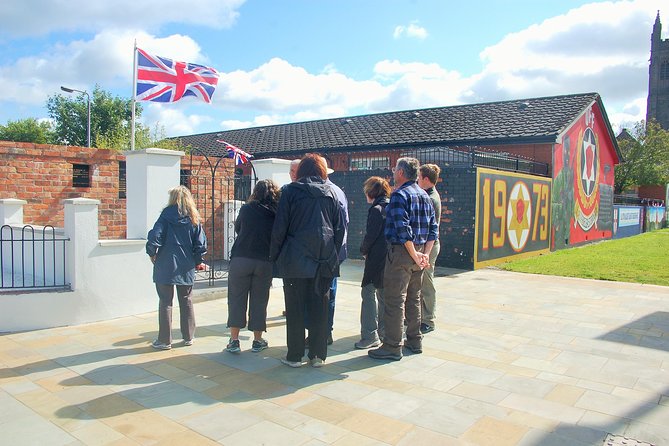
Belfast’s black cab tour puts the city’s divided past right in front of you: Republican murals on Falls Road, Loyalist murals on Shankill Road, the former prison, Clonard Monastery, and the long Peace Wall. I like the private format, since you can ask direct questions without sharing the cab with strangers. I also like the chance to hear personal memories from guides such as Ricky, Brendan, Patrick, Kevin, and John.
The main drawback is that two hours is a tight window for a subject this complex. Guide quality and viewpoint can vary, too. One guide may offer a balanced account, while another may focus strongly on one side. If you are collecting the full route, confirm that port pickup and return are included, since one booking resulted in an unexpected £50 port charge.
Key points to know before booking
- Private black cab: Only your own group rides with the guide, making questions and photo stops easier.
- Six important Belfast locations: The route covers Divis, Falls Road, the Bobby Sands mural, Shankill Road, Clonard Monastery, and the Peace Wall.
- Personal accounts matter: Several named guides, including Ricky, Brendan, Patrick, and Kevin, are described as sharing memories of growing up during the Troubles.
- The two communities are presented: The route crosses both Republican and Loyalist areas, though the balance may depend on your assigned guide.
- Pickup is offered: Hotel, port, and other pickup arrangements are listed, but confirm the exact port terms before your day.
- Early departures help: An early start can mean quieter roads and more time to look at the murals without crowds.
Belfast’s Troubles explained from a black cab
The strength of this tour is its setting. You are not only hearing dates and political labels inside a museum. You are moving through streets where murals, barriers, flags, and memorials still shape daily life.
A private cab works well here. Belfast’s Republican and Loyalist areas are spread across the west of the city, and the route crosses several districts in a short time. You do not need to work out the roads or decide which murals matter. Your guide handles the driving and stops when there is something worth seeing.
I would not book this as a light sightseeing ride. The Troubles involved violence, prison life, political conflict, identity, and long memories. The tour can be emotional. One account describes it as visceral, while another calls it sobering. That is useful warning: you will see places linked to murder, imprisonment, paramilitary groups, and community division.
The guide makes a major difference. Guides named in the available information include Ricky, Brendan, Patrick, Kevin, John, Davy, Jerry, George, Jim, Sean, and David. Several are described as having lived through the Troubles or having family connections to the areas visited. That personal angle can make the past easier to understand, but it also means you should listen carefully and ask for more than one viewpoint when possible.
More belfast black taxi tours in Belfast:
- Cab Tours Belfast Famous Black Taxi Tours
★ 5.0 · 3,633 reviews - Private Black Taxi Belfast City Tour
★ 5.0 · 2,188 reviews - Belfast black taxi tours
★ 5.0 · 1,166 reviews
Divis and the narrow streets near Falls Road
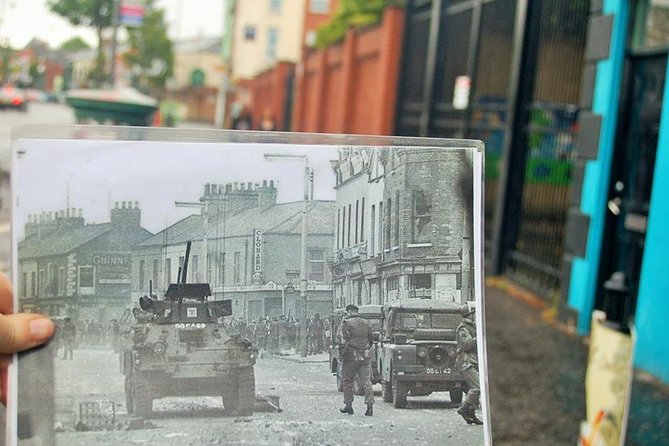
The first stop is Divis, at the foot of the Republican Falls Road. The Divis flats were used as a British Army base from 1969 for more than 25 years, with the top two floors occupied by soldiers. That detail helps you see how close military control was to ordinary homes.
The tour also passes through a narrow street associated with scenes from the film The Name of the Father. This is a brief stop of about 15 minutes, and the emphasis is on the location and its role in the conflict rather than on a formal attraction with an admission desk.
You will probably notice how quickly the built environment changes as the cab moves through this part of west Belfast. The point is not pretty architecture. It is the physical closeness of homes, army positions, contested streets, and community boundaries.
There is no admission fee listed for the stop. You should also expect to look from the cab and stop nearby rather than take part in a long walking visit. That keeps the tour moving, but it limits the time available for close examination.
Falls Road and the Bobby Sands mural
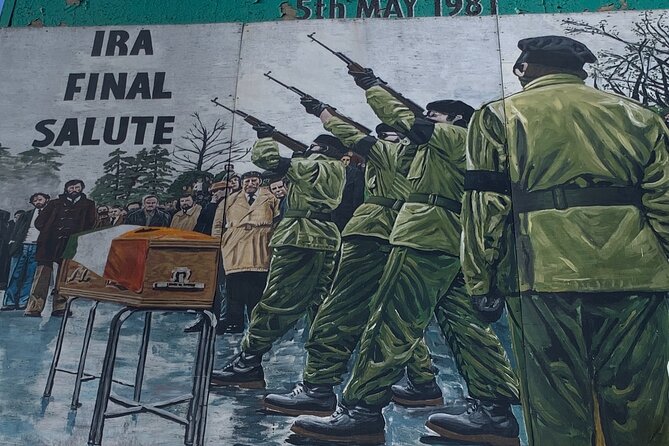
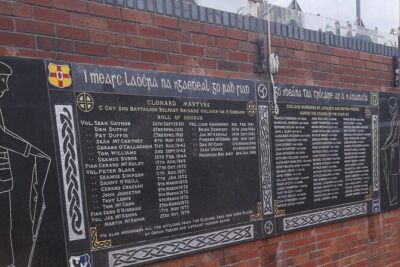
The Falls Road is one of Belfast’s best-known Republican areas and stretches for several miles. Here, the guide explains Irish history, the rise of the Provisional IRA, and the experience of the Catholic community through the murals painted by local people.
The Bobby Sands mural is the most recognizable image on this section of the route. Sands was an IRA prisoner who died on hunger strike in 1981. The mural is not simply street decoration. It reflects how political memory is displayed in public and how a community chooses its symbols.
You will have roughly 30 minutes in this area, which is generous compared with the other stops. That gives you time to take photographs and ask about the images rather than simply race past them.
Still, you should remember that murals express a point of view. They are powerful primary evidence of community feeling, but they are not a complete account of the conflict. Ask your guide how Loyalists understand the same years, and how the murals are viewed today. The best versions of this tour help you compare stories instead of handing you one approved answer.
The former gaol and Belfast’s prison story
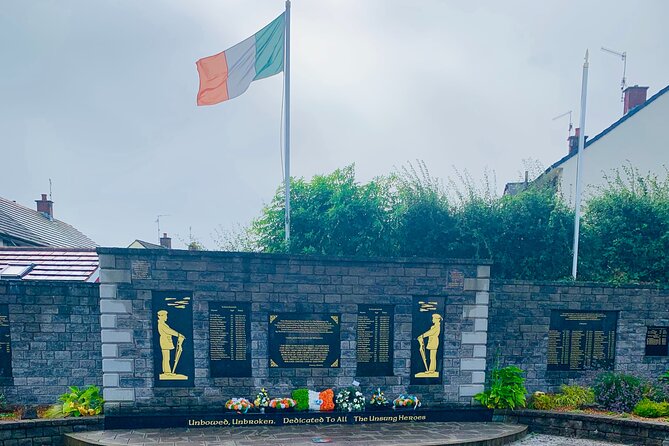
The route includes a former gaol built in the 1800s that also served as a hanging prison. It held members of the IRA, UVF, UFF, and INLA until it closed in the 1990s.
The prison’s importance comes from the range of people held there. It was connected to several armed groups, not just one side. The Good Friday Agreement later led to the release of prisoners, making the gaol part of the larger story of peace, compromise, and contested justice.
The supplied schedule does not give this stop a clear number or a precise duration. That is worth noting if you have a strict plan after the tour. The cab route covers it as part of the wider city visit, but you should not assume you will have time for a full interior tour or a separate admission visit.
This is one of the places where a good guide can add real value. Dates alone do not explain why prison release was so controversial. A guide who can connect the gaol to the peace process gives you a clearer sense of how the conflict moved from armed struggle toward political negotiation.
More belfast city walking tours in Belfast:
- A History of Terror – Belfast City Centre Walking Tour
★ 5.0 · 2,883 reviews - Best of Belfast Walking Tour
★ 5.0 · 399 reviews - Shore Excursion from Belfast: Including Giants Causeway and Belfast City.
★ 4.0 · 192 reviews - Giant’s Causeway and Belfast City Murals Tour inc Game of Thrones Dark Hedges
★ 4.0 · 180 reviews
The International Mural Wall on Divis Street
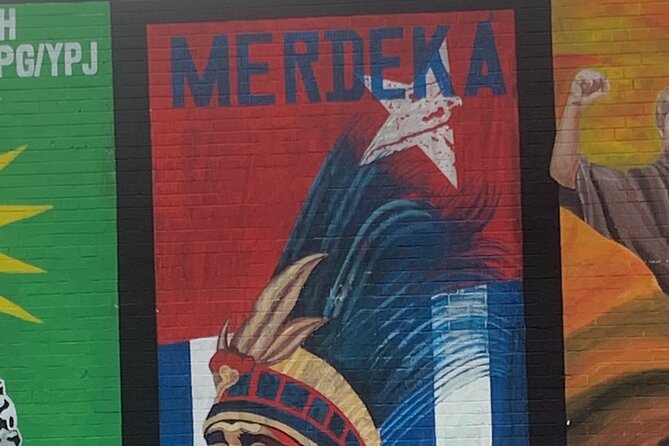
The International Mural Wall on Divis Street adds a wider political layer. More than 40 murals are associated with the wall, and the displays change over time. Subjects named for the route include Palestine, Cuba, and the Kurdish cause.
The guide explains each mural and its links to Republican politics. You may find this stop especially useful if you want to understand how local political identity connects with causes outside Northern Ireland. It shows that the wall is not only about past events in Belfast. It is also a public noticeboard for current political solidarity.
The stop lasts about 15 minutes. Since murals can change monthly, do not treat the exact appearance of the wall as fixed. The value is in the guide’s explanation of the images you see on the day.
This section also shows why a black cab is practical. The wall is part of a larger route, and your guide can place it beside Falls Road, Divis, and the Peace Wall instead of leaving you to connect the sites on your own.
Shankill Road and the Loyalist viewpoint
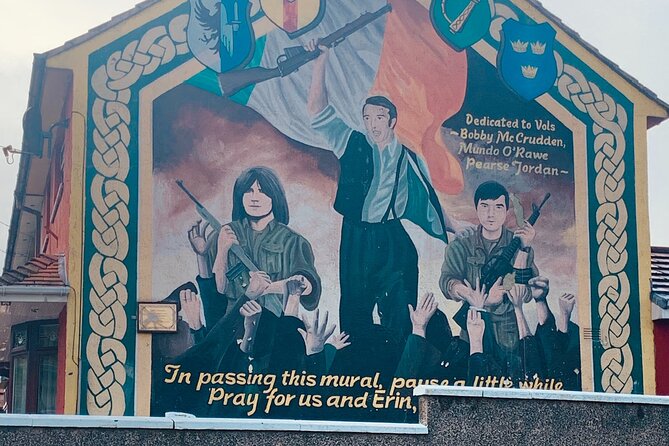
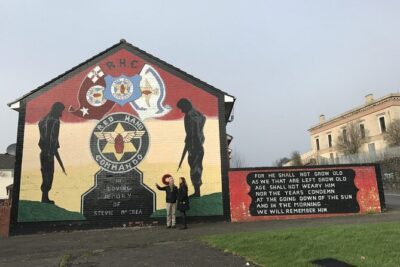
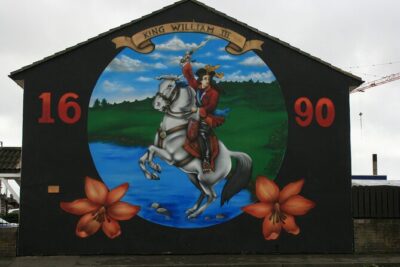
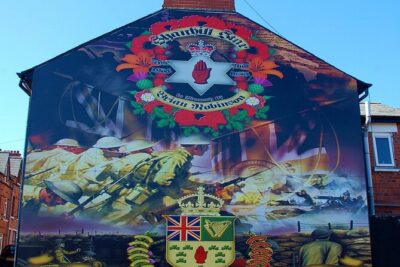
The move to Shankill Road takes you into the heart of Loyalist Belfast. The guide discusses the UDA and UVF, Protestant identity, the conflict with the IRA, murals, and the bonfires held around July 12.
This is an important counterpoint to Falls Road. If you only see Republican murals, you will leave with an incomplete picture. Shankill Road shows how Loyalist communities understood their own history, fears, British identity, and resistance to Irish republicanism.
You have about 20 minutes here. As on Falls Road, the murals are not neutral illustrations. They tell a community story, and the guide’s language can shape how you understand it. The information specifically notes that guides may offer different perspectives, so I would ask your guide directly how they approach both communities.
This can be a sensitive stop. Listen for differences between explaining a belief and endorsing every action carried out in its name. A strong guide should help you understand why people felt threatened while still addressing the damage caused by paramilitary violence.
Clonard Monastery and the path to peace
Clonard Monastery provides a calmer setting and a key link to the peace process. The Gothic monastery was created by Italian craftsmen and local workers, and it is connected to Father Alex Reid’s role in secret peace talks between Gerry Adams and John Hume.
The stop lasts around 10 minutes, so this is more of a focused explanation than a long architectural visit. The building matters because the peace process did not appear out of nowhere. It required private meetings, trusted intermediaries, and years of political effort.
For me, this stop helps balance the tour. The murals and walls show division in physical form. Clonard points toward the difficult negotiations that helped reduce open conflict. You will hear about the Good Friday Agreement elsewhere in the tour, especially in connection with prison releases and the aftermath of the Troubles.
The monastery is also a reminder that Belfast’s story is not only military and political. Religious buildings and community figures played roles in communication, mediation, and local life.
The Peace Wall and an unfinished peace
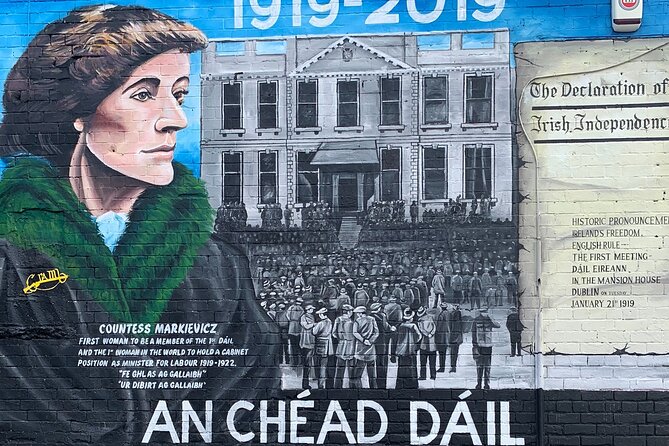
The famous Peace Wall is the final listed stop and one of the most memorable. Built in 1969, the walls were intended to keep Republican and Loyalist communities apart. They stretch through parts of the city, and their continued presence shows that peace does not always mean barriers disappear at once.
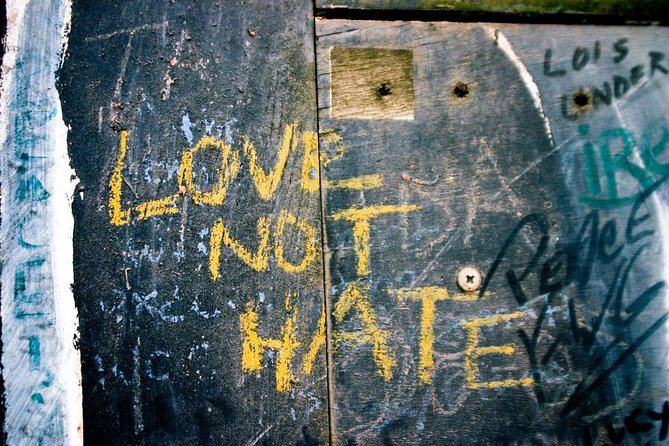
The wall has also become a place where public figures leave messages for peace. The names associated with quotes include President Clinton, Tiger Woods, and Morgan Freeman. Those messages provide a striking contrast with the wall’s original purpose.
You will have around 15 minutes here. Use that time to look at the writing, ask how the wall affects nearby communities, and consider the difference between a ceasefire, a political agreement, and full social trust. The tour’s mention of the Good Friday Agreement helps place the wall in the period after the worst violence, but the wall itself remains a visible reminder of unfinished work.
This is a good final stop because it leaves you with a question rather than a neat ending. Belfast has changed, yet the physical division remains part of the city.
What the two-hour timing really means
The route lists about 105 minutes across the six timed stops, leaving only a small amount of the two-hour outing for driving and the gaol visit. That tells you to expect a brisk overview, not a slow walking seminar.
You will have chances to get out and take photographs. One account specifically describes many stops and enough time for photos, while another says the group did not feel rushed. Even so, traffic, pickup delays, and lengthy questions can affect the schedule.
An early start is a smart choice. One morning departure offered quieter roads and empty mural areas, which made it easier to absorb the images. The listed operating hours run from 8:00 a.m. to 4:00 p.m., Monday through Sunday, for the stated booking periods.
The air-conditioned cab, private vehicle, and onboard WiFi add comfort, especially in poor weather or for anyone who does not want a long walk. The experience requires good weather, though, and may be moved or refunded if conditions prevent it from running.
Is $111.11 a fair price?
At $111.11 per person, this is not the cheapest way to see Belfast. Its value depends on your group size and how much you want a private guide rather than a general city bus or self-guided mural walk.
For a small group, the price buys two hours of a dedicated driver-guide, door-to-door transport where arranged, and the ability to ask questions throughout. You also avoid navigating unfamiliar streets and can combine several areas that are separated from one another.
The private format is particularly useful if your group has a serious interest in the Troubles. You can ask about a specific mural, request clarification, or discuss the differences between Republican and Loyalist accounts. With a larger group, the per-person cost may feel easier to justify.
I would confirm the pickup terms before paying, especially for a cruise-port pickup and return. Port pickup and drop-off are listed among the inclusions, but one poor experience involved a request for an extra £50. Get the exact arrangement in writing so a disputed charge does not consume your two hours.
Who should book this cab tour?
I would choose this for anyone who wants context rather than a quick photo stop. It suits history students, families with older children, first-time visitors to Belfast, and people who remember the news coverage of the 1970s, 1980s, and 1990s but never understood how the streets fit together.
It also suits you if you prefer a private setting. The cab holds only your group and the guide, and children must be accompanied by an adult. Service animals are allowed, and most people can take part.
I would think twice if you want a fully neutral, academic account or a long visit inside historic buildings. The tour uses local experience, murals, and street locations. That makes it vivid, but personal accounts can lean toward one community’s interpretation.
The experience is also less suitable if your only interest is Belfast’s general architecture, shopping, or Titanic history. It may drop you at the Titanic Museum or another location, but the main subject is the Troubles and their aftermath.
Practical booking advice
Confirmation is provided when you book, and free cancellation is available up to 24 hours before the start time. Changes made less than 24 hours ahead are not accepted, and late cancellations are not refunded.
Pickup is offered from hotels and ports, and the tour is near public transport. Ask where the cab will meet you and where it will finish. One booking used a drop-off at the Titanic Museum, while another used a train station, so a custom end point may be possible, but you should arrange it in advance.
The experience is offered in English. If you want a balanced presentation, ask at the start how your guide will cover both Republican and Loyalist perspectives. The route itself visits both sides, but the tone depends on the person behind the wheel.
Should you book it?
Book it if you want Belfast’s divided communities explained on the streets where the conflict happened. The private cab, local guides, personal stories, and mix of Falls Road, Shankill Road, murals, monastery, prison, and Peace Wall give you a strong two-hour introduction.
Go in ready for difficult material, and do not expect every guide to sound the same. Confirm port charges, request a morning time if you can, and ask for a balanced account. If that suits your interests, $111.11 can be good value for a private, direct introduction to Belfast’s recent past.
FAQ
How long is the Belfast black cab tour?
The tour lasts approximately two hours.
Is this a private tour?
Yes. Only your group participates, and transport is provided in a private vehicle.
Does the tour include hotel and port pickup?
Hotel and port pickup and drop-off are listed among the included services. Confirm the exact port arrangement before booking, since one booking involved a separate port-charge dispute.
Which Belfast locations are visited?
The route includes Divis, Falls Road, the Bobby Sands mural, the former gaol, the International Mural Wall on Divis Street, Shankill Road, Clonard Monastery, and the Peace Wall.
Is the tour offered in English?
Yes. The experience is offered in English.
What is the cancellation policy?
You can cancel up to 24 hours before the start time for a full refund. Cancellations or changes made less than 24 hours before the start are not accepted for a refund. If poor weather or an insufficient number of participants cancels the tour, you will be offered another date or experience, or a full refund.
More 2-Hour Experiences in Belfast
- 2 Hour Private Belfast Taxi Cab Tour of Troubles & Peace walls
★ 5.0 · 240 reviews - 2 hours Belfast Original Drivers The Troubles Black Taxi Tour
★ 5.0 · 227 reviews - Original Private Belfast Troubles and Peace Cab/Taxi Tour 2 Hours
★ 5.0 · 90 reviews - Original Drivers Belfast Taxi/Cab Tour 2 hour private adventure
★ 5.0 · 74 reviews
Just added around Belfast
- Giants Causeway Private Tour★ 5.0 · 3 reviews
- This is Belfast Walking Tours. Our history, our culture.★ 5.0 · 7 reviews
- The Single Cask Whiskey Experience★ 5.0 · 6 reviews
- Epic Escape Room Adventure to Save King’s Landing in Belfast★ 5.0 · 3 reviews
- Belfast City Sightseeing Tour Including Titanic Museum | 6 Hours★ 4.5 · 9 reviews
- Private Guided Walking Tour in Belfast★ 3.5 · 3 reviews
- 4 Hours Private Belfast City Tours★ 5.0 · 10 reviews
- Private Giants Causeway Tour Tour For Up to 15 People★ 4.0 · 5 reviews
Belfast Black Taxi Tours, compared.
2 Hour Private Belfast Taxi Cab Tour of Troubles & Peace walls
Read our review →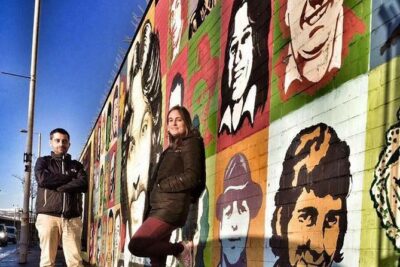
2 hours Belfast Original Drivers The Troubles Black Taxi Tour
Read our review →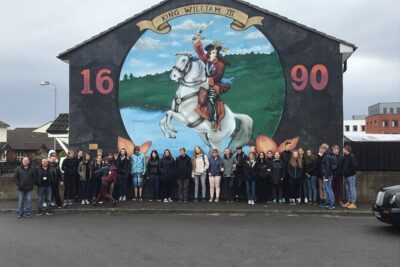
Black Taxi Tour and Crumlin Road Gaol tour Combo
Read our review →
Browse the lists this tour appears in