
Reviewed · WALKING TOURS
Belfast Eclectic Walking City Center Experience, The Marti Way
Belfast’s story is not kept behind museum glass on this walk. Marti leads you from City Hall through old market lanes, street-art-covered entries, grand churches, riverside landmarks, and the Cathedral Quarter, linking the city’s industrial past with its difficult recent years and hopeful future.
I like the small group of no more than eight, which makes it easier to hear Marti and easier for him to adjust the route to your interests. I also like the mix of famous sights and tucked-away corners, including the Belfast Entries and places where local history, food, music, and daily life meet.
The main consideration is the amount of information. Marti’s approach is lively and wide-ranging, but this is not a quiet sightseeing stroll. You should be ready to walk at a brisk pace and listen to a steady stream of history, facts, opinions, and recommendations.
Key points to know before booking
- Marti’s personal approach: He asks what interests you and can shape the conversation around history, architecture, art, food, music, or local life.
- A walk through Belfast’s timeline: The route connects linen, shipbuilding, the Troubles, peace, and current redevelopment.
- Major sights plus lesser-known corners: You see City Hall, St. George’s Market, the Big Fish, Belfast Cathedral, and the narrow Belfast Entries.
- A maximum of eight people: The capped group helps the walk feel more flexible than a large coach or crowd-based tour.
- No attraction admission fees: The listed stops are viewed from outside or visited without an admission charge.
- Useful orientation for a short stay: The walk ends near restaurants and apartments in St. Anne’s Square, with tips for further places to eat, drink, and explore.
What Marti’s Belfast feels like on foot
This is best understood as an orientation walk with a strong history focus, not a standard checklist of monuments. Marti, the guide behind Belfastology Walking Tours, presents Belfast as a city still working through its past while building something new.
He connects the visible city to the stories behind it. A church may lead into the linen trade. A market area may open a conversation about commerce and community. Street art may point toward political memory, local identity, or peace and reconciliation.
The walk is also personal in tone. Marti asks about your interests and has adapted the route for different groups. He may bring in architecture, music, food, local characters, or small details that match what you want to learn. His recommendations can include further reading and films, as well as places to eat, drink, shop, or continue sightseeing.
That flexibility is a real benefit, especially if you are new to Belfast and do not yet know what questions to ask. The tradeoff is that the exact emphasis can vary. One group may hear more about history and politics, while another may spend more time on buildings, street art, or local culture.
A few more Belfast trips to weigh up
- A History of Terror – Belfast City Centre Walking Tour
★ 5.0 · 2,883 reviews - Belfast Political Tour-Conflicting Stories Walking Tour
★ 4.5 · 459 reviews - Best of Belfast Walking Tour
★ 5.0 · 399 reviews
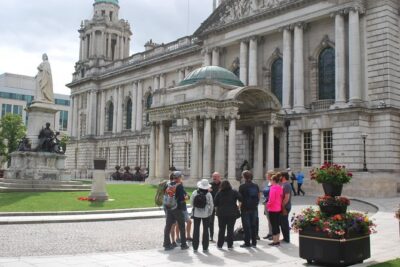
Starting at Belfast City Hall
Meet at Belfast City Hall, a practical and central starting point. Marti uses the opening section to explain what else you can see and do in the city, including some free options when open.
This introduction helps you get your bearings. You hear how Belfast developed, how its past shaped the modern city, and how the period known as the Troubles fits into that story. The discussion also reaches current redevelopment and the city’s future.
You get practical advice here, too. Marti talks about places to eat and drink, including gastro bars and restaurants. That matters because a walking tour is often most useful when it helps you plan the rest of your day, not just the next hour.
From City Hall, the route moves toward the Linen Quarter and the Titanic Memorial Garden. You are already shifting from the grand civic center into areas tied to industry, work, and Belfast’s maritime identity.
Titanic memory and Belfast’s linen past
The Titanic Memorial Garden is a brief but meaningful stop. Marti explains its development and its connection to the ill-fated ship. The visit does not replace the dedicated Titanic Belfast attraction, but it gives you a compact piece of the city’s Titanic story without adding an admission fee.
The route then reaches St. Malachy’s Parish, where the focus turns to Belfast’s buildings and the growth of the linen industry. This part is useful because Belfast’s story can easily become too focused on the Troubles or Titanic. The linen trade shows another foundation of the city’s development.
St. Malachy’s also adds architectural variety. Instead of walking past churches as background scenery, you learn how individual buildings fit into the city’s growth. The stop is short, so you should think of it as a clear introduction rather than a detailed architectural study.
Markets, courts, and the Spirit of Belfast
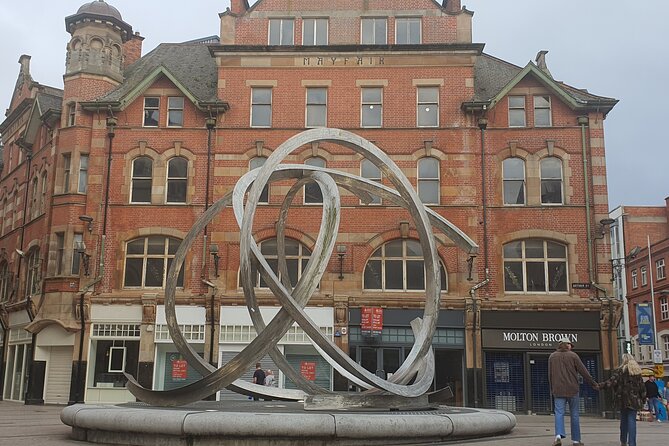
At St. George’s Market, Marti explains the market’s history and how the surrounding area has changed. Depending on when you take the walk, the market itself may be more than a landmark. It is one of the places where you can continue exploring food and local life after the tour.
The route passes through the courts area and the wider Markets district. This is a good example of the walk’s method: you see a physical part of central Belfast, then hear how its use and character have developed over time.
Next comes the Spirit of Belfast, an iconic sculpture viewed along the way. The stop is brief, but it helps keep the route moving toward the Belfast Entries rather than pausing at every landmark for a long lecture.
Same city, a completely different kind of day:
- Titanic Belfast Entrance Ticket: Titanic Visitor Experience Including SS Nomadic
★ 4.5 · 3,698 reviews - Cab Tours Belfast Famous Black Taxi Tours
★ 5.0 · 3,633 reviews - Giant’s Causeway Day Trip from Belfast
★ 5.0 · 3,480 reviews - Game of Thrones and Giant’s Causeway Full-Day Tour from Belfast
★ 5.0 · 2,291 reviews
Entering the Belfast Entries
The Belfast Entries are among the most distinctive parts of the walk. These narrow lanes are tied to the early growth of Belfast, and Marti uses them to discuss rebellious locals, including the United Irishmen.
The lanes also bring the past into present-day Belfast. Street art tells parts of the city’s story, while gastro bars and restaurants show how these older spaces are now used. You are not only hearing about Belfast’s origins. You are seeing how old urban spaces can find new life.
This is one of the places where a small group helps. Narrow lanes are awkward for large parties, and a group capped at eight can move through them with less fuss. If you enjoy street art, local food, and places that feel less formal than a major monument, this section may be a highlight.
Victoria Square and the River Lagan
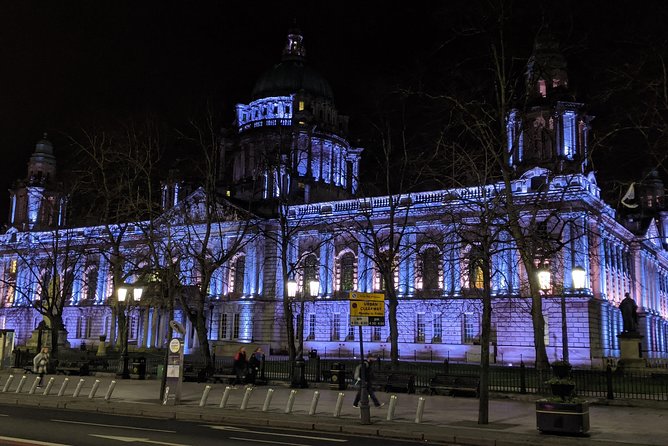
After the Entries, the route reaches Victoria Square Shopping Centre. Marti discusses its past, present, and future before the walk turns back toward the river.
The contrast is useful. You move from old lanes and historic markets into a modern shopping complex, then toward the River Lagan. Belfast’s redevelopment becomes easier to understand when you see these changes close together rather than hearing about them as an abstract plan.
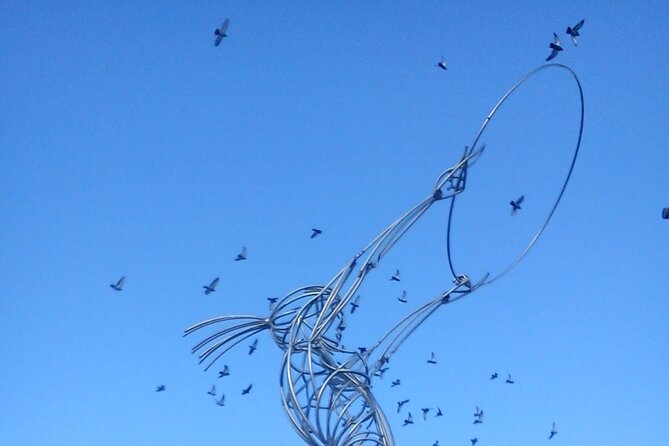
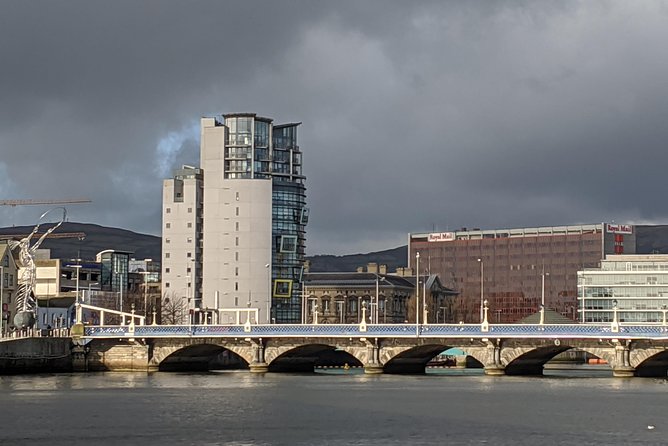
At the Beacon of Hope, Marti explains the meaning of the sculpture and points out what lies farther along the Lagan, including the Big Fish and the route toward the Titanic Quarter. You do not take a separate walk through the Titanic Quarter on this experience. It is viewed across the river and discussed as part of the wider city.
The International Convention Centre Belfast, formerly known by another name, also comes into the conversation. This adds another example of the city’s newer civic and conference development.
The Big Fish and Belfast’s waterside story
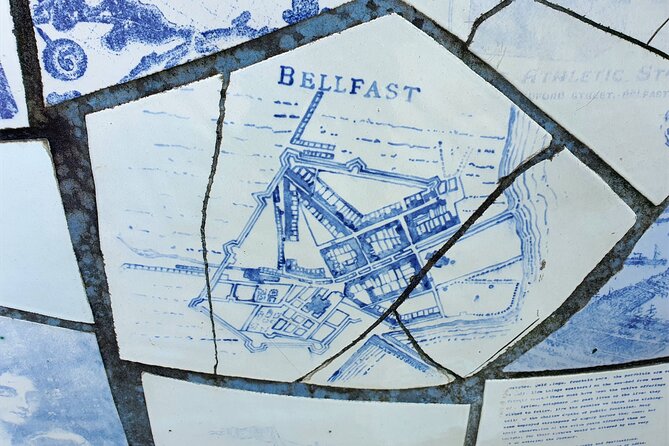
The Big Fish is a memorable riverside landmark, and Marti explains how its history is written on its scales. It is the sort of stop that works well in a walking tour because it combines a strong photo opportunity with a story you can carry away.
From here, you head toward the Cathedral Quarter. The route gives you a sense of how close the Titanic Quarter is across the river, though reaching it would take another walk of about 15 minutes from this area.
This section is less about entering an attraction and more about reading the city from its public spaces. The river, bridges, sculptures, conference buildings, and restored districts all show different stages of Belfast’s development.
Street art, peace, and the Cathedral Quarter
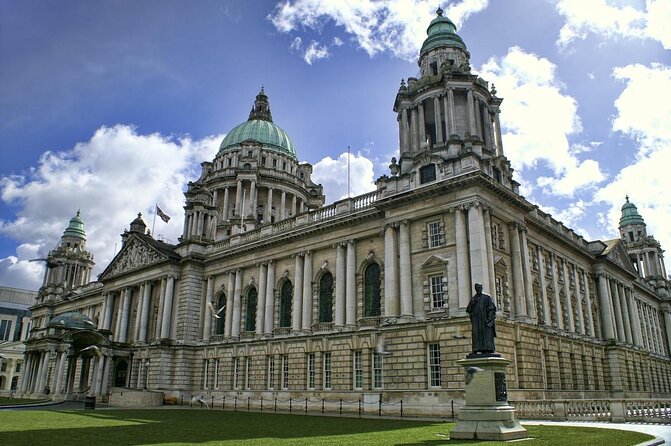
The Cathedral Quarter brings together more street art, restaurants, bars, cultural spaces, and historic buildings. Marti uses the area to discuss how Belfast and its people are moving toward peace and reconciliation.
The subject deserves care, and this is where the tour’s tone matters. The experience is not presented as a dedicated political mural or peace-wall tour. It gives you a broader city-center account, with the Troubles included as part of Belfast’s history rather than treated as the only thing worth seeing.
If you want a detailed study of political murals, sectarian geography, or the peace gates, this may not be enough on its own. Marti offers other walks with a more specific political and street-art focus. For a first visit, though, the wider approach can help you place recent history alongside the city’s architecture, economy, arts, and everyday life.
The Cathedral Quarter is also a good place to continue your evening. Marti points out food and drink options, and the area makes an easy base for further exploration after the walk.
Belfast Cathedral and St. Anne’s Square
The route circles Belfast Cathedral, also called the Cathedral Church of St. Anne. Marti explains its construction and the development now taking place around it.
Again, the stop is more about context than a long interior visit. The tour gives you a way to understand the cathedral as part of the surrounding quarter and the city’s changing center. If you want extended time inside, check the available opening arrangements separately, since the walk itself does not promise a formal cathedral visit.
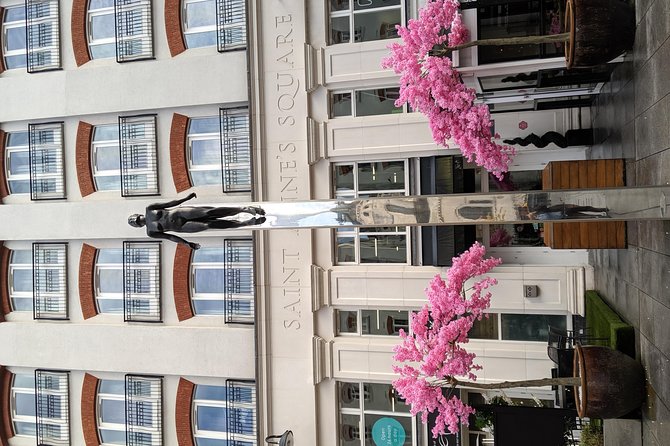
The finish comes at the MAC, the contemporary arts center, in St. Anne’s Square. The square has been described as Belfast’s answer to a European plaza, with restaurants and apartments above. It is a sensible ending point because you can stop for food, continue into the Cathedral Quarter, or use the city center as your next base.
The official endpoint is by the statue of Anne. This differs from the starting point at City Hall, so plan to collect anything you left behind before setting out and allow time to find your way back if needed.
How much walking and information to expect
The advertised duration is about three hours. Actual timing can vary with group size, questions, weather, and how much the conversation follows your interests. Some tours may finish closer to two and a half hours, while others can run longer.
You should have a moderate level of fitness. The route covers a lot of ground on foot, and the pace has been described as brisk but manageable. Wear shoes suited to city streets, and bring rain protection because the experience depends on good weather.
Marti’s style is energetic and full of detail. He can move from Belfast’s early history to architecture, music, current redevelopment, food, street art, and local personalities. That range is the point of the eclectic format, but it can feel like a lot if you prefer a short, quiet introduction.
I suggest doing this walk early in your Belfast stay. You can use the restaurant suggestions later, return to places that caught your eye, and decide if you want a more focused political, mural, or music walk afterward.
Small group value at $36.05
At $36.05 per person, the price is fair for a three-hour guided walk with a maximum of eight people. You are paying mainly for Marti’s local interpretation and the ability to ask questions, not for entry to paid attractions. The listed stops are free to view, so the value rests in the stories, route planning, and personal guidance.
That makes the experience more useful than a basic self-guided route if you want context. You could walk past City Hall, the Big Fish, St. George’s Market, and the cathedral on your own, but you would miss the links between them and the explanations of how Belfast became the city you see today.
The small cap improves the value further. Marti can speak with the group, notice individual interests, and move through narrow places without the drag of a large crowd. It is not a private tour or a luxury experience, so do not book it expecting a fully bespoke itinerary or private transport.
The tour is offered in English and includes a mobile ticket. Service animals are allowed, and the start is near public transport. Children must be accompanied by an adult.
What makes this walk different
The strongest feature is the guide’s broad, personal knowledge of Belfast. Marti is clearly passionate about the city and brings humor, local contacts, personal stories, and practical tips into the walk. He may even recognize people around City Hall or in the neighborhoods, giving the experience a more local feel.
The second strength is the route’s range. You see civic buildings, memorials, churches, shopping areas, markets, sculptures, narrow lanes, street art, the river, a cathedral, and a contemporary arts center. Few stops receive a long visit, but together they give you a solid city-center frame.
I also value the positive but respectful treatment of Belfast’s recent past. The tour does not pretend the Troubles are unimportant, yet it also does not reduce Belfast to conflict. The emphasis on healing, reconciliation, and the city’s future gives the history a useful present-day context.
The main weakness is the same feature that makes the walk appealing: its eclectic nature. If you want one tightly organized subject, such as shipbuilding, political murals, or architecture, a specialist tour may suit you better. Here, the conversation can move quickly across many themes.
The information load may also test your attention. Take notes if you want to remember the recommended books, films, bars, restaurants, and follow-up sights. You will hear more than you can retain in one pass.
Who should book the Marti Way experience
I would choose this walk if you are visiting Belfast for the first time and want a broad introduction with a strong local voice. It suits curious adults, couples, families with older children, and anyone who prefers walking and conversation to sitting on a sightseeing bus.
It is especially useful for a short stay. In three hours, you cover enough of central Belfast to decide where to return, while learning how the city’s industry, politics, architecture, art, and food scene connect.
You should be comfortable with a brisk walk, outdoor conditions, and a guide who likes to talk. If you want a silent photo stop at each landmark, a luxury private setting, or a narrowly focused political tour, choose another format.
The tour has a 4.9 rating from 348 reviews and is recommended by 98 percent of customers. Those figures support the idea that the format works very well for most people, while the one clear negative account is a useful warning: be honest about how much history you want before the walk begins. Marti can adapt, but the experience is built around explanation.
FAQ
Where does the Belfast Eclectic Walking City Center Experience start?
The tour starts at City Hall, Belfast BT1 5GS, UK.
Where does the walking tour finish?
The walk finishes in St. Anne’s Square by the Statue of Anne, near the MAC at 10 Exchange St. West, Belfast BT1 2NJ.
How long does the tour last?
The advertised duration is approximately three hours. The actual length may vary, with some walks taking around two and a half hours and others lasting longer.
How many people can join the tour?
The group is capped at a maximum of eight travelers.
Is this a private or luxury tour?
No. It is a small-group walking tour, not a private or luxury experience.
Are admission tickets included?
The listed stops are free, and the experience includes an introduction to Belfast’s city center rather than paid entry to major attractions.
What happens if the weather is poor?
The experience requires good weather. If it is canceled because of poor weather, you can receive a different date or a full refund.
Should you book it?
Book this tour if you want Belfast explained through its streets, buildings, art, markets, and people, with the Troubles placed in a wider story of change and reconciliation. Marti’s flexible style and eight-person limit are the main reasons to choose it.
Skip it if you prefer a tightly scripted route, a specialist political tour, or a private vehicle. For most first-time visitors who want practical orientation, strong local insight, and plenty of ideas for the rest of their stay, $36.05 is a sensible use of three hours.
Just added around Belfast
- This is Belfast Walking Tours. Our history, our culture.★ 5.0 · 7 reviews
- Giants Causeway Private Tour★ 5.0 · 3 reviews
- The Single Cask Whiskey Experience★ 5.0 · 6 reviews
- Epic Escape Room Adventure to Save King’s Landing in Belfast★ 5.0 · 3 reviews
- Belfast City Sightseeing Tour Including Titanic Museum | 6 Hours★ 4.5 · 9 reviews
- 4 Hours Private Belfast City Tours★ 5.0 · 10 reviews
- Private Guided Walking Tour in Belfast★ 3.5 · 3 reviews
- Private Departure Transfer: Hotel to Belfast Airport★ 5.0 · 9 reviews
Walking Tours, compared.
A History of Terror – Belfast City Centre Walking Tour
Read our review →
Belfast Political Tour-Conflicting Stories Walking Tour
Read our review →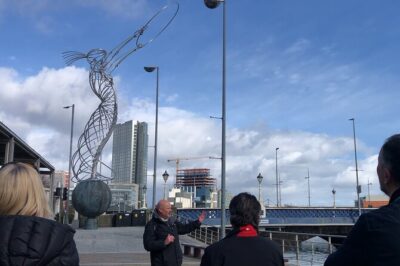
Derry City: The Bloody Sunday Story – Walking Tour
Read our review →
Belfast Troubles Murals Street Art and Peace Wall Walking Tour
Read our review →Browse the lists this tour appears in