
Reviewed · HISTORICAL TOURS
Walking Bogside History Tour in Guildhall
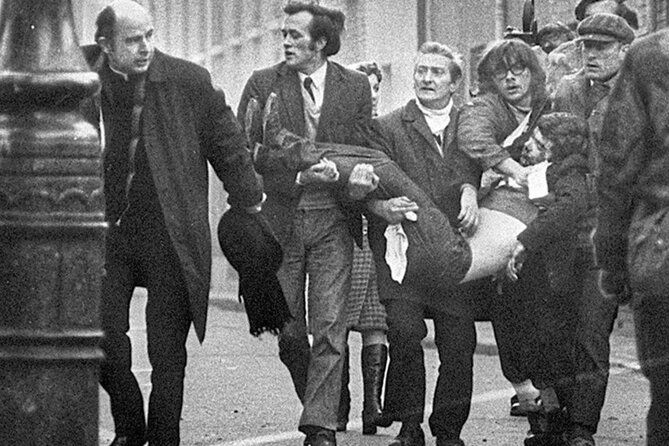
The most powerful part of this Bogside History Tour is its human scale. You walk through the streets where the Battle of the Bogside unfolded, follow part of the original march route, and finish near the Bloody Sunday monument beneath Derry’s walls. Several guides, including Jimmy Toye, John, Paul, Neil, and McCrea, have personal experience of the period.
I like the short route, which gives you a serious history lesson without eating half your day, and I like the chance to hear local memories rather than only dates and official accounts. The main drawback is that the experience depends heavily on your assigned guide. Most visitors praise the warmth and personal detail, but a few report poor communication, weak delivery, or even a no-show.
Key points before you book
- Personal accounts are the main attraction: Jimmy Toye and other guides have described growing up in the Bogside and living through the Troubles.
- The walk ends at powerful sites: You visit Free Derry Corner, pass the Museum of Free Derry, and reach the Bloody Sunday monument.
- The route is short and manageable: The advertised duration is about 1 hour 30 minutes, with no admission fees for the listed stops.
- Expect a clear local viewpoint: The tour offers an authentic account of Bogside life, but it is not presented as a detached, academic survey.
- Small groups help: The maximum group size is 20, and smaller groups can make it easier to ask questions and hear personal stories.
- Allow a little flexibility: Some guides have taken closer to two hours, while one reported experience ended almost immediately after a bathroom stop.
Why the Bogside changes the way you see Derry
Derry’s recent past is not tucked away in a distant museum. It is written across gable walls, marked by monuments, and attached to ordinary streets. The Bogside, known in Irish as Taobh an Bhogaigh, lies outside the city walls and became the center of major events during the Troubles.
This tour helps you connect those places. You are not simply looking at murals and taking photographs. You are hearing how political conflict affected families, teenagers, neighborhoods, and daily life. That matters because Bloody Sunday can feel like a single date in a textbook until you hear an account from someone who was there.
The Battle of the Bogside in 1969 lasted three days and helped set the Troubles in motion. The later events of Bloody Sunday had major political and social effects, both in Derry and beyond. The walk focuses on those events and on the pain left behind in the community.
I would plan this tour early in your time in Derry. It gives you a framework for the murals, the walls, Free Derry Corner, and the city’s divided political memory. You may still want to visit the Museum of Free Derry afterward, since the walking tour passes it but does not list admission or a full indoor visit as part of the experience.
A few more Derry trips to weigh up
- A History of Terror – Belfast City Centre Walking Tour
★ 5.0 · 2,883 reviews - Private Political History & Murals Tour Belfast
★ 5.0 · 182 reviews - Belfast Political/history/troubles private taxi/cab tour
★ 5.0 · 69 reviews
Starting at Guildhall and entering the Bogside
The meeting point is Derry Guildhall, at Guildhall Square, Londonderry BT48 7BB. The location is near public transportation, which makes it practical if you are arriving without a car. Confirmation is provided when you book, so keep that information handy and check the exact meeting instructions before setting out.
From Guildhall, the walk retraces parts of the original march connected with Bloody Sunday. That turns the history into a physical route. You can see where people moved, where the crowd gathered, and how the city’s walls relate to the Bogside below them.
The tour description lists about one hour for the Bogside portion, followed by about 30 minutes at Free Derry Corner and the final sites. In practice, you should allow around 90 minutes, and possibly closer to two hours. One guide, John, has been described as taking about two hours while offering a detailed account.
The walk itself is not presented as long or strenuous. One description calls it accessible and not a long walk. Still, the subject is heavy, and you will be on your feet while listening. Wear comfortable shoes, and arrive ready to keep with the group rather than treating the route as a casual photo stop.
The Bogside murals and the memory of the Troubles
The large gable-wall murals by the Bogside Artists are among the area’s best-known sights. They give the tour a visual language, showing how local memory and political identity have been expressed in public space.
The murals are important, but they are not the whole story. A guide can explain how the area became a focus during the Battle of the Bogside and how the conflict shaped the community. The best guides add small human details, humor, and personal memories without losing sight of the suffering involved.
That balance comes up repeatedly in the strongest accounts of this experience. Jimmy Toye is praised for combining tragic stories with moments of humor. John is described as warm, candid, and willing to explain events in detail. Paul is remembered for being funny as well as informed, while McCrea is praised for answering questions and keeping a group of about 10 or 11 people engaged.
You should expect a clear point of view. A guide who lived through the events will not sound like a neutral narrator reading from a script. That is a strength if you want local memory and emotional truth. It is a limitation if you are seeking a fully balanced account of every political position. I would treat the tour as one important local perspective, then use the Museum of Free Derry or other sources to broaden your understanding.
Free Derry Corner and the final walk
The route passes the Museum of Free Derry and continues toward Free Derry Corner. The corner is within sight of the Bloody Sunday monument and beneath Derry’s city walls, making this final section especially concentrated.
Free Derry Corner has become one of the defining symbols of the Bogside. Its location helps you understand the relationship between the neighborhood and the walled city above it. The ending also places the Bloody Sunday monument within the same setting as the streets and walls connected to the events.
This is where the tour’s emotional weight is likely to build. Guides have recounted the events leading up to Bloody Sunday, the deaths and injuries, and the effect on their families and community. One guide, for example, has spoken about losing his own father. Those details make the history personal, though they can also make the walk upsetting.
Give yourself a quiet moment at the end rather than rushing straight into another attraction. The official information says the activity ends back at the Guildhall meeting point, while the route description says it concludes at the Bloody Sunday monument. Because those details do not perfectly match, confirm the finishing arrangement with the guide on the day.
Same city, a completely different kind of day:
- Private Guided Walking Tour in Derry City
★ 5.0 · 635 reviews - Derry City: The troubles Bogside walking tour
★ 5.0 · 503 reviews - Derry City: The Bloody Sunday Story – Walking Tour
★ 5.0 · 186 reviews - Discover the City Walls – Small Group Public or Private Tour
★ 5.0 · 160 reviews
The guides make or break the experience
The tour has several named guides associated with especially strong experiences. Jimmy Toye is praised for firsthand memories of the Battle of the Bogside and Bloody Sunday, including his experience as a young person during those events. John is described as detailed, personable, and connected to the local community.
Paul has been praised for his humor, personal connection, and ability to make the past understandable for families. McCrea is described as passionate, direct, and willing to answer questions. Neil is remembered not only for speaking from personal experience but also for making a special effort to assist a woman using a wheelchair.
These accounts point to the tour’s greatest value: you may hear living memory in the place where it happened. The stories can be funny, sad, angry, and deeply affecting in the same hour. That mixture often gives the walk more force than a standard sightseeing tour.
But you should know about the uneven reports. One person found the guide cold, rushed, and too focused on delivering facts without inviting questions. Another could not hear the guide well enough to follow the talk and suggested a microphone or speaker system. A separate booking involved a guide who did not appear, followed by an upsetting exchange when contact was made later.
Those reports are not the usual picture, given the overall 4.9 rating from 280 reviews and a recommendation rate of 98 percent. Still, they are useful warnings. Stay near the guide, speak up if you cannot hear, and ask questions early. If the group spreads out, the quality of the experience can drop quickly on a busy street.
How much value do you get for $27.73?
At $27.73 per person, this is a reasonable price for a 90-minute walking tour with a strong local focus. There are no separate admission fees for the listed stops, and the value comes from interpretation rather than expensive entry tickets.
You are paying for access to a guide’s time, local memory, and explanation of places you could technically visit on your own. You could walk past the murals and Free Derry Corner for free, but you would miss much of the connection between the sites. If your interest is modern Irish history, the added context is worth more than the cost of admission to a typical attraction.
The price is also useful for a short stay. If you have only one day in Derry, the tour can provide a compact introduction to the Bogside without requiring a full-day commitment. One person described it as the highlight of a visit lasting less than 24 hours.
The value is less certain if you dislike emotionally intense tours or prefer a strictly neutral presentation. You may also feel disappointed if your guide speaks too softly, does not allow questions, or fails to appear. The high overall rating suggests those problems are uncommon, but the experience is personal and guide-dependent.
Group size, walking pace, and practical comfort
The maximum group size is 20 people. That is small enough for a personal walk, though a full group may make it harder to hear, especially outdoors. Smaller departures can be particularly useful here because personal stories and questions are central to the experience.
Most people can participate, and service animals are allowed. The tour is near public transportation. The supplied information does not promise a fully step-free route or set out detailed wheelchair access, so contact the provider if you have specific mobility needs. Neil’s considerate handling of a wheelchair user is encouraging, but it should not be treated as a formal accessibility guarantee.
The activity is offered in English only. You should also be comfortable with local accents, since the tour is delivered by Derry guides and may include the distinctive local speech heard in the television series Derry Girls. That accent is part of the local character, but it can take concentration if you are not used to it.
Bring water and dress for an outdoor walk. The tour is short, but you may spend the full time outside. Most important, give the subject the attention it deserves. This is not a light city stroll with a few historical facts added on.
Who will appreciate this walk most?
I would choose this tour if you want to understand Derry through the people who lived through the Troubles. It suits visitors with an interest in modern history, political conflict, civil rights, memory, and the way communities preserve difficult stories.
It is also a good fit for visitors who have already seen the city walls and want to understand what lies below them. The Bogside murals and Free Derry Corner mean more when you know why they were created and how the area became a center of resistance and conflict.
Families can take the tour, but parents should decide if the subject is suitable for their children. The guide may discuss death, injury, violence, and grief in direct terms. The humor used by some guides can provide breathing room, but it does not make the material light.
I would be more cautious if you want an academic lecture, a broad survey of all sides, or a tour with polished audio equipment. You may find the personal approach less detached than expected. If you have hearing difficulties, ask at the start where to stand and tell the guide if you are struggling to follow.
Booking, cancellation, and timing advice
The tour is commonly booked about 15 days in advance, so I would not leave it until the last minute if your schedule is fixed. Confirmation arrives at booking, and the activity is available as a mobile ticket.
Free cancellation is allowed up to 24 hours before the start time for a full refund. Changes or cancellations made less than 24 hours before the local start time are not accepted for a refund. That gives you useful flexibility, but you still need to check your plans carefully.
Since the listed meeting point is Guildhall, arrive there with time to spare. The meeting instructions have been called vague by one person, so make sure you know exactly where to wait. If you do not see the guide, use the contact details supplied with your booking rather than wandering off.
Should you book the Bogside History Tour?
Book it if you want a direct, local account of Bloody Sunday and the Troubles, especially if Jimmy Toye, John, Paul, McCrea, or Neil is leading your departure. The strongest version of this tour combines personal memory, humor, hard facts, and a walk through the actual streets where the events unfolded.
The main caution is consistency. A few poor experiences involve unclear meeting arrangements, low volume, a detached guide, or a no-show. Those problems deserve attention, even though the overall score is excellent.
For most people interested in Derry’s recent past, I would book this tour early in the visit and follow it with the Museum of Free Derry. At $27.73, it offers a lot of context for a modest price. Just arrive prepared for a serious subject, stay close enough to hear, and remember that the tour’s strength is its personal viewpoint, not a perfectly neutral history lecture.
FAQ
Where does the Walking Bogside History Tour start?
The tour starts at Derry Guildhall, Guildhall Square, Londonderry BT48 7BB, UK.
How long does the tour last?
The advertised duration is about 1 hour 30 minutes. Some tours have taken closer to two hours, so allow a little extra time.
Where does the tour finish?
The route description says it concludes at the Bloody Sunday monument near Free Derry Corner and beneath the city walls. The additional information says the activity ends back at the meeting point, so confirm the final drop-off point with your guide.
What places does the tour visit?
The walk enters the Bogside, retraces part of the original Bloody Sunday march, passes the Museum of Free Derry, visits Free Derry Corner, and reaches the Bloody Sunday monument.
Is admission to the stops included?
The listed stops have no admission fee. The tour passes the Museum of Free Derry, but the information does not say that an indoor museum visit is included.
What language is the tour offered in?
The tour is offered in English.
How many people can join the tour?
The maximum group size is 20 people. Smaller groups may make it easier to hear the guide and ask questions.
Is the tour suitable for most people?
The information says most people can participate. Service animals are allowed, and the tour is near public transportation. Contact the provider if you need specific mobility arrangements.
Can I cancel for a full refund?
Yes. You must cancel at least 24 hours before the local start time for a full refund. Cancellations or changes made less than 24 hours before the start time are not accepted for a refund.
Just added around Derry
- Derrie Danders: A Self-Guided Audio Tour of the Riverside and South City★ 5.0 · 3 reviews
- Derrie Danders: Wander around the Waterside on a self-guided GPS audio tour★ 4.5 · 3 reviews
- Full Day Private Luxury Tour of Causeway Coast (Giants Causeway)★ 5.0 · 5 reviews
- Derrie Danders: A Self-Guided Audio Tour of the Walled City’s West★ 4.5 · 6 reviews
- Derrie Danders: Unveiling Derry’s Dark & Haunted Past Audio Tour★ 4.5 · 3 reviews
- Giant’s Causeway & Game of Thrones (luxury Private Tour)★ 5.0 · 15 reviews
- Herstory Derry Tour★ 5.0 · 16 reviews
- Private Guided Tour of Causeway Coastal Route★ 5.0 · 31 reviews
Historical Tours, compared.
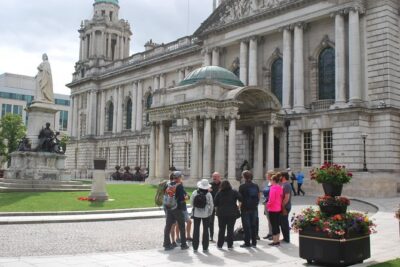
A History of Terror – Belfast City Centre Walking Tour
Read our review →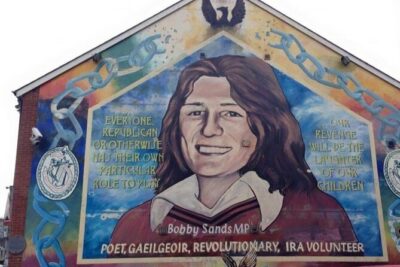
Private Political History & Murals Tour Belfast
Read our review →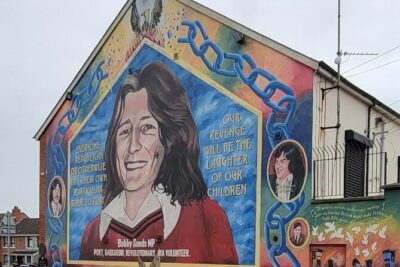
Belfast Political/history/troubles private taxi/cab tour
Read our review →
Belfast Walking Tour: City Centre History, Troubles & Stories
Read our review →
1 Hour Express Belfast Taxi/Cab Tour History, Murals, Troubles
Read our review →
Belfast political history and mural unique private 90 min tour
Read our review →
Belfast by the Glass: alternative history of Belfast, sip by sip.
Read our review →
2 Hour Terror and Mural History Belfast taxi Private Tour
Read our review →Browse the lists this tour appears in