
Reviewed · WALKING TOURS
Belfast Political Tour-Conflicting Stories Walking Tour
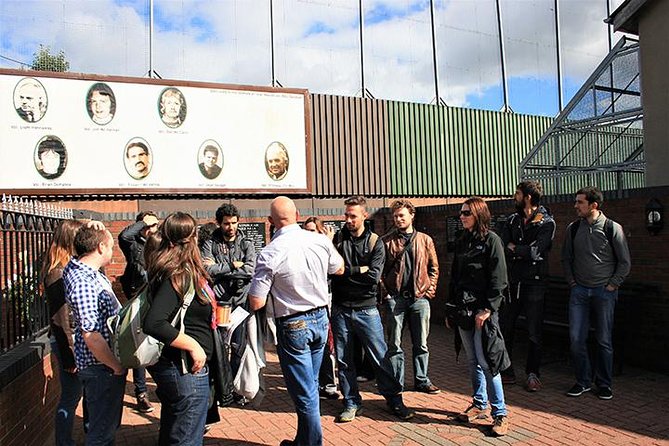
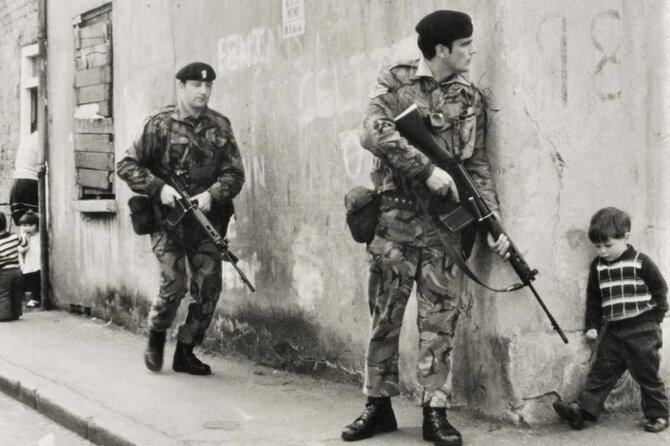
The striking thing about this Belfast walk is that you hear two personal accounts of the Troubles in the neighborhoods where the conflict unfolded. One guide takes you through the nationalist Falls area, then another leads you along the loyalist Shankill Road. The Peace Wall is not a museum display here. It is part of daily life, with gates that still close at night.
I like the tour’s honest structure and its use of local guides who lived through the conflict. I also like the way it connects murals and memorials to specific people and events, rather than treating Belfast’s political past as a collection of colorful walls. The main drawback is simple: this is a full three hours outdoors, often in wind, with difficult and emotional material. Come prepared to listen, walk, and sit with uncomfortable ideas.
Key points to know before you book
- Two sides of one divided city: Begin near Divis Tower and walk through the Falls before crossing to the Shankill area.
- Personal voices: Guides such as Jack, Paul, Ian, and Mark have presented Republican and loyalist perspectives from lived experience.
- Major Belfast murals: See the Bobby Sands mural, the International Wall, Bombay Street, and Shankill murals.
- Memorials with difficult stories: Stops include the D Company memorial, Bayardo bombing site, UVF memorial, Frizzells Fish Shop bombing site, and Somme Memorial.
- Three hours on foot: The route is generally moderate and not described as hilly, but good shoes and warm layers matter.
- Good value for serious history: At $36.05 per person, you are paying for a small-group walking experience with two guides and access to firsthand stories.
Why this tour gives Belfast’s Peace Wall real meaning
A black cab tour can show you Belfast’s divided neighborhoods from the comfort of a vehicle. This walk asks you to move through them on foot. That changes the experience. You notice how close the Falls and Shankill Roads are, how quickly the murals change, and how a wall built as a security measure still shapes ordinary movement.
The route begins at Divis Tower, near the Falls Road side of West Belfast. From there, you spend about 90 minutes in the nationalist area before continuing for another 90 minutes on the Shankill Road. The route ends on Lower Shankill Road, about an eight-minute walk from the starting point and roughly 15 minutes from Belfast city centre.
The physical closeness of the two communities is one of the tour’s most useful lessons. These districts are not distant parts of a country. They sit beside one another, separated by the Peace Wall and by memories that remain raw. You may see gates in the wall that are still locked at around 8 p.m., a practical detail that says more than a tidy peace agreement can.
The guides aim to explain how people on each side understood the conflict. That does not mean every claim will feel comfortable or neatly balanced. A personal account is shaped by memory, loyalty, loss, and anger. The value is in hearing those forces directly and thinking carefully about what you are being told.
A few more Belfast trips to weigh up
- A History of Terror – Belfast City Centre Walking Tour
★ 5.0 · 2,883 reviews - Best of Belfast Walking Tour
★ 5.0 · 399 reviews - Belfast Eclectic Walking City Center Experience, The Marti Way
★ 5.0 · 348 reviews
Starting near Divis Tower and the Falls Road
The first section focuses on the nationalist side of West Belfast. Guides have included Jack and Paul, with the exact pairing depending on the day. Their presentation may cover Republican views, local memories, and the way the community understood British rule, identity, policing, imprisonment, and armed struggle.
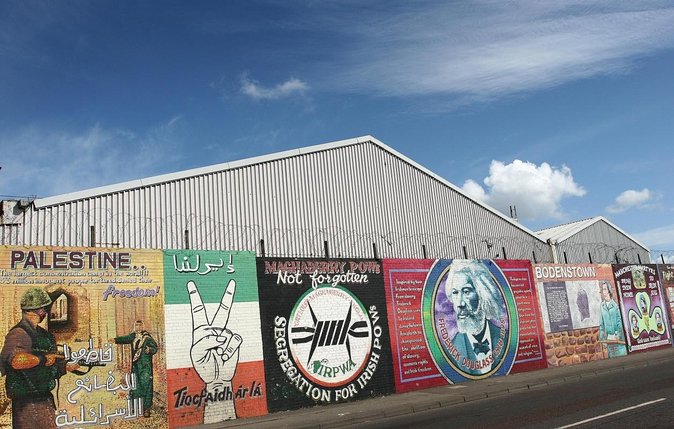
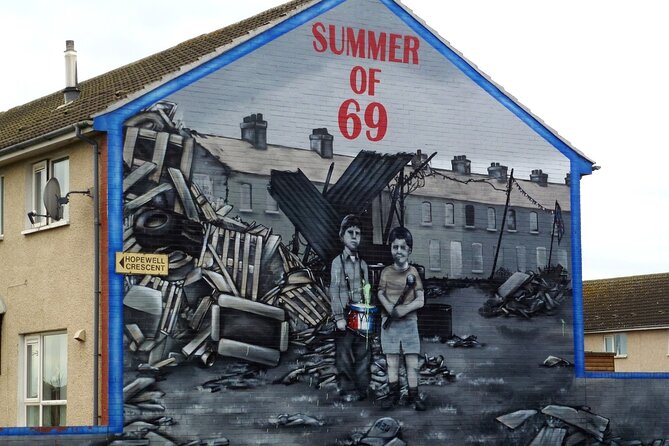
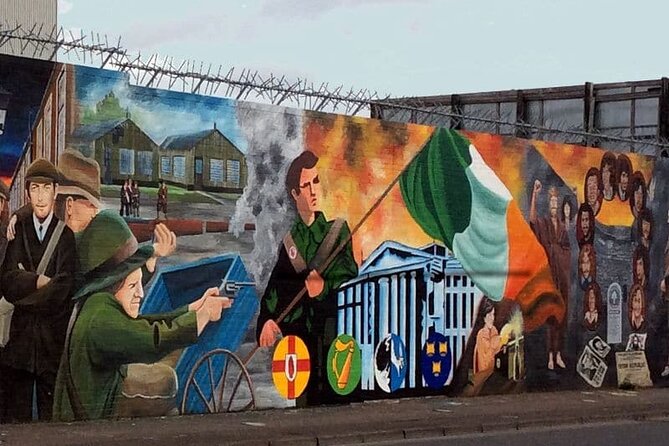
The route includes the International Wall, a long display of political murals and messages from Belfast and beyond. It is an important introduction because the artwork is not simply decorative. The murals record political positions, honor allies, mark deaths, and connect local events to wider struggles.
You then see the Bobby Sands mural, one of Belfast’s best-known political images. Bobby Sands was an IRA prisoner who died during the 1981 hunger strike. The mural carries a great deal of symbolic weight, and the guide’s explanation helps place it within the Republican story rather than leaving you to guess at its meaning.
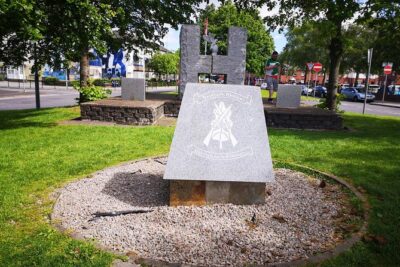
The D Company memorial garden and Bombay Street add a more local scale. Memorial gardens often turn a broad political conflict into a list of names and faces. Bombay Street recalls one of the places damaged by sectarian violence, and the stop helps show how the conflict affected homes and streets, not only political leaders.
This part may feel stronger for visitors who want dates, names, and political context. One account described the Falls guide as especially good at setting out the basic history of the Troubles, including significant people and events. That matters because murals alone can be hard to read if you do not know the story behind them.
At the same time, you should not expect a neutral lecture in the academic sense. The guide speaks from a particular side. That is the point of the tour, but it also means you should listen with curiosity and judgment. You may hear anger toward England or Britain that is difficult to accept, even while gaining a clearer idea of why those feelings developed.
Crossing to Shankill Road and the loyalist story
The second half moves into the loyalist area along Shankill Road. This is where the tour’s title becomes especially clear. A second guide presents the conflict from a Unionist or loyalist perspective, often drawing on memories of friends, neighbors, and family members lost during the violence.
Guides have included Mark and Ian, although names and pairings can vary. The loyalist section includes the Shankill Memorial Garden, the Bayardo bombing site, a UVF memorial, the Frizzells Fish Shop bombing site, and the Somme Memorial.
These stops are valuable because they shift the focus from Republican volunteers and nationalist symbolism to loyalist victims, military identity, and the fear felt within Protestant communities. The Somme Memorial, for example, connects local identity to the First World War and to the memory of Protestant and Unionist sacrifice. You may not agree with every political message, but you will see how historical memory helps shape community identity.
The Bayardo and Frizzells stops bring the cost of violence into sharper view. The stories here include men, women, and children killed in bombings and shootings. The memorials are not abstract political statements. They point to individual lives and to the grief carried by families and neighborhoods.
This half of the tour can feel more uneven than the Falls section. Some guides explain the broader setting carefully. Others focus more on the names, places, and personal tragedies. If you want a clean timeline of the conflict, you may find yourself filling in gaps. If you want to understand how violence was remembered by people living in the area, this direct approach can be powerful.
The best guides do not ask you to choose a winner. They show how both communities experienced fear and loss, then explain why trust remains limited. You will hear views shaped by real suffering, but suffering does not automatically make every political argument correct. Keeping that distinction in mind will make the walk more useful.
Murals, memorial gardens, and the details a bus cannot show
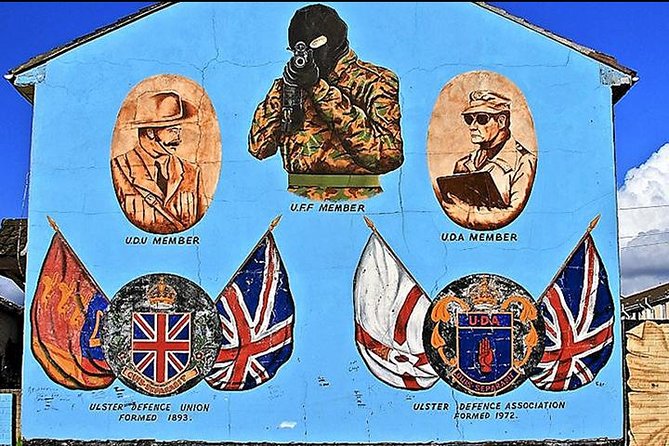
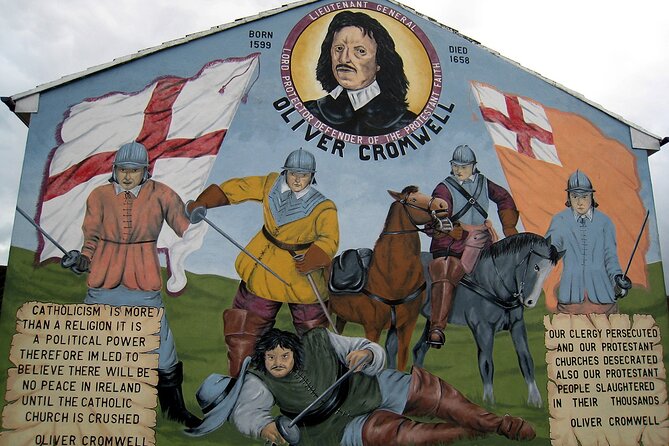
Belfast’s murals are easy to photograph, but a photograph cannot explain why one figure is honored, why another is condemned, or why a certain street corner remains sensitive. The guide supplies that missing layer.
On the Falls side, the International Wall and Bobby Sands mural show how Republican communities use public art to express identity and political goals. The D Company memorial garden gives the area a more intimate tone. You are not only looking at art. You are being asked to consider who is remembered, who is left out, and how a neighborhood tells its own story.
On the Shankill side, murals and memorials reflect a different set of loyalties. The Union Jack, military references, loyalist organizations, and commemorations of local deaths can seem stark when viewed beside the Falls murals. That visual contrast is one of the clearest parts of the walk.
You should also expect the route to include busy public streets. One unhappy account raised concerns about traffic noise, muffled sound, and a guide who was hard to hear. That appears to have been an isolated failure, but it points to a real issue: this is a street tour, not a quiet museum visit. Stay close to the guide and speak up if you cannot hear.
The maximum group size is 20 people. That is small enough to keep the guides within reach, but a group of 20 beside a busy road can still spread out. Pay attention at crossings and stops, and do not hesitate to move closer when the guide begins speaking.
Same city, a completely different kind of day:
- Titanic Belfast Entrance Ticket: Titanic Visitor Experience Including SS Nomadic
★ 4.5 · 3,698 reviews - Cab Tours Belfast Famous Black Taxi Tours
★ 5.0 · 3,633 reviews - Giant’s Causeway Day Trip from Belfast
★ 5.0 · 3,480 reviews - Game of Thrones and Giant’s Causeway Full-Day Tour from Belfast
★ 5.0 · 2,291 reviews
The human cost of hearing both sides
The tour works best when you understand that the guides are not actors delivering a scripted performance. Ex-political prisoners and people with direct experience of the conflict have led sections of the walk. Their memories can make the past feel immediate.
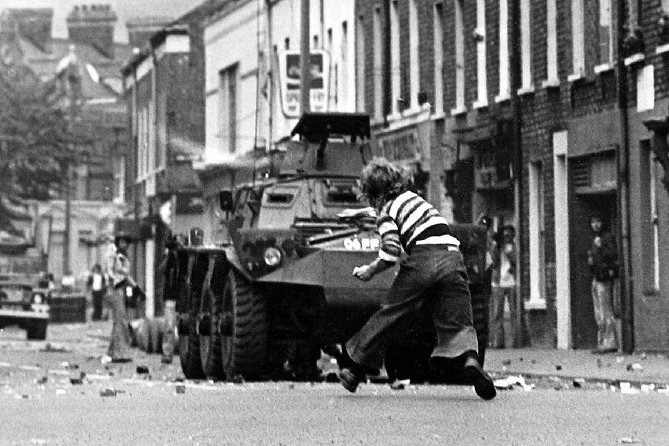
That immediacy is also the emotional challenge. You may hear about people murdered in bombings, friends lost to violence, prison experiences, and the bitterness that remains between neighboring communities. One guide may talk about Republican volunteers with a sense of respect, while another may describe victims from the loyalist community and the damage caused by armed groups.
The strongest moments come when both guides express a desire for peace despite their very different histories. That does not erase what happened, and it does not produce an easy answer. It does show how people who once occupied opposing positions can speak to visitors and, at least in the setting of the tour, share the same route.
I would not book this as light sightseeing between pubs and shopping. You may leave with more questions than answers. That is a good result for this subject, but only if you are willing to think about what you heard instead of searching for a simple moral scorecard.
The tour can also lead to difficult conversations after it ends. Give yourself time before scheduling another serious attraction. A quiet drink or meal later in the day may be more useful than rushing straight into another packed activity.
Walking time, weather, and what to wear
Plan on about three hours outside. Each main section lasts roughly 90 minutes, and the pace is moderate because the guides stop often to explain murals, memorials, and events. The route is not described as hilly, but three hours on pavement still calls for comfortable footwear.
Belfast weather can change quickly, and the Peace Wall area can feel windy. Wear warmer layers than you think you need, even on a bright day. Bring water, and consider a small snack. A comfort break may be available early in the second section, with an opportunity to get a drink, but you should not depend on finding refreshments exactly when you want them.
A rain cancellation is possible because the experience requires suitable weather. If poor conditions cancel the walk, you can be offered another date or a full refund. You can also cancel for a full refund up to 24 hours before the start time. Changes or cancellations inside that 24-hour window are not refunded.
The meeting point is at Divis Tower, Belfast BT12 4QA. The walk ends at 154 Shankill Road, Belfast BT13 2BE. Since the finish is not the same spot as the start, plan your next move. The guide can help with directions or getting a taxi, and the end point is an eight-minute walk back toward the start or about 15 minutes from the city centre.
Is $36.05 a fair price?
At $36.05 per person, this is not the cheapest way to see Belfast’s murals. A self-guided walk costs nothing, and a black cab tour may offer more ground with less effort. But the price here covers about three hours, two neighborhood sections, a group capped at 20, and guides who speak from personal experience.
The value depends on what you want. If you only need photographs of the murals, save your money and walk around with a map. If you want the political meaning behind the images, the names behind the memorials, and a chance to hear conflicting accounts in the places where events happened, the fee is reasonable.
The tour is offered in English with a mobile ticket. Most people who can manage a three-hour city walk should be able to take part, and service animals are allowed. Because the subject is serious and the route uses public streets, it suits adults and mature older children better than very young children, although the supplied information does not set a formal age limit.
The 4.6 rating from 460 ratings, with 93 percent recommending it, suggests a dependable experience overall. Still, the occasional problem matters. Guide quality, sound, weather, and the difficult nature of the topic can shape your day. This is one of those tours where the people leading it matter a great deal.
Who should book this Belfast political walk?
I would choose it if you want to understand why the Peace Wall still exists and how the Troubles continue to affect daily life. It is especially useful early in a Belfast visit, before you spend time exploring the murals alone.
You will get the most from it if you can listen to views you dislike without treating the guide as a political spokesperson for yourself. An open mind does not mean accepting every claim. It means allowing each guide to explain how his community saw the conflict, then making your own judgments.
This is also a good match for anyone comparing a political walking tour with a black cab tour. The walking format gives you more time at specific locations and puts you directly in the neighborhoods. The cab option may be easier on your legs, but this route provides a closer look at the Peace Wall and a clearer split between the Falls and Shankill perspectives.
Should you book the Conflicting Stories Walking Tour?
Book it if you want a serious, firsthand account of Belfast’s divided past, and if you are ready for three hours of walking in changeable weather. The two-guide format, the personal stories, and the specific memorial stops make this more than a mural photo stop.
Skip it if you want a polished, detached history lesson or a short sightseeing loop. The presentation can vary by guide, some explanations may feel strongly partisan, and one section may be more detailed than the other. For most visitors who want to understand Belfast beyond its city centre, though, this is a worthwhile and sobering choice. Bring good shoes, warm layers, and enough patience to hear both stories.
FAQ
Where does the tour start?
The tour starts at Divis Tower, Belfast BT12 4QA, in West Belfast.
Where does the tour end?
It ends at 154 Shankill Road, Belfast BT13 2BE, on Lower Shankill Road. The finish is about an eight-minute walk from the starting point and about 15 minutes from Belfast city centre.
How long does the walking tour last?
The experience lasts approximately three hours. About 90 minutes are spent around the Falls and another 90 minutes around Shankill Road.
What places will I see?
Stops include the International Wall, Bobby Sands mural, D Company memorial garden, Bombay Street, Shankill Memorial Garden, Bayardo bombing site, UVF Memorial, Frizzells Fish Shop bombing site, and Somme Memorial.
Is the tour suitable for people who are not very familiar with the Troubles?
Yes. The guides explain the political history and the local stories, though the amount of background detail can vary between guides. The subject is complex and emotionally serious.
How many people can join the tour?
The maximum group size is 20 people.
What happens if the weather is poor or I need to cancel?
You can cancel at least 24 hours before the start time for a full refund. If poor weather causes the tour to be canceled, you will be offered another date or a full refund.
Just added around Belfast
- Giants Causeway Private Tour★ 5.0 · 3 reviews
- This is Belfast Walking Tours. Our history, our culture.★ 5.0 · 7 reviews
- The Single Cask Whiskey Experience★ 5.0 · 6 reviews
- Epic Escape Room Adventure to Save King’s Landing in Belfast★ 5.0 · 3 reviews
- Belfast City Sightseeing Tour Including Titanic Museum | 6 Hours★ 4.5 · 9 reviews
- Private Guided Walking Tour in Belfast★ 3.5 · 3 reviews
- 4 Hours Private Belfast City Tours★ 5.0 · 10 reviews
- Private Giants Causeway Tour Tour For Up to 15 People★ 4.0 · 5 reviews
Walking Tours, compared.
A History of Terror – Belfast City Centre Walking Tour
Read our review →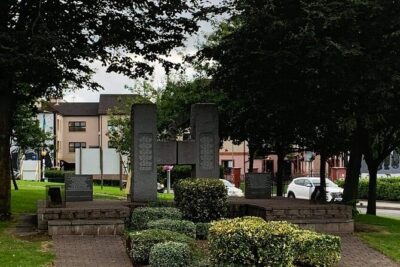
Belfast Eclectic Walking City Center Experience, The Marti Way
Read our review →
Derry City: The Bloody Sunday Story – Walking Tour
Read our review →
Belfast Troubles Murals Street Art and Peace Wall Walking Tour
Read our review →Browse the lists this tour appears in