
Reviewed · WALKING TOURS
1798 A Belfast Rebellion Walking Tour
The most interesting part of this walk is the way it turns Belfast’s streets into a story about revolution, religion, and trade. You follow the United Irishmen through churches, pubs, meeting rooms, and old lanes, while Colin Shaw introduces the people behind the rebellion, including Thomas Russell, Henry Joy McCracken, and Mary Ann McCracken.
I like the clear focus on Presbyterian Belfast, a side of the city’s past that is easy to miss, and I like the links to the American War of Independence and French Revolution. The main drawback is pace: two and a half hours on foot, with plenty of names and political detail, may feel demanding on a cold or wet morning.
Key points to know
- 1798 through Belfast’s streets: The rebellion is explained at the places where its supporters met, worshipped, worked, and faced punishment.
- A strong guide-led experience: Colin Shaw is the named guide praised for bringing the period’s people and politics to life.
- More than military history: The route covers Catholic penal laws, Presbyterian merchants, abolition, slavery, and Belfast’s early development.
- Nine central stops: City Hall, Linen Hall, Kelly’s Cellars, churches, Assembly Rooms, and the old Entries all form part of the circuit.
- Easy to hear in a group: A Vox whisper set lets you follow the guide without crowding around him.
- Good value for history-minded visitors: At $35.73, the price buys 150 minutes of guided context rather than a quick look at monuments.
Belfast’s 1798 story is not confined to a battlefield or a single memorial. It is spread across the city center, in places that still serve religious, civic, social, and commercial roles. This walking tour connects those locations and explains how Belfast’s early Presbyterian settlers, Catholic population, merchants, reformers, and rebels were tied to one turbulent period.
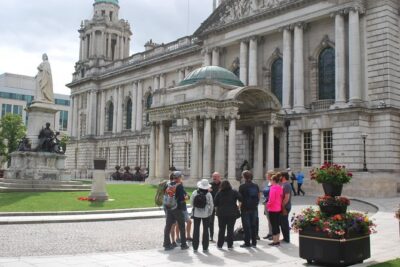
You meet at Belfast City Hall at 10:00 am. The tour ends at the same place, beside the statue of Mary Ann McCracken. That circular route is handy if you are spending the day in central Belfast, and it gives you an orientation walk before visiting other sights.
The advertised duration is about two hours and 30 minutes. The group can include up to 25 people, so it is not a private walk, but the supplied Vox whisper set should help you hear Colin clearly as you move between stops. You should still expect a moderate amount of walking and standing.
City Hall sets the political stage
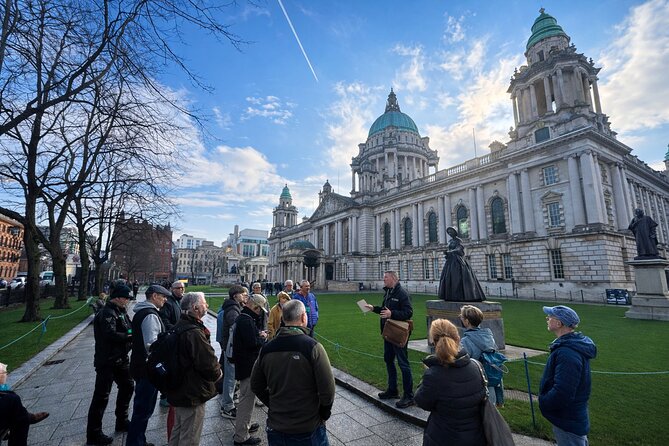
The first stop is Belfast City Hall, where Colin introduces the conditions that led to the United Irishmen Rebellion of 1798. This opening matters because the tour is not simply a sequence of old buildings. You first get the political frame, then see how that larger conflict affected ordinary Belfast institutions and families.
The City Hall meeting point is easy to find at Donegall Square North. Since the tour begins and ends here, you can use it as a simple reference point for the rest of your day.
The opening takes about 15 minutes. That is enough time to establish the main themes without spending the whole tour on background. I would pay close attention here, since later stops add names and events at a fairly steady rate.
A few more Belfast trips to weigh up
- A History of Terror – Belfast City Centre Walking Tour
★ 5.0 · 2,883 reviews - Belfast Political Tour-Conflicting Stories Walking Tour
★ 4.5 · 459 reviews - Best of Belfast Walking Tour
★ 5.0 · 399 reviews
Linen Hall introduces Thomas Russell
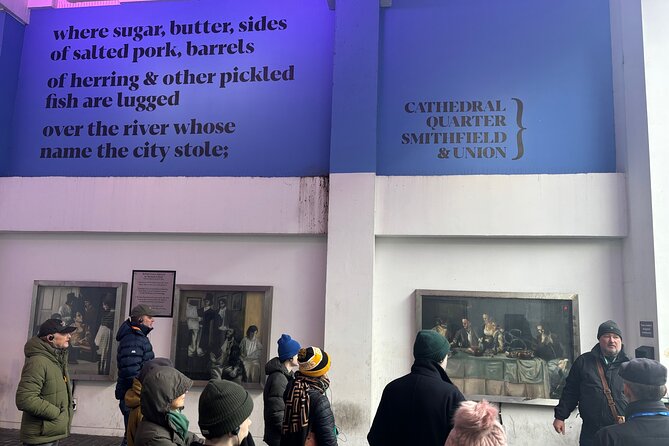
From City Hall, the route moves to The Linen Hall. The library’s connection to Thomas Russell gives the rebellion a personal face. Russell was a United Irishman and its most infamous librarian, so this stop shifts the story from broad political forces to one individual’s role in Belfast.
This is one of the places where a good guide makes a real difference. The route uses blue plaques and old buildings, but plaques alone rarely explain how a person fitted into the city’s political life. Colin’s approach, as reflected in the supplied comments, focuses on biographies and helps you connect names with actual people.
The stop lasts about 10 minutes. You will not get a long library visit here. Think of it as a compact historical explanation outside or around the building, not a separate museum admission.
St Mary’s shows the force of the penal laws
At St Mary’s Roman Catholic Church, the focus turns to Ireland’s Catholics and the restrictions imposed by the penal laws. You hear how those laws affected Catholic life and how the chapel was established in the late eighteenth century.
This is an important counterweight to the tour’s strong Presbyterian thread. The rebellion story can sound like a dispute among Protestant political groups if Catholic experience is left out. St Mary’s helps show the religious divisions and unequal rights that shaped Ireland before 1798.
The church stop is scheduled for about 10 minutes. That makes it a useful lesson in context, but not a full church tour. If you want to study the building’s interior or sit quietly, you should plan a separate visit if opening arrangements allow.
Kelly’s Cellars connects politics with pub life
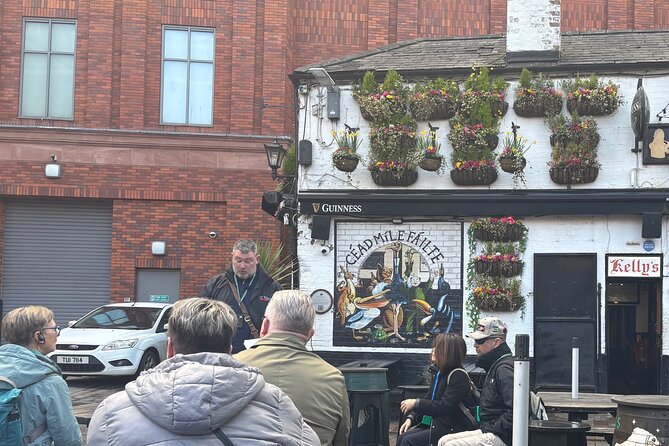
Kelly’s Cellars is one of the most memorable stops because it was a secret meeting place for the United Irishmen. It is also a historic pub, giving the walk a more social setting after the churches and civic buildings.
I like this kind of stop because it makes political history feel less abstract. Meetings for a rebellion did not happen only in grand halls. They also relied on trusted networks and ordinary places where people could gather without drawing attention.
The official stop is about 10 minutes. You should not assume that a full pub visit or meal is included. A mid-tour coffee pause has formed part of the experience described by one participant, but coffee is not listed among the tour inclusions, so bring money if you would welcome a drink.
Same city, a completely different kind of day:
- Titanic Belfast Entrance Ticket: Titanic Visitor Experience Including SS Nomadic
★ 4.5 · 3,698 reviews - Cab Tours Belfast Famous Black Taxi Tours
★ 5.0 · 3,633 reviews - Giant’s Causeway Day Trip from Belfast
★ 5.0 · 3,480 reviews - Game of Thrones and Giant’s Causeway Full-Day Tour from Belfast
★ 5.0 · 2,291 reviews
First Presbyterian Church explains Belfast’s merchants
At First Presbyterian Church, the walk explores how Presbyterians became wealthy merchants in Belfast. You also hear about prominent members of the congregation.
This is among the tour’s most useful stops for anyone who knows Belfast mainly through its later political divisions. The emphasis here is on social position, commerce, religion, and local influence. It gives you a clearer sense of why Presbyterian Belfast was able to produce reform-minded figures, business leaders, and supporters of political change.
The stop lasts around 10 minutes. Because the tour covers a lot of ground, you may want to note names on your phone or ask Colin to repeat them. The walk is designed to make those names memorable, but the period includes many similar political alliances and family connections.
Assembly Rooms reveals the city’s difficult choices
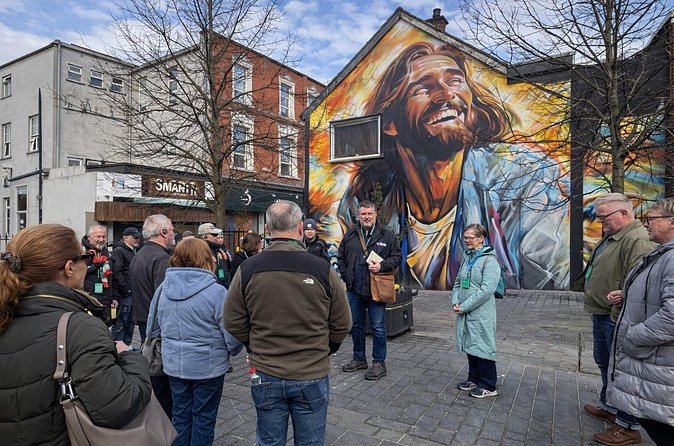
The Assembly Rooms add a more formal political setting to the route. Here, Colin discusses major meetings, including the court martial of Henry Joy McCracken and a failed proposal for a Belfast slave-ship company.
That pairing is especially valuable. The tour does not present eighteenth-century reformers as simple heroes. It also asks you to consider the city’s commercial interests and its links to slavery. The failed slave-ship proposal shows that Belfast’s political and business history included uncomfortable contradictions.
Henry Joy McCracken is one of the key figures in the Belfast rebellion story, and the court martial gives the events a grim personal edge. This is a place where the tour’s human focus works well: you are not only hearing that a rebellion failed, but also learning what happened to people connected to it.
Again, allow about 10 minutes. The Assembly Rooms stop is historical rather than a lengthy interior tour, so the value lies in the explanation and the connection to the surrounding streets.
St George’s marks Belfast’s earliest name
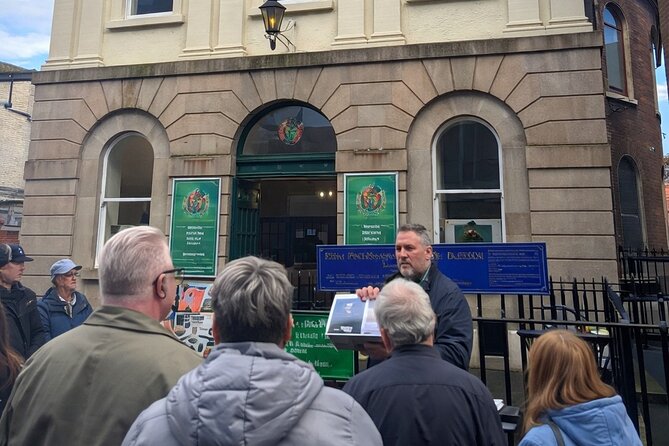
The Parish Church of St George occupies the site of Belfast’s first church. The stop also explains the origin of Belfast’s name.
This is a short but useful change of subject. After the tour has concentrated on rebellion and political organizing, St George’s reaches further back to the city’s beginnings. It helps you see Belfast as an older place than the industrial city many people picture.
The scheduled time is 10 minutes. You will hear the significance of the site, but you should not expect a broad architectural tour or a long visit inside the church. If early Belfast interests you, this explanation gives you a good reason to return and explore the area at your own pace.
Joy’s Entry turns an old lane into an art space
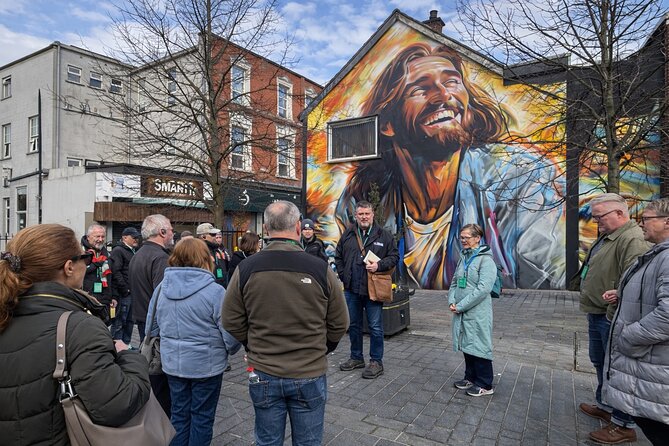
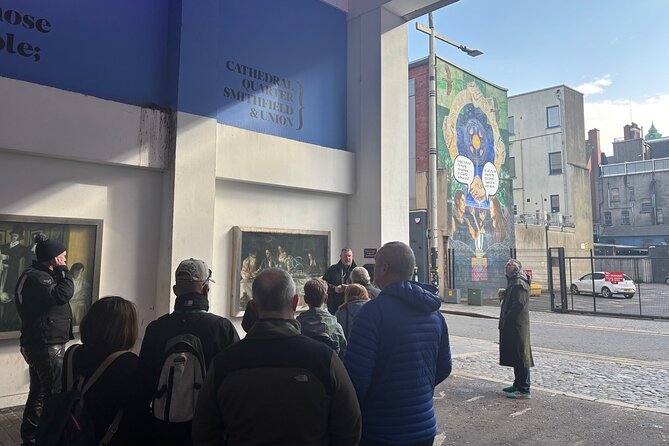
Joy’s Entry introduces the influence of the Joy family and the historic Entries in the oldest part of Belfast. These narrow routes have since become an outdoor art gallery.
This is one of the route’s strongest visual moments. The Entries provide a direct sense of the older city plan, while the artwork shows how Belfast continues to use historic spaces in new ways. You get a physical connection to the past without needing to enter a museum.
The Joy family also adds another layer to the tour’s focus on local people. Belfast’s development is presented through families, businesses, religious groups, and political networks rather than through a list of dates.
The stop takes about 10 minutes. Since the Entries are public urban spaces, the appeal depends partly on the guide’s storytelling and on how much time you want to spend looking at the art. This is not a large gallery visit with a formal collection.
Mary Ann McCracken brings the walk full circle
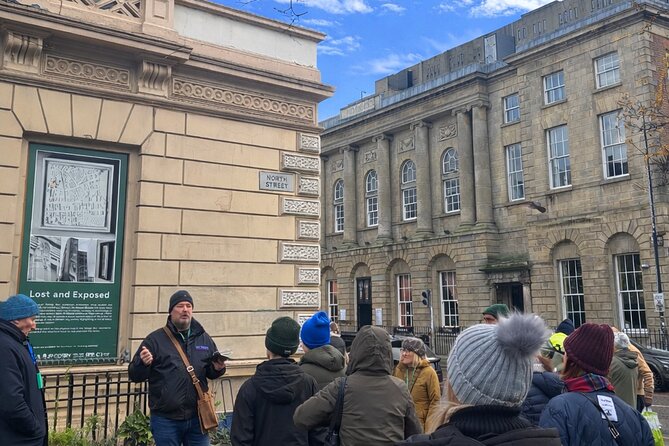
The tour returns to Belfast City Hall and finishes at the statue of Mary Ann McCracken. She was an abolitionist, educator, and United Irishwoman, making her an apt final figure for a walk that links rebellion with questions of freedom, education, religion, and human rights.
Ending with Mary Ann McCracken gives the route a wider meaning. The story does not stop with the failed rebellion or the punishment of its leaders. It also follows the later moral and civic work of people connected to that political world.
The final stop lasts about 15 minutes. It is a good point to ask any remaining questions, especially if you want to pursue the city’s blue plaques or visit more sites linked to the United Irishmen.
Why Colin Shaw matters on this route
A history walk with nine stops depends heavily on the guide. Colin Shaw is the guide specifically named for this experience, and his strengths are clear: enthusiasm, detailed knowledge of the period, an open attitude toward questions, and an ability to connect individuals with wider events.
The most useful feature is his ability to link Belfast to France and the United States. The American War of Independence and French Revolution were not isolated foreign stories in this telling. They form part of the political background that shaped ideas in Ireland during the late eighteenth century.
Colin also appears to make the people memorable. Instead of leaving you with only names on blue plaques, the walk gives those figures a role and a personal story. That is particularly helpful for first-time visitors who want to understand Belfast rather than simply photograph its best-known buildings.
The tour is offered in English only. If you enjoy asking questions and following a detailed spoken explanation, that format should suit you well. If you prefer a quiet walk with only occasional commentary, this may feel talk-heavy.
What $35.73 buys you
At $35.73 per person, the tour is priced in the middle range for a specialist city walk, but the value depends on what you want from Belfast. You are paying for two and a half hours of interpretation across nine locations, not for admission to a collection of paid attractions.
That distinction matters. The listed stops have free admission, and no separate entry tickets are included because the experience is built around public streets, churches, civic buildings, a library, a pub, and historic meeting places. The guide supplies the connective tissue.
I think the price is fair if you want a serious introduction to eighteenth-century Belfast. It is less compelling if you only want a general overview of the city or a fast list of major sights. The tour has a clear subject and spends time on political detail.
The group limit of 25 keeps the experience from becoming a huge crowd, though it is still large enough that you may need to stay close to the guide. The Vox set helps with this. Gratuities are optional and not included.
Who should book it?
I would choose this walk if you:
- Want to understand the United Irishmen Rebellion from a Belfast perspective.
- Are curious about Presbyterian merchants and religious divisions.
- Like biographies, political history, and local stories.
- Prefer seeing real streets and buildings to sitting in a museum.
- Are visiting Belfast for the first time and want historical bearings.
- Enjoy asking questions during a guided walk.
You may want something else if you have limited mobility, dislike standing outdoors, or prefer a broad city introduction with more modern Belfast. The activity calls for moderate physical fitness, and the weather can affect your enjoyment. One participant specifically wished for a warmer day, so wear suitable clothing and shoes.
The 10:00 am start works well for a Saturday morning or for the first half of a sightseeing day. The walk averages 10 days of advance booking, so reserving ahead is sensible if your Belfast dates are fixed. Confirmation is provided at booking, and service animals are allowed.
Should you book the 1798 Belfast Rebellion walk?
Book it if you want the political and social story behind Belfast’s older streets, especially if the names of the United Irishmen, Presbyterian reformers, and local merchants are unfamiliar to you. Colin Shaw’s lively, detailed approach is a major reason to choose this particular walk, and the route gives you more than a standard city-center orientation.
Skip it if your priority is interiors, architecture, shopping, or a short introduction with little historical detail. For the right audience, $35.73 is a sensible price for a focused, human-scale look at Belfast in the 1790s. Wear good shoes, arrive at City Hall before 10:00 am, and be ready to listen closely.
FAQ
Where does the 1798 Belfast Rebellion Walking Tour start?
It starts at Belfast City Hall, Donegall Square North, Belfast BT1 5GS, UK.
What time does the tour begin?
The tour starts at 10:00 am.
Where does the tour end?
The walk ends back at Belfast City Hall, at the meeting point.
How long does the tour last?
The advertised duration is approximately two hours and 30 minutes.
How much does the tour cost?
The listed price is $35.73 per person.
What language is the tour offered in?
The tour is offered in English.
How large can the group be?
The maximum group size is 25 people.
Is anything provided to help you hear the guide?
Yes. A Vox whisper set is included so you can hear the guide clearly throughout the walk.
Can you cancel for a full refund?
Yes. You can cancel at least 24 hours before the local start time for a full refund. Cancellations or changes made less than 24 hours before the start are not accepted for a refund.
Just added around Belfast
- Giants Causeway Private Tour★ 5.0 · 3 reviews
- This is Belfast Walking Tours. Our history, our culture.★ 5.0 · 7 reviews
- The Single Cask Whiskey Experience★ 5.0 · 6 reviews
- Epic Escape Room Adventure to Save King’s Landing in Belfast★ 5.0 · 3 reviews
- Belfast City Sightseeing Tour Including Titanic Museum | 6 Hours★ 4.5 · 9 reviews
- Private Guided Walking Tour in Belfast★ 3.5 · 3 reviews
- 4 Hours Private Belfast City Tours★ 5.0 · 10 reviews
- Private Departure Transfer: Hotel to Belfast Airport★ 5.0 · 9 reviews
Walking Tours, compared.
A History of Terror – Belfast City Centre Walking Tour
Read our review →
Belfast Political Tour-Conflicting Stories Walking Tour
Read our review →
Belfast Eclectic Walking City Center Experience, The Marti Way
Read our review →
Derry City: The Bloody Sunday Story – Walking Tour
Read our review →Browse the lists this tour appears in