
Reviewed · BELFAST TROUBLES AND MURAL TOURS
Belfast Political/history/troubles private taxi/cab tour
Belfast’s political story makes the most sense when you see the streets where it happened. This private taxi tour takes you along the Falls Road and Shankill Road, through Catholic and Protestant communities, with stops at murals, gates, and the Peace Wall.
I like the private vehicle, which lets you ask direct questions without holding up a large group. I also like the local guides, including Caolan and Diarmaid, who explain events with personal knowledge and a strong sense of place. The main drawback is time: 90 minutes passes quickly for a subject this complex, and some people may want a longer visit.
Key points at a glance

- Falls Road and Shankill Road: See two communities whose streets, murals, and symbols reflect different political identities.
- Personal local guiding: Guides such as Caolan and Diarmaid have been praised for clear explanations, humor, and firsthand connections to Belfast.
- Peace Wall stop: You can stop for photographs and write your name or a message on the wall.
- Private taxi format: Your group travels alone, so you can ask questions and set the pace within the available time.
- Central meeting point: The usual departure point is near the Leonardo Hotel on Great Victoria Street.
- Good short-tour value: At $90.19 per person, the cost is easiest to justify for a small group sharing a private vehicle.
Why this short Belfast tour matters
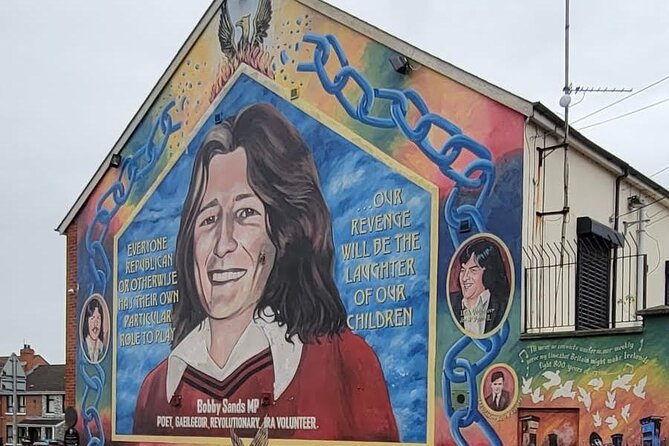
You can look at Belfast’s murals on your own, but the pictures do not explain themselves. A clenched fist, a paramilitary emblem, a portrait of a hunger striker, or an image of a British monarch can carry a great deal of meaning. Without context, you may see color and political slogans but miss the story behind them.
This tour gives you that context while moving through the neighborhoods. Your guide explains the conflict from its causes through the Troubles and toward the peace process. The value is not only in seeing landmarks. It is in being able to ask why a particular mural is there, what a gate meant to local residents, and how political identity still shapes daily life.
I especially like the taxi format for first-time visitors. You are not left to wander through unfamiliar streets with a quick explanation and a photo stop. The driver-guide remains with you, pointing out details and answering questions as the vehicle moves between sites.
The subject is serious. The best way to approach it is with patience and respect. You will hear about violence, marches, imprisonment, hunger strikes, divided neighborhoods, and people who lived through fear and loss. At the same time, the guides are described as friendly and good-humored, which helps keep the experience human rather than grimly academic.
More belfast troubles and mural tours in Belfast:
- Belfast’s Political Mural Taxi Tour
★ 5.0 · 1,180 reviews - Belfast Troubles Tour: Walls and Bridges
★ 5.0 · 853 reviews - Famous 1.5 hour Belfast Murals Tour
★ 5.0 · 477 reviews
From Great Victoria Street into divided Belfast

The normal meeting point is on Great Victoria Street, close to central Belfast and the Leonardo Hotel. Pickup can also be arranged from your chosen location in Belfast. If you stay outside the city center, expect a small additional taxi charge.
Once inside the private vehicle, you can settle into a compact route through west Belfast. The tour lasts about 90 minutes from pickup to drop-off. That timing makes it useful on a busy visit, especially if you want a political orientation before exploring Belfast’s museums, galleries, or city center on your own.
The short length also creates a clear limitation. You will get a guided introduction, not a complete study of Northern Ireland’s past. If you ask many questions, the tour may run over when the guide has no later booking, but you should plan around the advertised 90 minutes rather than count on extra time.
A private tour gives you more control than a large coach. You can ask for clarification when a date or name goes by too quickly. You can also tell your guide what interests you most, such as murals, community divisions, British and Irish identity, or the peace process.
Falls Road: Catholic identity and republican memory
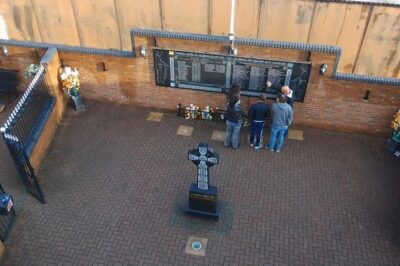
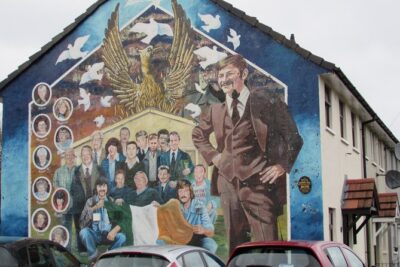
The first major part of the route takes you onto Falls Road, associated with Belfast’s Catholic and Irish nationalist community. This is not simply a street to drive down. It is a place where murals and memorials express a particular view of Ireland, British rule, republican politics, and the conflict.
Your guide explains the local meaning of what you see. You may stop beside murals for photographs and a closer look. The stops matter because a taxi window is a poor way to read a wall or understand a portrait. Getting out gives you time to study the images and ask what they represent.
A strong guide will also help you separate different strands of the story. The Troubles were not one simple fight with two tidy teams. The tour is designed to discuss political history, community identity, and the actions of Catholics and Protestants without reducing every person on either side to the choices of armed groups.
That distinction is important. Many ordinary families lived with the results of violence without supporting it. A useful tour helps you see how political symbols can represent pride, grief, anger, memory, or a demand for justice, sometimes all at once.
Shankill Road: Protestant identity and loyalist memory

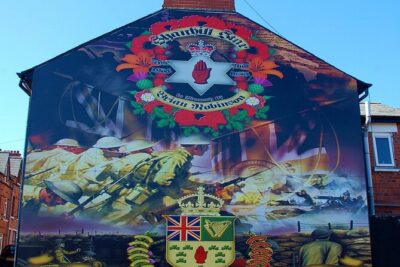
The taxi then brings you to Shankill Road, associated with Belfast’s Protestant and loyalist community. Seeing Falls Road and Shankill Road in one sitting gives you a more useful picture than visiting only one side.
The two areas are close together, yet their murals and public symbols can feel sharply different. Your guide explains the political ideas behind the imagery and the local experiences that shaped it. This side-by-side approach is one of the tour’s strongest features because it shows how the same conflict was understood in different ways by people living only a short distance apart.
I would pay close attention to the language your guide uses. The political terms can be confusing at first, especially if you are visiting from outside Ireland and the United Kingdom. Ask questions when you need to. The guides are repeatedly described as willing to explain difficult subjects, answer many questions, and offer further reading or podcasts for later.
The tone may vary by guide. Caolan, also spelled Caolen or Caolain in different mentions, is described as personable, humorous, and passionate about the subject. Diarmaid is described as friendly, candid, and connected to the local community. You may not receive one particular guide, but the company uses local drivers who bring different personalities and experiences to the route.
A few more Belfast trips to weigh up
- A History of Terror – Belfast City Centre Walking Tour
★ 5.0 · 2,883 reviews - Private Political History & Murals Tour Belfast
★ 5.0 · 182 reviews - Belfast Walking Tour: City Centre History, Troubles & Stories
★ 5.0 · 39 reviews - 1 Hour Express Belfast Taxi/Cab Tour History, Murals, Troubles
★ 5.0 · 17 reviews
Murals, gates, and the details between landmarks

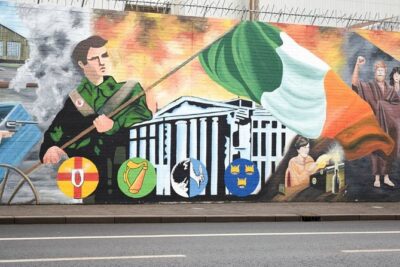
The murals are the visual heart of the tour, but do not treat them as a simple checklist. Their location, subject, colors, and symbols all add context. Your guide can tell you why certain figures appear and how public art became a way for communities to express identity and remember the past.
The gates are just as powerful. They mark the practical reality of separation. They are not merely historic objects. The idea that some gates can still be closed at night helps explain why Belfast’s peace is not the same thing as complete social integration.
The tour includes stops at several gates and at murals in both communities. That is useful for photographs, but I would use your camera sparingly at first. Look carefully, listen to the explanation, and then take pictures. The setting deserves more thought than a quick social media stop.
You may also find that the visual story raises more questions than the 90-minute route can answer. That is not a failure. A good introduction should send you back to your hotel wanting to read more, listen to local accounts, or visit another Belfast site with better preparation.
The Peace Wall and a personal message

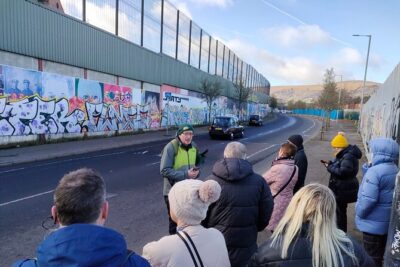
The Peace Wall is the tour’s most memorable stop for many visitors. Your guide brings you to the wall and gives you time to see it firsthand, take photographs, and write your name or a message on it.
This can feel strange at first. A wall associated with division has become a place where visitors leave hopeful notes. The act is simple, but the setting carries weight. You are looking at a physical barrier built in response to conflict, while also seeing evidence of how the site has become part memorial, part political statement, and part visitor stop.
I would not rush this part. Ask your guide about the gates and how they relate to the wall. The combination helps you understand that peace did not simply erase the old boundaries. Some barriers remain, and the memory of the Troubles remains part of local life.
The Peace Wall also brings up a point that this tour handles best when it avoids easy blame. Different communities remember suffering in different ways. Your guide’s job is to explain those views clearly, not tell you what conclusion to reach.
How balanced is the explanation?

The strongest praise for this experience centers on fair treatment of both communities. Several guides are described as presenting Catholic and Protestant perspectives, explaining facts without taking sides, and encouraging further study. That approach is especially useful if you know little about the creation of Northern Ireland or the Troubles.
Still, balance is partly a matter of interpretation. One critical account felt the tour favored Catholic republican views and did not give enough attention to other perspectives. The company rejected that assessment and said its aim is respectful, fact-based guiding.
I would treat this as a reason to ask questions, not a reason to avoid the tour. If balance matters greatly to you, say so at the beginning. Ask your guide to explain how both communities understood key events, and listen for distinctions between political movements, armed organizations, governments, and ordinary residents.
No 90-minute tour can cover every argument in equal detail. You are receiving a local introduction, not a university seminar. The private setting gives you the best chance to press for clarification if an explanation feels incomplete.
Price, privacy, and practical value
The listed price is $90.19 per person. For one person, that may feel high for a 90-minute activity. For two or more people sharing a private taxi, the calculation becomes easier because you are paying for a dedicated vehicle and guide rather than a seat on a large group outing.
The privacy has real value. You can ask questions about sensitive subjects without speaking in front of strangers. You can also spend a little longer at a mural or Peace Wall stop when the schedule allows.
Pickup and drop-off are included at a Belfast city center point, and pickup from another Belfast address can be arranged. Locations outside the city center may add a small taxi fee. Alcoholic drinks are not included, though that should not matter much for a serious daytime history tour.
The tour is confirmed at booking, mobile tickets are accepted, and it is offered in English. Service animals are allowed, and the activity is near public transport. Most people can take part, but remember that this is a taxi tour with stops rather than a long walking tour.
Free cancellation is available if you cancel at least 24 hours before the start time. Cancellations or changes made inside that window are not refunded or accepted, based on local time.
Who will get the most from this experience?
I would choose this tour if you want a focused introduction to Belfast’s political past and prefer conversation to a recorded audio guide. It suits visitors who have limited time but still want to understand why west Belfast looks and feels the way it does.
It is also a good choice for people who dislike large groups. A private vehicle keeps the experience personal and lets you ask direct questions. Families can benefit from the flexible format too. One account describes the guide explaining the subject in a way that worked for a six-year-old, though the adult themes still require care.
History fans will appreciate the local accounts, photographs, murals, and political explanations. Visitors from overseas may find the tour especially useful because it introduces the background needed to understand Northern Ireland’s institutions, identities, and community divisions.
You may prefer another format if you want extensive walking, museum displays, or a full-day examination of the conflict. You should also think twice if you want a detached overview with no local or personal perspective. This is designed to feel close to the communities, and that closeness is part of both its appeal and its possible limitation.
Should you book this Belfast taxi tour?
I would book it as a first look at Belfast’s Troubles, especially early in your visit. The route gives you the essential west Belfast landmarks, while the private taxi and local guide make it easier to ask the questions that a bus tour may leave unanswered.
Choose it for the Falls Road and Shankill Road comparison, the Peace Wall stop, and the chance to hear how local guides such as Caolan and Diarmaid explain the past. Just keep your expectations realistic: 90 minutes can orient you, but it cannot settle every historical dispute.
If you want the most from the experience, arrive with an open mind, ask for both community perspectives, and leave time afterward for your own reading. At $90.19 per person, it is strongest value for a small private group that wants a direct, thoughtful introduction rather than a quick taxi ride with photo stops.
FAQ
How long does the Belfast political taxi tour last?
The tour lasts approximately 90 minutes from pickup to drop-off.
Where does the tour start?
The usual meeting point is Great Victoria Street in Belfast, near the Leonardo Hotel.
Can I be picked up from my hotel?
Yes. Pickup can be arranged from your chosen location in Belfast. Pickup destinations outside Belfast city center may include a small additional taxi charge.
Is the tour private?
Yes. Only your group participates in the private activity.
Which Belfast neighborhoods does the tour visit?
The route includes Falls Road, associated with the Catholic community, and Shankill Road, associated with the Protestant community.
Will I see the Peace Wall?
Yes. The tour includes a stop at the Belfast Peace Wall, where you can take photographs and write your name or a message.
Are photographs allowed?
Yes. The guide stops at certain murals and the Peace Wall so you can take photographs.
Is the tour offered in English?
Yes. The tour is offered in English.
What is the cancellation policy?
You can cancel up to 24 hours before the experience start time for a full refund. Cancellations or changes made less than 24 hours before the start time are not accepted for a refund.
Just added around Belfast
- This is Belfast Walking Tours. Our history, our culture.★ 5.0 · 7 reviews
- Giants Causeway Private Tour★ 5.0 · 3 reviews
- The Single Cask Whiskey Experience★ 5.0 · 6 reviews
- Epic Escape Room Adventure to Save King’s Landing in Belfast★ 5.0 · 3 reviews
- Belfast City Sightseeing Tour Including Titanic Museum | 6 Hours★ 4.5 · 9 reviews
- Private Guided Walking Tour in Belfast★ 3.5 · 3 reviews
- 4 Hours Private Belfast City Tours★ 5.0 · 10 reviews
- Private Departure Transfer: Hotel to Belfast Airport★ 5.0 · 9 reviews
Belfast Troubles and Mural Tours, compared.
2 Hour Private Belfast Taxi Cab Tour of Troubles & Peace walls
Read our review →
2 hours Belfast Original Drivers The Troubles Black Taxi Tour
Read our review →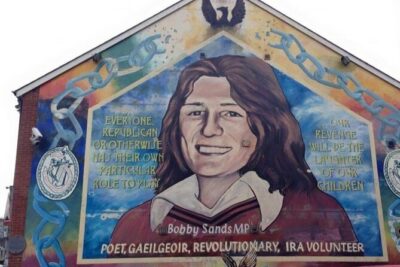
Private Political History & Murals Tour Belfast
Read our review →Browse the lists this tour appears in