
Reviewed · CYCLING TOURS
Belfast Bike Tours
Belfast’s story comes into sharp focus when you pedal from the Peace Wall to the Titanic Quarter in one morning. This three-hour ride links neighborhoods that are spread too far apart for a relaxed walking tour, while keeping you close to the streets, murals, pubs, churches, and public art that give the city its character.
I like the way guide David explains the Troubles with care, giving context to both loyalist and republican communities rather than reducing Belfast to a simple tourist tale. I also like the easy pace and mostly flat route, which lets you cover a lot without turning the outing into a race. The main consideration is weather: Belfast rain can arrive quickly, and the tour may be canceled in poor conditions.
Key Points to Know Before You Ride
- Write on the Peace Wall: You get time to leave your own message on one of Belfast’s best-known symbols of division and hope.
- See the city in one sweep: The route connects Shankill Road, Queen’s University, City Hall, St. George’s Market, Titanic Quarter, and Cathedral Quarter.
- A mostly flat ride: The bikes are not electric, but the route is easy for most riders, with only a short uphill section.
- David leads the way: Expect a friendly local guide with personal insight into how Belfast has changed over recent decades.
- Small-group feel: The maximum group size is 15, and smaller departures can feel almost private.
- Good value at $48.52: You get about three hours of sightseeing, local commentary, exercise, and a useful first map of Belfast.
Why a Bike Is the Right Way to Meet Belfast
Belfast is compact, but its important places are spread across several distinct areas. On foot, you can cover the center well, but reaching the Peace Wall, Queen’s University, the River Lagan, St. George’s Market, and Titanic Quarter in the same outing takes more time and energy.
A bicycle fixes that problem. You can move between neighborhoods quickly, then stop where the story matters. You are not sealed inside a coach, and you are not marching behind a guide with a large group. You see ordinary streets between the headline sights, which helps you understand Belfast as a working city rather than a string of photo stops.
The route is designed for a comfortable pace. Belfast is largely flat, and the ride includes side streets and alleys as well as main roads. One short uphill stretch and one section on a busy but slow-moving road are the only difficulties mentioned in the tour details. You do not need to be a serious cyclist, though you should feel comfortable balancing, braking, and riding in an urban setting.
The bikes are standard, not electric. That matters if you prefer a motor-assisted ride or have limited cycling strength. For most people, though, the distance and pace sound manageable. Families have used the tour with children, including an eight-year-old, and older teenagers have also found it engaging.
A few more Belfast trips to weigh up
- Belfast Beer Bike tours
★ 5.0 · 161 reviews - Party Bike Tour of Belfast
★ 5.0 · 27 reviews - Titanic Eastside Bike Tour
★ 5.0 · 9 reviews
From Queen Street to Belfast’s Divided Streets
The meeting point is Belfast Bike Tours, Unit 13, Fountain Centre, Queen Street, in the city center. It is close to public transportation, and the tour returns there at the end. The mobile ticket makes arrival simple, but allow enough time to find the Fountain Centre before the start.
The opening section heads through central Belfast toward the murals and memorials connected with the Troubles. This is the part of the ride where a local guide matters most. Belfast’s political art is not just colorful wall decoration. It marks neighborhoods, identities, grief, loyalty, and competing versions of the past.
David’s approach is especially useful here. He explains both sides of the loyalist and republican divide, giving you room to understand why the murals exist without turning the ride into a political lecture. That balance can help you read the symbols with more care.
The Peace Wall is a major stop. It separates communities that were once caught in sustained conflict, and you have time to write a message on it. That small act makes the place personal, but it is worth treating the wall with respect. The stop is not simply a photo opportunity. It is a chance to think about how Belfast has changed and how much division still shapes the city.
The route also includes Shankill Road, with its memorials and loyalist identity. The contrast between Shankill Road and nearby republican areas gives the history a physical setting. Instead of hearing only dates and political terms, you see how boundaries were built into the streets.
Kelly’s Cellars and the Old City Center
From the neighborhoods shaped by conflict, the tour turns toward Belfast’s older center. Kelly’s Cellars is one of the city’s oldest pubs, and the stop adds a more social, everyday note to the route.
The point is not to spend a long time inside every building. The value is in seeing how Belfast’s pub culture, churches, monuments, and narrow lanes fit into the city’s larger story. Along the way, David points out striking churches and historic details that are easy to miss from a car or a fast walking route.
This section also helps you get your bearings. Belfast’s center is reassuringly small once you understand the main lines between City Hall, the markets, the river, and the university district. I would take mental notes here, since the route gives you useful ideas for where to return later for a meal, a drink, or a closer look.
Belfast City Hall and the Civic Core
Belfast City Hall is one of the tour’s clearest architectural stops. You pause to hear about its history and take in the building’s formal design. It is a good counterpoint to the murals and residential streets because it represents the city’s civic face.
A bike tour works well here because you can approach the building from the surrounding streets, stop for photographs, and then move on without losing much time. You get the broad picture rather than a long interior visit. If you want a detailed look inside City Hall, you will need to return on your own, since this is a sightseeing stop within a wider route.
The tour keeps moving south toward Queen’s University, the Botanical Gardens, the Palm House, and the Ulster Museum. Sculptures along the way add visual interest, and this portion gives you a different view of Belfast: greener, more academic, and less tied to the political murals of the north and west.
The itinerary names Queen’s University as a stop, while the wider route takes in the gardens and museum area. You should see these places in context rather than expect extended visits inside each one. The benefit is coverage. By the end, you know where the university quarter is and can choose to return for more time.
Same city, a completely different kind of day:
- Titanic Belfast Entrance Ticket: Titanic Visitor Experience Including SS Nomadic
★ 4.5 · 3,698 reviews - Cab Tours Belfast Famous Black Taxi Tours
★ 5.0 · 3,633 reviews - Giant’s Causeway Day Trip from Belfast
★ 5.0 · 3,480 reviews - A History of Terror – Belfast City Centre Walking Tour
★ 5.0 · 2,883 reviews
St. George’s Market Brings the Senses Back
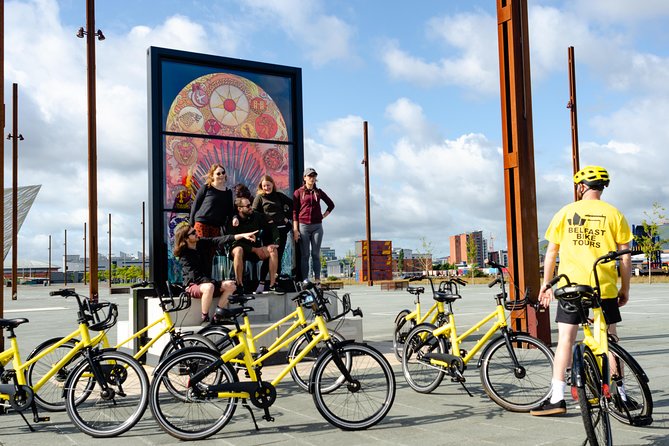
St. George’s Market is one of the liveliest stops on the route. The market brings together food, color, noise, and the everyday side of Belfast. The tour passes through and stops to sample traditional food, adding a taste of the city to the history and architecture.
This is a useful break in the rhythm. The Peace Wall asks for reflection. City Hall asks you to look up at grand civic design. St. George’s Market brings you back to ordinary pleasures: browsing stalls, spotting local specialties, and watching people go about their day.
The market is also a practical recommendation point. If you are in Belfast for more than a few hours, you may want to return with time to spare. The bike tour gives you an introduction, not a full market visit. Keep that distinction in mind if food is your main reason for booking.
Across the River to Titanic Quarter
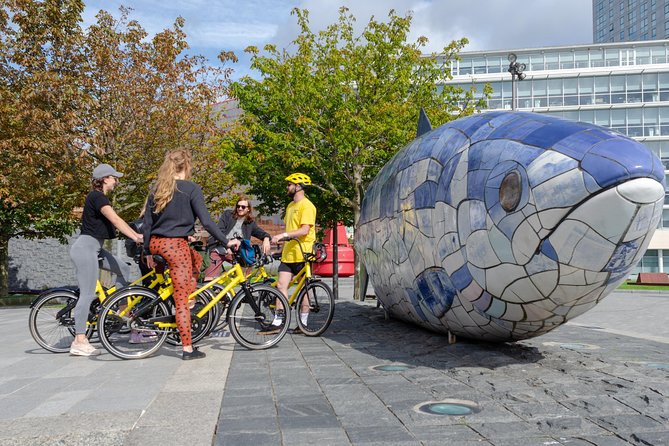
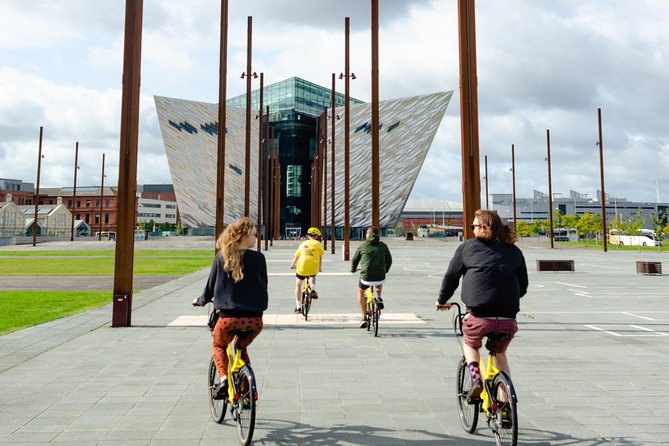
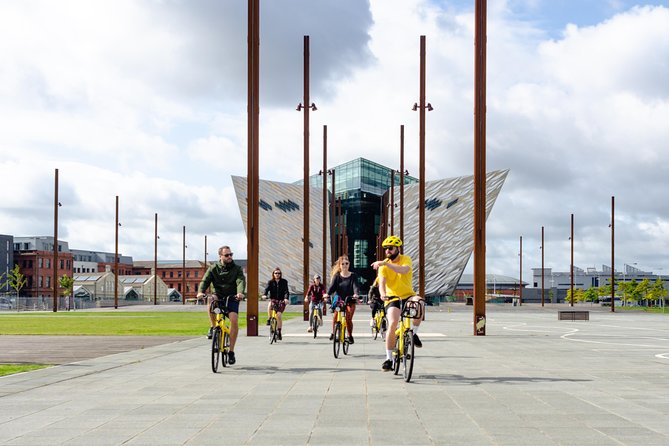
The ride then crosses the River Lagan into Titanic Quarter. This area offers plenty of photo opportunities and a strong change of mood from the older center and politically marked neighborhoods.
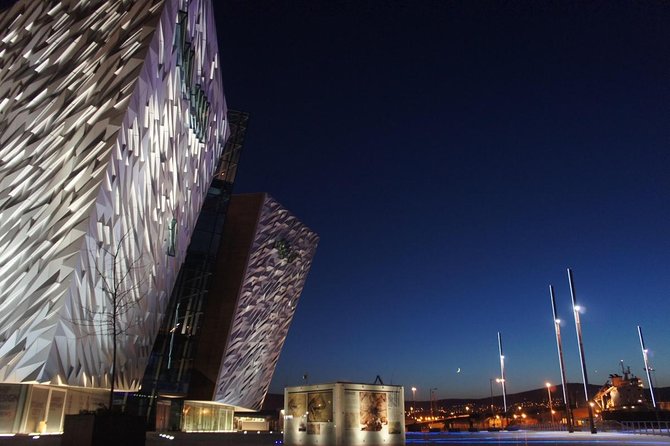
Titanic Belfast is named as a stop, but the tour does not describe a full museum visit. You should expect an exterior look, local context, and time for photographs rather than admission to a major indoor attraction. If Titanic Belfast is high on your list, plan a separate visit so you can give the museum the hours it deserves.
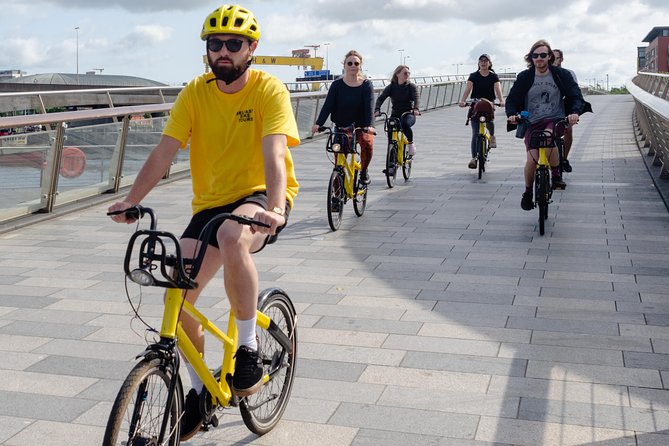
The old docks and riverfront make this part of the route especially rewarding by bicycle. You can connect the city’s industrial past with its modern identity in a short ride. Belfast’s shipbuilding story is not treated as an isolated museum subject. It sits beside the river, the docks, and the newer buildings of the quarter.
This is also one of the easiest places to appreciate why a bike saves time. You move from St. George’s Market to the river and across to Titanic Quarter without spending the day walking long connecting stretches. You still get fresh air and a bit of exercise, but the effort stays moderate.
Cathedral Quarter, Big Fish, and Final Stories
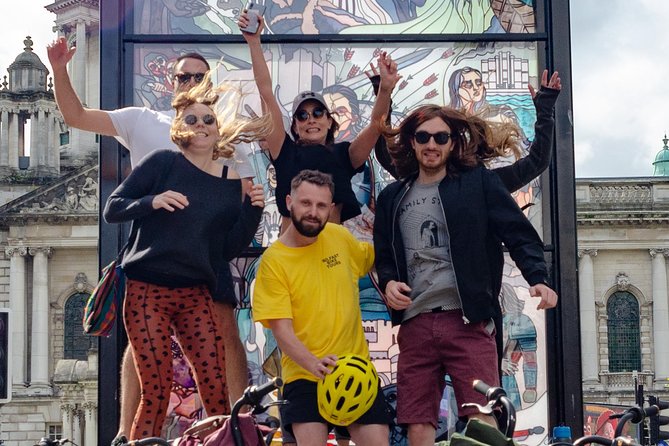
After crossing back over the Lagan, the route enters Cathedral Quarter. This is one of Belfast’s more social districts, known for small streets, public art, pubs, and surprises that can be missed if you stick to the main attractions.
The stop gives David room to point out details that are not always obvious on a standard city tour. The Big Fish, also called the Salmon of Knowledge, is one such landmark. The tiled sculpture is an easy photo stop, and a local tradition involves kissing it to get smarter. It is a silly little ritual, but it gives the ride some lightness after the serious material at the Peace Wall.
Cathedral Quarter is also a good place to ask for suggestions. David’s pub recommendation can help you decide where to spend an evening, and the area makes a natural follow-up stop after the tour. You finish back at the Fountain Centre, but you should leave with a short list of places worth exploring on foot.
David’s Guiding Style and the Group Size
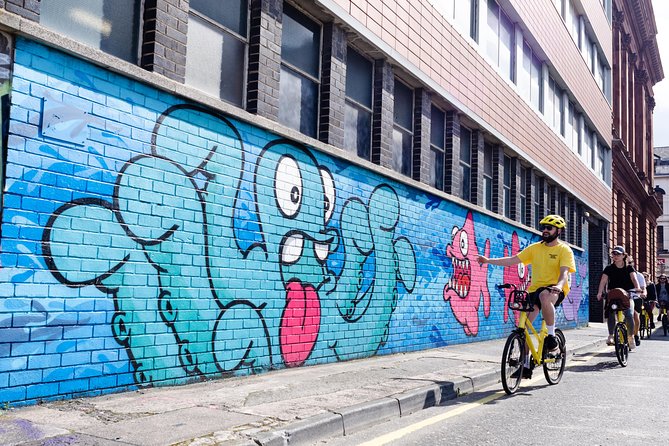
David is the named guide, and his role is central to the experience. He is described as fun, friendly, approachable, and well informed, with a personal connection to Belfast and a clear sense of how much the city has changed over the last 30 years.
That combination matters. A guide can recite dates while leaving you with no feel for a place. Here, the useful part is the link between history and streets you are actually cycling through. David’s humor keeps the ride from becoming heavy, but he also treats the Troubles as serious subject matter.
The maximum group size is 15. That is not a private tour, but it is small enough for questions and a more relaxed pace. Some departures may be much smaller, creating a nearly private experience. A small group also helps when stopping near murals or on narrow streets.
The ride is offered in English. If you want a detailed explanation of Belfast’s modern history, English fluency will help you get the most from David’s stories.
Price, Pace, and Who Gets the Best Value
At $48.52 per person, the tour costs more than simply walking around Belfast, but the comparison is not quite fair. You are paying for a bicycle, a guide, about three hours of route planning, and access to a wide spread of neighborhoods in one outing.
I see the strongest value for three types of visitors. First are people with limited time, including cruise passengers on a short port call. Second are first-time visitors who want a city orientation before choosing where to spend the rest of their stay. Third are families and active couples who prefer movement to a long indoor tour.
The ride also suits people who have never taken a bike tour. The route is described as easy, with very few hills, and the pace is not aggressive. Still, standard bicycles require basic cycling confidence. If you are short, ask for a suitable bike size before setting off. One rider had a minor mishap after needing a smaller bike, so fit is worth checking at the start.
Weather is the main practical risk. Belfast can be wet, and one departure went ahead in heavy rain while still being enjoyable, but that does not make bad weather comfortable for everyone. Dress warmly in winter, with a hat, gloves, and scarf, and bring a rain layer at other times. If conditions are poor enough for the operator to cancel, you can choose another date or receive a full refund.
Free cancellation is available up to 24 hours before the start time. Cancellations or changes within 24 hours are not refunded or accepted. The tour also needs a minimum number of participants, so a low booking count can lead to a new date, another experience, or a refund.
Should You Book Belfast Bike Tours?
I would book this as an early activity in Belfast, especially if you have only one day or part of a day. The route covers the Peace Wall, Shankill Road, the center, Queen’s University, St. George’s Market, Titanic Quarter, and Cathedral Quarter, giving you a strong working map of the city.
Book it if you want local stories, a fair account of Belfast’s divided past, and an easy way to reach several districts. It is also a good choice for families, older teens, cruise passengers, and anyone who likes a bit of exercise with sightseeing.
Choose something else if you want long indoor visits at Titanic Belfast, the Ulster Museum, or City Hall. This is a moving overview, not a series of extended museum tours. Also think twice if you dislike cycling in city traffic or are hoping for an electric bike.
For most visitors, the $48.52 price is fair because the tour combines transport, orientation, history, food, and local guidance in one compact outing. If the forecast is reasonable and you can ride a standard bicycle, this is one of the most efficient ways to meet Belfast.
FAQ
How long is Belfast Bike Tours?
The tour lasts approximately three hours.
How much does the tour cost?
The listed price is $48.52 per person.
Where does the tour start?
It starts at Belfast Bike Tours, Unit 13, Fountain Centre, Queen Street, Belfast BT1 6ET, UK.
Where does the tour finish?
The activity ends back at the meeting point on Queen Street.
What language is the tour offered in?
The tour is offered in English.
What sights are included?
The route includes Titanic Belfast, Queen’s University, the Peace Wall, Shankill Road, Kelly’s Cellars, Belfast City Hall, St. George’s Market, and Cathedral Quarter. It also takes in areas near the Botanical Gardens, Palm House, Ulster Museum, River Lagan, and Belfast docks.
Is the route difficult to cycle?
The route is mostly flat, with very few hills. A short uphill section is included, and the bicycles are standard bikes rather than electric bikes.
How many people can join the tour?
The maximum group size is 15 people.
What happens if the tour is canceled because of weather?
You will be offered a different date or a full refund if the tour is canceled because of poor weather.
Just added around Belfast
- This is Belfast Walking Tours. Our history, our culture.★ 5.0 · 7 reviews
- Giants Causeway Private Tour★ 5.0 · 3 reviews
- Belfast City Sightseeing Tour Including Titanic Museum | 6 Hours★ 4.5 · 9 reviews
- The Single Cask Whiskey Experience★ 5.0 · 6 reviews
- Epic Escape Room Adventure to Save King’s Landing in Belfast★ 5.0 · 3 reviews
- Private Guided Walking Tour in Belfast★ 3.5 · 3 reviews
- 4 Hours Private Belfast City Tours★ 5.0 · 10 reviews
- Private Departure Transfer: Hotel to Belfast Airport★ 5.0 · 9 reviews
Cycling Tours, compared.

Unforgettable beauty of Northern Ireland from an E-Bike
Read our review →Browse the lists this tour appears in