
Reviewed · MUSEUMS
Peacemakers Museum Entry Ticket
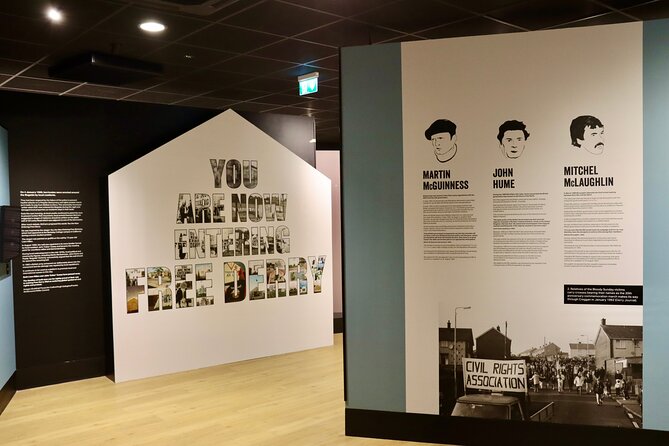
Derry’s Peacemakers Museum takes you through the difficult years from 1972 to 2007, then shows how political work turned conflict toward peace. John Hume, Martin McGuinness, and Mitchel McLaughlin receive special attention as three Bogsiders who helped shape the 1998 Good Friday Agreement.
I like the mix of first-person stories, archive footage, and original objects, which gives the history a human scale. I also like the museum’s clear focus on reconciliation and the future, rather than leaving you with violence alone. The main drawback is that there is a lot of reading and listening, so 90 minutes can feel rushed.
Key points to know
- Covers August 1972 to May 2007: The displays connect the Troubles to the peace process and its aftermath.
- Explains the Good Friday Agreement: You get a plain account of how the Agreement was reached and what consent means for the island’s future.
- Focuses on three Derry figures: John Hume, Martin McGuinness, and Mitchel McLaughlin are central to the story.
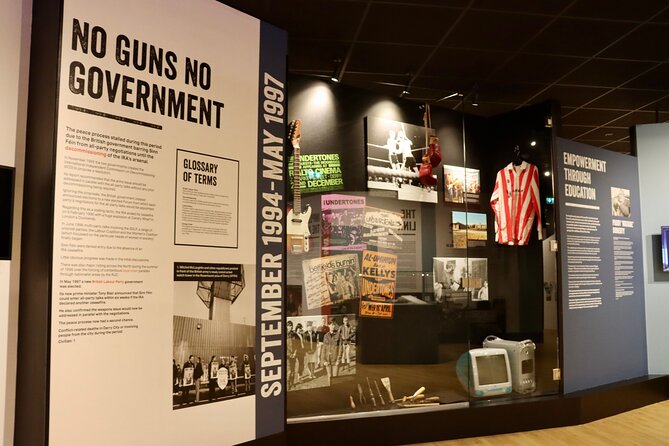
- Uses several forms of evidence: Artefacts, oral history, photographs, archive film, and interactive displays break up the reading.
- Audio is available in five languages: Choose English, Spanish, French, German, or Italian.
- Best paired with the Free Derry Museum: Visit that museum first if you want earlier background on the 1960s and early 1970s.
A clear route from conflict to peace
The Peacemakers Museum is not a quick photo stop. It is a serious history museum built around a recent and still sensitive period in Derry-Londonderry. You are not looking at ancient events from a safe distance. The people, places, and political decisions here remain part of life on the island today.
The main story begins in August 1972, after the conflict had already entered a brutal phase. From there, the displays follow the changing nature of the Troubles, the experience of local communities, and the long political effort that eventually produced the Good Friday Agreement in 1998.
The timeline continues through May 2007, giving the peace process room to develop beyond the signing of the Agreement. That matters because an agreement on paper is not the same thing as peace in daily life. The museum helps you see the negotiations, the compromises, and the question of how the settlement might shape the island in years to come.
I find that time span useful because it prevents the museum from treating the Good Friday Agreement as a single dramatic finish. Instead, you see it as part of a long process, with difficult decisions before and after 1998.
A few more Derry trips to weigh up
- IRA Troubles Conflict Private Tour Museum Graves Murals and Political Analysis
★ 5.0 · 67 reviews - Saint Patrick Centre Exhibition experience
★ 4.5 · 33 reviews - Titanic Museum and Whiskey Distillery Exploration with Tasting
★ 4.5 · 25 reviews
Artefacts and archive film put faces to the history
The Peacemakers Museum uses more than wall text. You will find artefacts, photographs, oral history, archive footage, and interactive features, each offering a different way into the subject.
That variety is helpful when the material becomes dense. A written panel can explain a political event, while a recorded voice or piece of film can show how that event affected people in Derry. The combination also helps if you have only a basic understanding of the Troubles.
You should still expect plenty of reading. The displays cover political developments, local experiences, and the peace process in detail. Set aside the full hour and a half if you can. If you are trying to fit the museum into a tight schedule, you may need to choose which sections deserve the most time.
The archive material is especially valuable because it connects the museum’s account to the period itself. This is not only a story of politicians signing documents. It is also a story of ordinary life during conflict, memories carried for decades, and the human cost behind political language.
The three Bogsiders at the center of the story
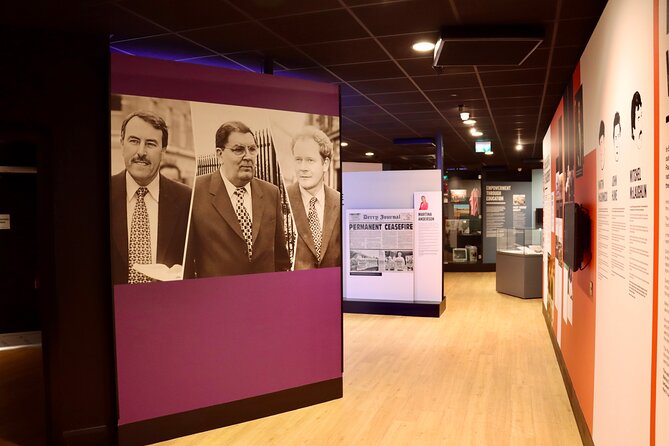
A major part of the museum concerns John Hume, Martin McGuinness, and Mitchel McLaughlin, three men from Derry’s Bogside who played important roles in creating the conditions for peace.
Their involvement gives the museum a strong local focus. You learn about the political work behind the 1998 Good Friday Agreement and the effort to create a system based on consent. The Agreement offered a political framework for resolving the conflict and allowed the island’s constitutional future to be determined by the wishes of its people.
The museum does not treat peace as a simple achievement by one person or one political group. The displays show a process involving different interests, painful compromise, and years of work. That approach is useful if your knowledge of the conflict comes mainly from headlines or short visits to Derry’s murals.
You may also find the personal side of these figures more helpful than a standard political timeline. Their connection to Derry makes the story feel local rather than abstract. The museum links major events to the streets and communities around you.
What the museum says about daily life during the Troubles
The strongest sections are likely to be those that connect political events with personal experience. The museum includes first-person accounts and material about how people lived through the conflict, rather than presenting it only as a sequence of elections, agreements, and speeches.
Some displays cover subjects that are less familiar to many people, including the Dirty Protest in the female prison. That broader range is important. It shows that the conflict affected women as well as men, and that the prison experience formed part of the political story.
The personal accounts can be emotionally demanding. One person with childhood memories of the period found the museum brought back powerful feelings. You may not have the same response, but you should expect a thoughtful and sometimes heavy visit.
For that reason, I would not plan the museum as a rushed stop between lunch and another attraction. Give yourself time to pause. The subject needs room, and you will get more from the museum if you read carefully instead of racing from screen to screen.
Same city, a completely different kind of day:
- Private Guided Walking Tour in Derry City
★ 5.0 · 635 reviews - Derry City: The troubles Bogside walking tour
★ 5.0 · 503 reviews - Walking Bogside History Tour in Guildhall
★ 5.0 · 280 reviews - Derry City: The Bloody Sunday Story – Walking Tour
★ 5.0 · 186 reviews
Why a visit to the Free Derry Museum can help first
The Peacemakers Museum begins in 1972, so it works best when you already have some background on the earlier civil rights period and the events of the 1960s and early 1970s.
A useful plan is to visit the Free Derry Museum first. It covers the 1960s through the early 1980s, while the Peacemakers Museum carries the story into the peace process. Together, the two museums give you a fuller sequence.
This order also helps explain why the museum starts where it does. You will have a better sense of the conditions that led into the conflict, rather than meeting the story halfway through.
That said, you can still visit Peacemakers on its own. Its displays provide enough information to make sense of the main people and events. Just expect a greater amount of reading if this is your first serious introduction to Derry’s recent history.
A museum that looks toward reconciliation
The Peacemakers Museum has a clear interest in reconciliation and a positive future. That does not mean it avoids difficult subjects. Instead, it places violence and division inside a story about how people tried to move beyond them.
I appreciate that balance. A museum about the Troubles should not soften the past, but it also should not leave you with the idea that conflict is the only story Derry can tell. The focus on the Good Friday Agreement gives the visit a sense of purpose.
The central idea of consent is particularly important. The Agreement provided a political template in which the island’s constitutional future could be decided by consent, rather than imposed by force. You do not need a background in constitutional politics to understand why that principle matters, but the museum gives it proper weight.
The displays also raise questions about the future. They do not suggest that one agreement erased every disagreement. Instead, they show why peace requires continued political work and attention to the needs of different communities.
Planning the 90-minute visit
The advertised visit takes about one hour and 30 minutes. That is a sensible estimate if you want to read the panels, watch some films, and use the audio material.
You can move more quickly, but doing so means missing much of what makes the museum worthwhile. The exhibition is built for attention, not a ten-minute glance. I would allow at least the full suggested time, especially if you have a strong interest in modern Irish history.
The museum is open Monday through Friday from 9:30 a.m. to 5 p.m. for the stated operating period from July 29, 2024, through February 16, 2027. No weekend hours are provided, so check the current schedule before arranging a Saturday or Sunday visit.
There has been some confusion over opening information, so do not rely only on an old web page or an assumption that the doors will be open. Confirm the hours close to your visit. A mobile ticket is provided, and confirmation is sent at booking.
The museum is near public transportation, and service animals are allowed. Most people can take part without special arrangements.
Audio guides and reading choices
Admission includes an audio guide in English, Spanish, French, German, or Italian. A written guide is available in English.
The audio option gives you a way to manage the amount of information. You can listen to selected sections instead of reading every panel, or use it to add spoken context to the objects and film.
If English is your first language, do not assume the written guide is unnecessary. The exhibition covers a large period, and a compact written guide can help you keep names, dates, and political developments in order.
The audio and written options also make the museum more practical for groups with different language needs. Everyone does not have to absorb the material in exactly the same way.
What the $10.97 admission is worth
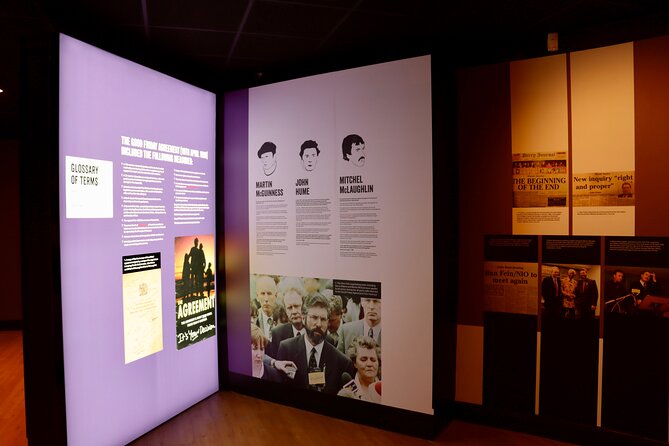
At $10.97 per person, the ticket is fairly priced for a 90-minute museum visit with several forms of media and a multilingual audio guide. The value is strongest if you are already planning to explore Derry’s history and want more than a surface view of the murals and landmarks.
You are paying for interpretation as well as entry. The museum brings together documents, objects, film, voices, and political explanation in one place. That saves you from trying to piece together the peace process from scattered sources.
The price may feel less attractive if you only want a quick introduction or have very little time. This is not an entertainment attraction, and the subject demands concentration. If you rush through it, you may not get the full value from the ticket.
There is no food or drink included. A cafe is available at the museum according to information from the visit, so it may be useful for a break or lunch, but food is separate from admission.
Who will get the most from this museum
I would recommend the Peacemakers Museum to you if you want to understand how Derry moved from conflict toward political peace, not just see the physical reminders of the Troubles.
It is particularly useful for:
- First-time visitors who want context for Derry’s murals and memorials
- Anyone interested in the Good Friday Agreement
- People studying modern Irish or British history
- Visitors who prefer oral history and film alongside written displays
- Anyone planning to visit both the Free Derry Museum and Peacemakers
Families with older children may also find it worthwhile, but the material is serious and there is a lot to read. Younger children may not get much from a museum built around political history and personal testimony.
If you have lived through the Troubles or have a close personal connection to the period, be prepared for an emotional response. The museum can bring back memories as well as offer historical explanation.
A few practical cautions before you book
The ticket is non-refundable and cannot be changed after booking. Only reserve when you are confident that the date and time fit your plans.
The experience is offered in English, but the audio guide supports Spanish, French, German, and Italian. The written guide is in English.
Allow more time than the bare minimum if you want to hear the films and read the displays. You can visit in 90 minutes, but you should not treat that figure as a promise that every section can be studied slowly.
Finally, check the opening hours directly before setting out. The stated schedule covers weekdays only, and a past closure caused frustration for someone who had planned the museum around another nearby visit.
Should you book the Peacemakers Museum?
Book it if you want a serious, local account of Derry’s journey from the Troubles to the peace process. The museum is especially good at joining political history with personal experience, and its focus on John Hume, Martin McGuinness, and Mitchel McLaughlin gives the story a strong connection to the city.
I would visit the Free Derry Museum first when possible, then allow a full 90 minutes for Peacemakers. The pair should give you a clearer sense of how the conflict developed and how the Good Friday Agreement changed the political path forward.
Skip it only if your schedule is too tight for sustained reading and reflection. For anyone willing to give the subject proper time, the $10.97 ticket offers a useful and affecting look at Derry’s recent past and its ongoing search for peace.
FAQ
Where is the Peacemakers Museum located?
The museum is in Derry-Londonderry, Northern Ireland.
How long does a visit take?
The visit takes approximately one hour and 30 minutes.
What period does the museum cover?
The museum explores the period from August 1972 through May 2007, including the conflict, the peace process, and the implementation of the Good Friday Agreement.
What is included with admission?
Admission includes all fees and taxes, plus an audio guide and an English written guide.
In which languages is the audio guide available?
The audio guide is offered in English, Spanish, French, German, and Italian.
Is a written guide available?
Yes. A written guide is available in English.
What are the opening hours?
For the stated period from July 29, 2024, through February 16, 2027, the museum is open Monday through Friday from 9:30 a.m. to 5 p.m.
Is the museum suitable for people using public transportation or service animals?
Yes. The museum is near public transportation, and service animals are allowed.
Can I cancel or change my ticket?
No. The ticket is non-refundable and cannot be changed for any reason after booking.
Just added around Derry
- Derrie Danders: A Self-Guided Audio Tour of the Riverside and South City★ 5.0 · 3 reviews
- Derrie Danders: Wander around the Waterside on a self-guided GPS audio tour★ 4.5 · 3 reviews
- Full Day Private Luxury Tour of Causeway Coast (Giants Causeway)★ 5.0 · 5 reviews
- Derrie Danders: A Self-Guided Audio Tour of the Walled City’s West★ 4.5 · 6 reviews
- Derrie Danders: Unveiling Derry’s Dark & Haunted Past Audio Tour★ 4.5 · 3 reviews
- Giant’s Causeway & Game of Thrones (luxury Private Tour)★ 5.0 · 15 reviews
- Herstory Derry Tour★ 5.0 · 16 reviews
- Private Guided Tour of Causeway Coastal Route★ 5.0 · 31 reviews
Museums, compared.
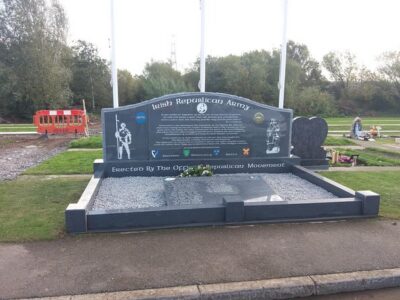
IRA Troubles Conflict Private Tour Museum Graves Murals and Political Analysis
Read our review →
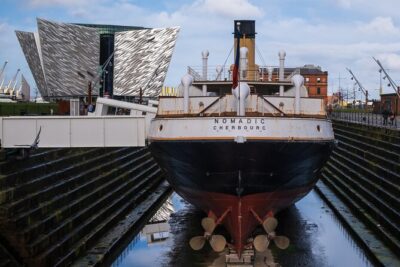
Titanic Museum and Whiskey Distillery Exploration with Tasting
Read our review →
Belfast City Sightseeing Tour Including Titanic Museum | 6 Hours
Read our review →Browse the lists this tour appears in