
Reviewed · BELFAST TROUBLES AND MURAL TOURS
IRA Troubles Conflict Private Tour Museum Graves Murals and Political Analysis
Belfast’s past is written across its walls, cemeteries, streets, and memorial gardens. This private tour takes you into the Falls Road, Clonard, Ballymurphy, and Shankill districts, explaining The Troubles from an Irish Republican point of view while showing you the places where that conflict remains visible.
I like the private vehicle, which lets you cover a lot of ground in three hours without trying to piece together Belfast’s divided neighborhoods on foot. I also like the access to the Eileen Hickey Irish Republican History Museum, a small collection not generally open to the public, where the subject feels personal rather than polished for mass tourism.
The main consideration is the tour’s clear political framing. You will hear the Republican case in detail, but not an equal presentation of Republican, Loyalist, and British arguments. If you want a balanced account of both sides, book a different Belfast political tour, or pair this one with another perspective.
Key points to know before you book
- Private access to a Republican museum: The Eileen Hickey museum is scheduled for visits Tuesday through Saturday from 10 a.m. to 2 p.m.
- A strongly stated viewpoint: The tour explains Belfast through Irish Republican history, including the IRA, hunger strikes, imprisonment, and the peace process.
- Many major sites in a short time: Expect murals, the Falls Road, Shankill Road, peace walls, Milltown Cemetery, Divis Tower, Clonard, and Ballymurphy.
- Personal guiding matters here: Guides named Barry, Paula, Joe, Ciarán, Brendan, and Anton have led this experience, with personal stories forming a major part of the presentation.
- Milltown Cemetery is a serious stop: You will visit the Republican plots and Bobby Sands’s grave, so allow room for a quiet, emotional part of the morning.
- Pickup details need checking: Central pickup is offered at the Leonardo hotel, while several other locations carry an extra charge.
Why this Belfast tour feels different
Many Belfast tours explain the murals from the outside, then move on. This one spends more time inside the political story behind them. You are not simply told that a wall divides two communities. You are taken to both sides, shown how the barrier works, and asked to consider why a structure first intended as a short-term measure still remains.
The tour is also unusually direct about its angle. Your guide discusses Irish Republican resistance, the formation and development of the Provisional IRA, Republican prisoners, hunger strikes, and the campaign for Irish reunification. Loyalism and British policy appear in that story, but they are treated as part of a Republican narrative rather than as an equal viewpoint.
That honesty is useful. You know what kind of tour you are joining, and you can ask questions without trying to pull the guide toward a subject the tour was not designed to cover. Guides such as Barry, Paula, and Joe are described as drawing on their own experience of Belfast and the conflict, which gives the commentary a human edge.
It also means you should arrive ready to listen carefully. The tour uses terms, names, and political positions that can be confusing at first. You will get more from it if you ask when a group, event, or acronym is unclear.
More belfast troubles and mural tours in Belfast:
- Belfast’s Political Mural Taxi Tour
★ 5.0 · 1,180 reviews - Belfast Troubles Tour: Walls and Bridges
★ 5.0 · 853 reviews - Famous 1.5 hour Belfast Murals Tour
★ 5.0 · 477 reviews
Falls Road murals and the first view of the divide
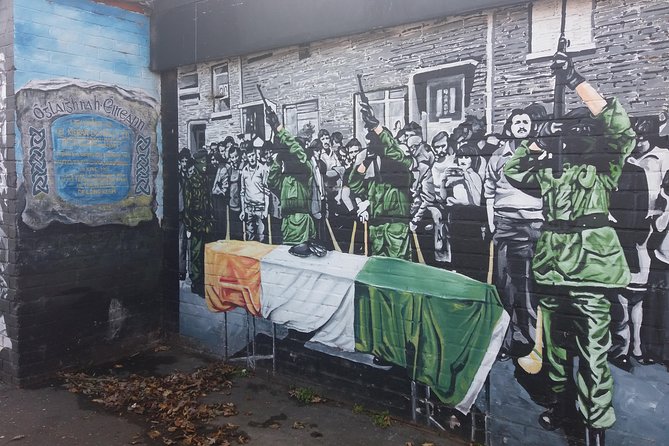
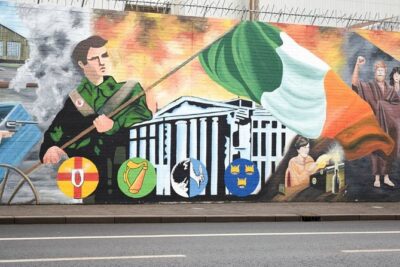
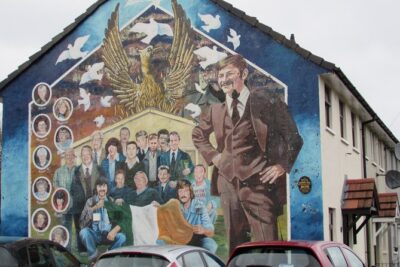
The opening stop at the International Mural Wall on Divis Street sets the tone. The Falls Road area is the heart of the tour’s Republican story, and the murals here are not decoration in the usual tourist sense. They are public statements about memory, identity, political prisoners, international causes, and the struggle for Irish freedom.
Your guide explains how the conflict developed from 1969 onward and connects the murals with former prisoners who painted them. The short listed stop is about 10 minutes, but the value comes from the explanation around it. A photograph alone tells you very little. The guide helps you read the symbols and place them within Belfast’s political history.
You should expect a lot of information early in the tour. The subject reaches back far beyond the three decades commonly called The Troubles, and the guides often begin with earlier Irish history before moving to modern Belfast. That wider background can help, but it also makes the pace brisk.
Peace walls, gates, and a divided city
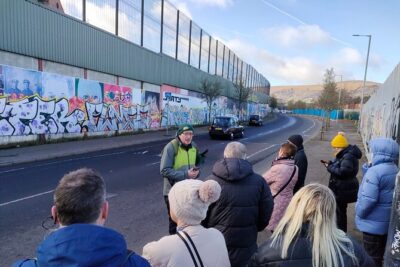
The peace wall between the Falls and Shankill districts is one of Belfast’s most striking sights. It is a physical reminder that the peace process did not erase the city’s division. Some roads still have gates that close at night, and the walls have grown longer and more numerous over time.
You visit both sides of the wall and hear why it was built. The tour also gives you the chance to sign the wall and write a message of peace. That sounds simple, but it creates a useful pause in a tour otherwise filled with armed groups, deaths, prison protests, and political grievance.
The largest wall separating the Falls and Shankill areas stretches roughly 800 metres and rises in several levels. Your guide explains that the first walls appeared after sectarian riots in 1969. They were meant to keep communities apart during violence, yet their success at reducing immediate contact helped make them permanent.
This is one place where you should look beyond the photograph. The wall is not only a symbol of peace. It is also evidence that peace can exist alongside separation, suspicion, and unfinished political questions.
Shankill Road and the Loyalist side
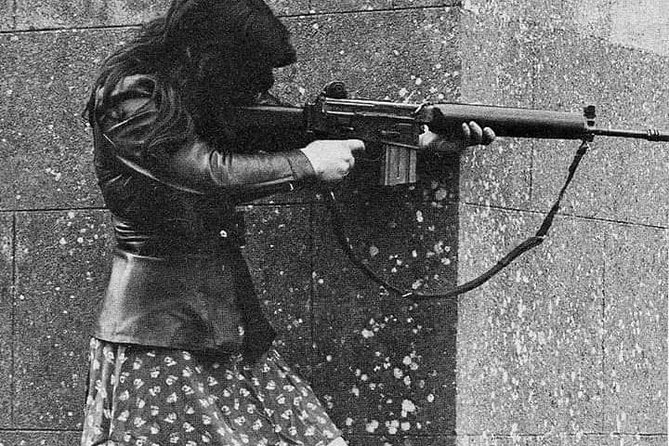
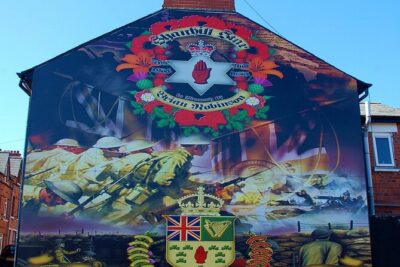
The tour crosses into Shankill Road, the traditional heartland of Ulster Loyalism. Here, murals show Loyalist paramilitary groups and masked men carrying weapons. The guide explains how Loyalism developed and how groups such as the UDA, UFF, and UVF operated during the conflict.
This stop is important because it keeps the tour from showing only one neighborhood. You will not receive a full Loyalist tour, but you will see the physical contrast between the Shankill and Falls areas and hear how each community understood the other.
The stop is scheduled for about 10 minutes, so do not expect a long walk through the district. You will mainly view the murals and streets from the vehicle, with opportunities to take photographs. Be discreet. These are living neighborhoods, not an open-air museum, and the people who live here have inherited the memories being presented.
A few more Belfast trips to weigh up
- Titanic Museum and Whiskey Distillery Exploration with Tasting
★ 4.5 · 25 reviews - Belfast City Sightseeing Tour Including Titanic Museum | 6 Hours
★ 4.5 · 9 reviews - Peacemakers Museum Entry Ticket
★ 5.0 · 37 reviews - Saint Patrick Centre Exhibition experience
★ 4.5 · 33 reviews
Clonard Martyrs and the scars of 1969
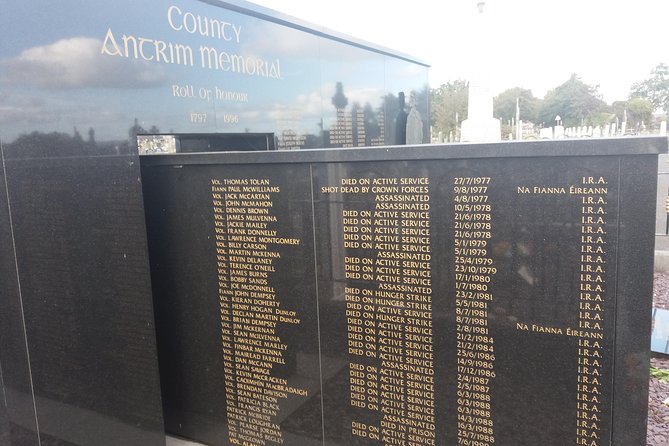
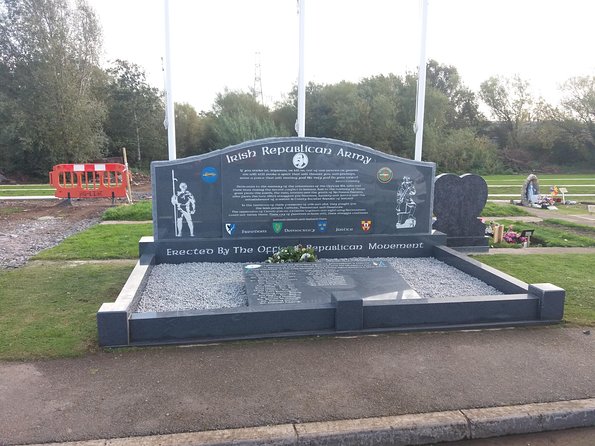
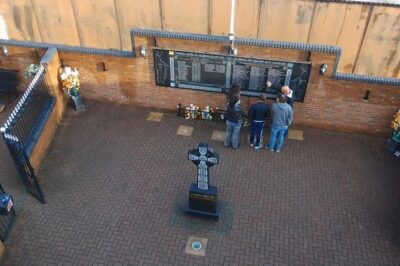
At the Clonard Martyrs Memorial Garden on Bombay Street, the tour becomes more intimate. Black iron gates feature a rising phoenix and the phrase Out the Ashes Arose the Provisionals. Inside, memorials name Republican volunteers, civilians, and prisoners connected with the Greater Clonard area.
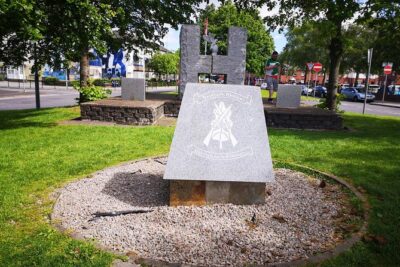
The garden is divided into three yards. Celtic crosses, granite plaques, provincial shields, benches, and lists of names create a formal place of remembrance. One section honors members of C Company, 2nd Battalion, Belfast Brigade. Other plaques remember civilians killed by Loyalists and British forces, as well as Republican prisoners from earlier decades.
The setting connects directly with the events of August 1969, when Bombay Street and nearby Catholic homes were attacked and burned. The first peace walls followed soon after. You can see how a memorial garden and a concrete barrier grew from the same period of fear and displacement.
The scheduled visit lasts about 30 minutes, making it one of the longer outdoor stops. If you are interested in how communities remember their dead, this may be among the most valuable parts of the tour. If you prefer a lighter sightseeing day, it may feel heavy.
Milltown Cemetery and Bobby Sands’s grave
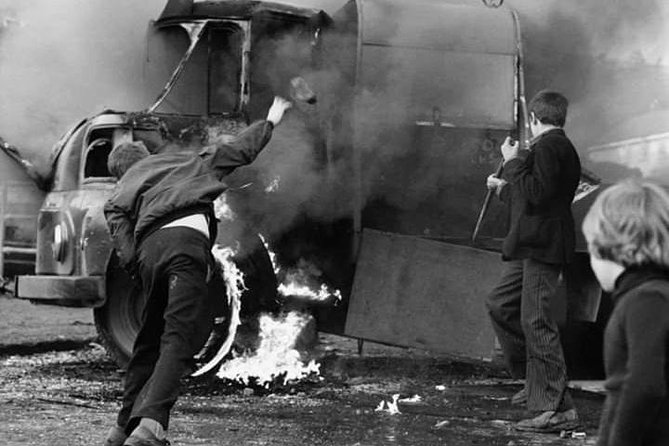
Milltown Cemetery is the tour’s most solemn stop. You visit the Republican plots, including the graves of volunteers killed in the 1920s, the Northern Campaign of the 1940s, and later periods of the conflict. The National Graves Association maintains several of these areas, marked with Republican symbols and formal memorials.
Bobby Sands’s grave is the best-known resting place here. Sands was a Provisional IRA member who died on hunger strike in 1981 while serving a sentence at the Maze prison. He had been elected as a Member of Parliament during the strike and died after 66 days.
The tour also points out the New Republican Plot, which contains the remains of 77 IRA volunteers, including Máiread Farrell. Your guide explains the meaning of the cemetery and the role of Republican commemoration rather than treating the site as a quick photo stop.
One practical note: the cemetery is scheduled for about 25 minutes, and that is a fair amount of time for a quiet memorial visit. If you are bringing flowers for a family grave, one guide has stopped at a flower shop to allow this. Arrange such a request in advance rather than counting on it.
The Republican museum and the value of private access
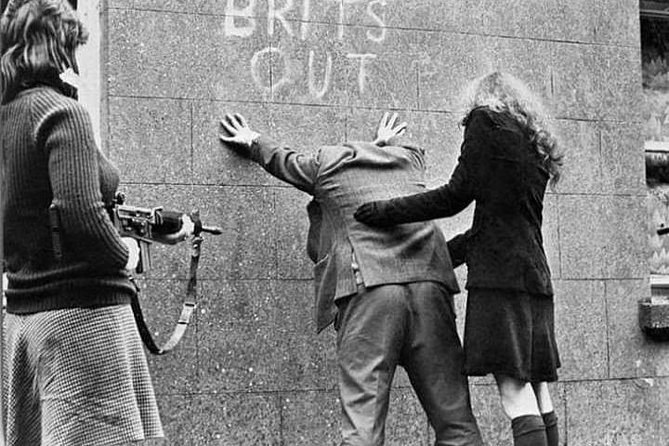
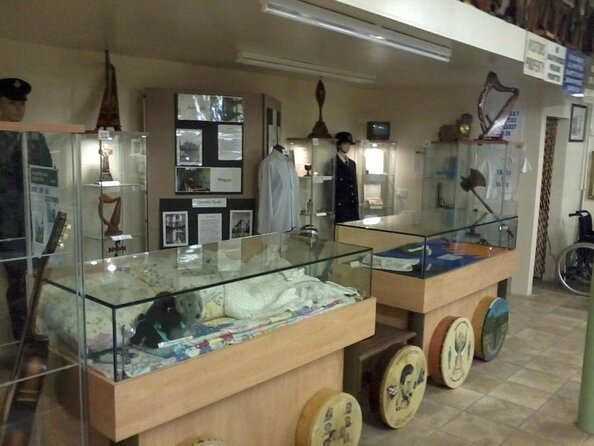
The Eileen Hickey Irish Republican History Museum is the tour’s most unusual feature. It is not normally open to the general public, and the visit gives you access to objects connected with Republican resistance and imprisonment.
The collection includes material from the struggle against British rule and the wider history of Irish resistance over roughly 800 years. You may also handle plastic and rubber bullets used by British Crown forces, an unusual hands-on detail that helps connect political history with the physical tools of the conflict.
The museum is only open for this tour from 10 a.m. to 2 p.m., Tuesday through Saturday. If it is closed, the alternative is a drive through Ballymurphy. That makes your start time important. Ask at booking if the museum is central to your plans, especially if you are visiting on a Sunday, Monday, or outside its opening hours.
You may meet former prisoners who share their experiences of the conflict. That can be powerful, but personal testimony is never the same as a neutral textbook. Listen for the distinction between an individual memory, a community tradition, and a point that can be checked against wider historical accounts.
Bobby Sands murals and the hunger strikes
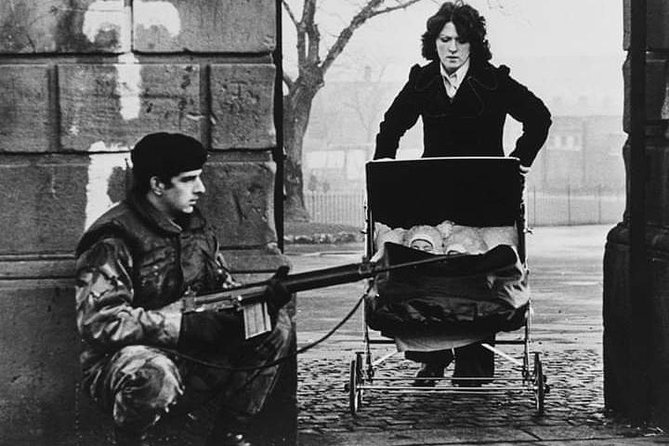
The tour visits the famous Bobby Sands mural and discusses the blanket and dirty protests that led to the hunger strikes of 1981. These prison protests began over the removal of special category status, which had allowed Republican prisoners to be treated as political prisoners rather than ordinary criminals.
A second stop focuses on the Republican heartland and a Garden of Remembrance associated with the 2nd Battalion, Belfast Brigade, including D Company, sometimes called The Dogs. The guide also discusses the Battle of the Falls in 1970, the 1920 Falls Road Massacre, and the hunger strikers.
The itinerary refers to photographs of 12 of the 22 hunger strikers. Taken together, the murals, memorial garden, and cemetery make the human cost of the prison struggle hard to avoid. You should not expect a detached account. The presentation gives strong attention to the Republican interpretation of the hunger strikes and their place in the wider campaign.
Divis Tower, Ballymurphy, and the Republican heartland
Divis Tower overlooks the Falls and once held a British Army sniper position and observation post, which remained in place until 2005. The tour points out the names and murals connected with the first two victims of The Troubles.
In Ballymurphy, you drive through Republican streets and see murals to the Great Famine, local volunteers, and Jim Bryson with his Big Louie machine gun. The guide explains the local meaning of these images and the role of the neighborhood during the conflict.
The final Divis stops include a Welcome Wall and another view of Belfast’s largest peace wall. These brief visits are useful because they show how political memory fills ordinary streets. The drawback is time. Several stops last only five minutes, so you will often view them from the vehicle rather than explore on foot.
Clonard Monastery and the peace process
Clonard Monastery lies near the interface between the Falls and Shankill districts. During the 1969 violence, priests from the monastery worked to protect local residents. Fathers Alec Reid and Gerry Reynolds, two important Catholic figures in the peace process, lived and worked here.
The monastery gives the tour a different angle. Memorial gardens and murals show how communities remember conflict, while Clonard shows the role of clergy in trying to reduce it. The stop lasts about 10 minutes and helps connect the street-level story with later negotiations and ceasefires.
Your guide also discusses current political developments and the peace process. The depth of that section will depend on your guide and your questions, but the private format makes it easier to ask how Belfast’s divisions continue today.
Three hours in a private vehicle
The tour costs $255.50 per person and lasts about three hours. That is a serious price, but this is not a simple mural drive. The fee covers private transportation, an air-conditioned vehicle, hotel transfer from the central meeting point, and a personalized route through areas that are awkward to connect by public transport.
You also pay for time with a guide who can answer questions and adjust the route. One guide has changed destinations during a tour as the conversation developed. Another has dropped people at Kelly’s Cellar afterward, and a guide has stopped so a couple could buy flowers for a family grave.
The value is strongest for a small group with a clear interest in modern Irish history. Split the cost among several people, and a private vehicle with a personal guide can make sense. For one person or a couple on a tight budget, the price may feel high, especially because some stops are very short.
Central pickup is free from the Leonardo hotel. Pickup or drop-off at places such as the Titanic Museum, Crumlin Road Gaol, Queen’s University, the Botanical Gardens, or Ulster Museum costs an additional £10. Lanyon train station, Dublin train, and St George’s Market pickups may also carry a £10 charge. Cruise ship pickup costs £25 each way, and airport pickup is not offered.
You can request an upgrade to a Mercedes-Benz V-Class with leather reclining seats, privacy glass, and electric doors for an additional £25 when available. The standard vehicle is air-conditioned, so the upgrade is a comfort choice rather than a requirement.
How to prepare for a politically focused tour
Read the title carefully before you book. This is an Irish Republican perspective tour, not a neutral overview of every position held during The Troubles. That does not make it unsuitable, but it does affect the questions you should bring.
I would pair the tour with basic reading on Nationalist and Unionist identities, partition, civil rights, internment, the peace process, and the 1998 Good Friday Agreement. You do not need to arrive as an expert. A little preparation will help you sort history, memory, political argument, and personal experience as you listen.
The tour is likely to suit you if you want:
- A private guide rather than a large group
- Direct access to Republican memorials and collections
- Personal accounts from people connected with Belfast
- A close look at murals and peace walls
- Time to ask detailed questions
- A strong focus on the IRA and Republican history
It may not suit you if you want a neutral city introduction, a broad architectural tour, or a full account of Loyalist history. The subject includes death, imprisonment, armed groups, and sectarian violence, so this is not a casual sightseeing drive.
The experience is rated 4.9 out of 5 from 67 ratings, with 97 percent of customers recommending it. That matches the tour’s strongest qualities: guides who are engaging, punctual, flexible, and able to make a difficult subject personal. Still, one account describes the price as high, and another notes that an accent was hard to follow. You can reduce the risk by requesting a slower pace and asking questions when you miss a point.
Should you book this Belfast IRA tour?
Book it if you want to understand Republican Belfast from inside its own story. The private museum, Milltown Cemetery, Clonard memorials, peace walls, and personal guiding offer access and detail that a quick city drive cannot match.
Book with care if you need political balance. You will see Shankill Road and hear about Loyalism, but the tour’s center is Irish Republican history. For a fuller picture, use this as one part of your Belfast visit and add a tour that presents both sides of the divide.
At $255.50 per person, I would choose it for a small group with a serious interest in history, politics, or family connections to Ireland. I would not choose it simply to collect mural photographs. The best reason to go is the chance to ask hard questions in the places where Belfast’s past is still part of daily life.
FAQ
How long does the tour last?
The tour lasts approximately three hours.
What viewpoint does the guide present?
The tour is presented from an Irish Republican perspective, covering the IRA, Republican history, the conflict, the peace process, and current political analysis.
Is this a private tour?
Yes. Only your group participates, and the itinerary can be personalized through questions and discussion.
Is transportation included?
Yes. Private transportation in an air-conditioned vehicle is included, along with round-trip transfer from the central meeting point at the Leonardo hotel.
Can I visit the Irish Republican History Museum?
The museum is scheduled to open for this experience from 10 a.m. to 2 p.m., Tuesday through Saturday. If it is closed, the tour substitutes a visit around Ballymurphy.
Does the tour visit Bobby Sands’s grave?
Yes. The tour visits Milltown Cemetery and the Republican plots, including Bobby Sands’s resting place.
Are there extra pickup charges?
Yes. Several pickup locations outside central Belfast cost an additional £10, cruise ship pickup and drop-off cost £25 each way, and airport pickup is not available.
Just added around Belfast
- This is Belfast Walking Tours. Our history, our culture.★ 5.0 · 7 reviews
- Giants Causeway Private Tour★ 5.0 · 3 reviews
- The Single Cask Whiskey Experience★ 5.0 · 6 reviews
- Epic Escape Room Adventure to Save King’s Landing in Belfast★ 5.0 · 3 reviews
- Belfast City Sightseeing Tour Including Titanic Museum | 6 Hours★ 4.5 · 9 reviews
- 4 Hours Private Belfast City Tours★ 5.0 · 10 reviews
- Private Guided Walking Tour in Belfast★ 3.5 · 3 reviews
- Private Departure Transfer: Hotel to Belfast Airport★ 5.0 · 9 reviews
Belfast Troubles and Mural Tours, compared.
2 Hour Private Belfast Taxi Cab Tour of Troubles & Peace walls
Read our review →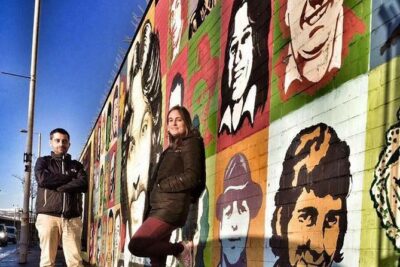
2 hours Belfast Original Drivers The Troubles Black Taxi Tour
Read our review →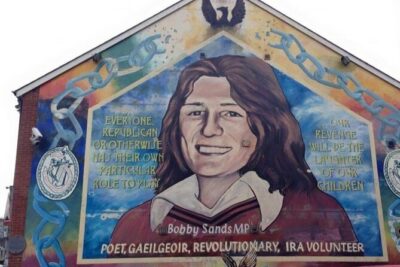
Private Political History & Murals Tour Belfast
Read our review →Browse the lists this tour appears in