
Reviewed · BELFAST TROUBLES AND MURAL TOURS
Belfast’s Political Mural Taxi Tour
Belfast’s murals are not just street art. They are public records of identity, grief, loyalty, resistance, and hope. This private taxi tour takes you from the republican Falls Road to the loyalist Shankill Road, with a local guide explaining how the city’s divided past still shapes its streets today.
I like the private format, since you can ask direct questions and the guide can adjust the pace or focus. I also like the chance to hear personal memories from Belfast guides such as Jackie, Jimmy, Tony, Michael, and Pat, rather than relying only on dates and political labels.
The main drawback is time. One hour is tight for a subject this complicated, and one tour guest sensibly wished for another 30 minutes. You will see the key areas, but this is an introduction, not a full study of the Troubles.
Key points to know before booking
- The tour crosses both sides of Belfast: You visit republican areas around Falls Road and loyalist areas around Shankill Road.
- The Peace Wall is a real stop: You can pass through the Peace Gates and leave a message on the wall.
- Your guide shapes the experience: Private tours allow room for questions and personal interests.
- The guides add lived experience: Jackie, Jimmy, Tony, Michael, and others explain events with local and personal context.
- The meeting point is central: Standard pickup and drop-off are at the Leonardo Hotel on Great Victoria Street.
- Plan for a serious subject: The tour can include violence, loss, identity, and continuing division, though guides aim for a fair account.
Why Belfast’s murals need a guide
You can see a mural in seconds. Understanding it takes longer.
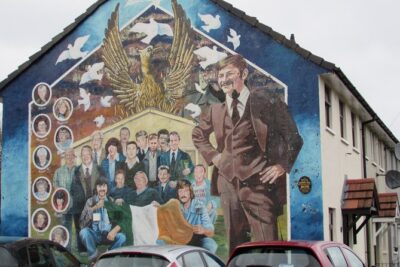
A painted portrait, flag, name, or military symbol may refer to a hunger striker, a dead community member, an old political cause, or a much wider argument about British and Irish identity. Without context, the murals can look like bold decoration. With a good guide, they become a map of Belfast’s recent past.
This tour focuses on the period commonly called the Troubles, the conflict that shaped Northern Ireland for decades and began a particularly violent phase in 1969. The guide introduces the political and community divisions that led to the unrest, then places the murals and walls within that story.
I would choose this tour early in a Belfast visit. It gives you a framework for the city before you visit museums or explore the neighborhoods on foot. It also helps you understand why two nearby streets can carry such different symbols and memories.
The strongest part of the experience is the human explanation. Guides including Jackie and Tony are described as Belfast natives with personal connections to the conflict. Jimmy is praised for allowing plenty of questions, while Michael has adjusted routes for people who had already seen some of the main sights. That flexibility matters on a private tour.
More belfast troubles and mural tours in Belfast:
- Belfast Troubles Tour: Walls and Bridges
★ 5.0 · 853 reviews - Famous 1.5 hour Belfast Murals Tour
★ 5.0 · 477 reviews - Belfast Murals Taxi Tour
★ 5.0 · 341 reviews
Starting at the Bobby Sands mural on Falls Road
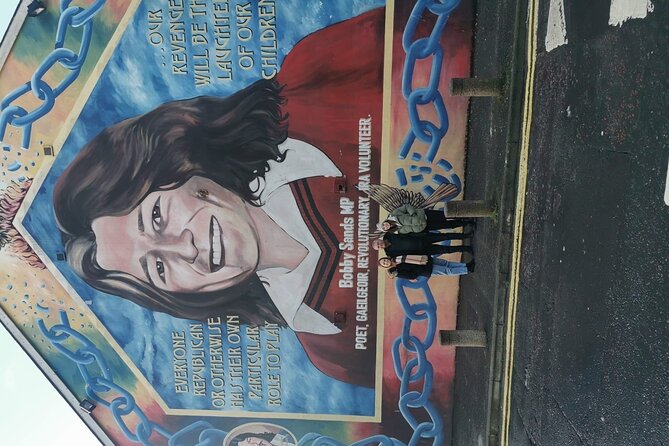
The first stop is the Bobby Sands mural near Divis Tower on the Falls Road. This is a useful place to begin because it puts an individual face on a broad political story.
Your guide gives an introduction here, including the events leading to August 1969 and the beginning of the Troubles. Expect the talk to set up the major themes of the hour: republican and loyalist identities, the role of the British state, community division, prison protests, political violence, and the effect on ordinary families.
The stop lasts about 15 minutes. That is enough for an opening explanation and photographs, but not enough for every detail. If you are new to Northern Irish history, listen for the basic structure rather than trying to memorize every name.
The Bobby Sands mural is also a reminder that these images are not neutral. For some people, Sands represents republican resistance and sacrifice. For others, he remains associated with the Provisional IRA and the violence of the conflict. A responsible guide should explain why the mural matters without pretending that every local memory is the same.
That balance is one of the qualities most often praised in the guiding. Jackie, Tony, and Jimmy are repeatedly singled out for explaining both sides and keeping the conversation fair. You should still feel free to ask how different communities interpret the same person or event.
Reading the International Mural Wall on Divis Street
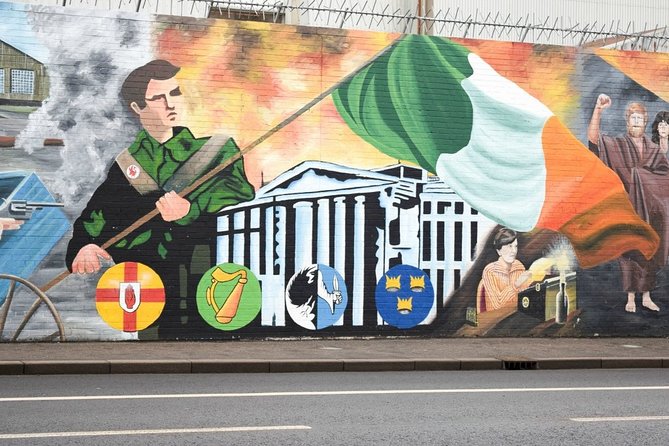
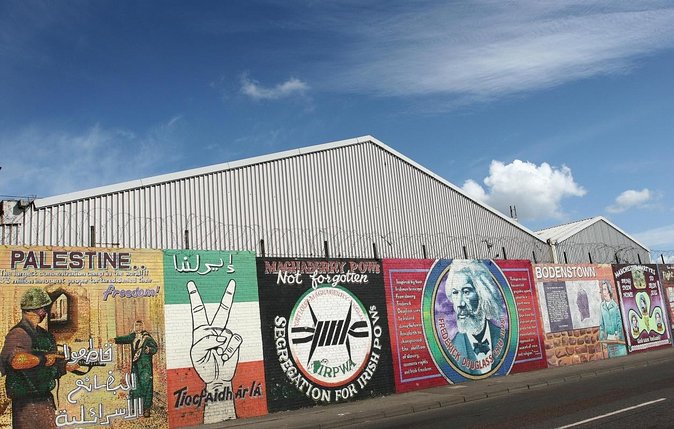
The next stop is the International Mural Wall on Divis Street, where the tour shifts from one major political image to the wider tradition of mural-making in Belfast.
Here, murals may connect local politics with international causes. Your guide brings the painted images into focus by explaining the symbols, people, and events shown. You have about 20 minutes for photographs and questions, which is generous compared with the opening stop.
I like this part because it shows how murals work as communication. They do not simply decorate a neighborhood. They speak to residents, visitors, political allies, and future generations. The wall can present a community’s view of justice, oppression, national identity, or solidarity beyond Northern Ireland.
The phrase open-air art gallery can sound lighthearted, but the material here is often heavy. Some murals honor people who died. Others express political demands or remember struggles far beyond Belfast. The value of the stop comes from holding both ideas at once: these are works of art, and they are also statements formed by conflict.
Your guide can also help you notice what a photograph leaves out. A mural sits on a particular street, in a particular neighborhood, beside homes and businesses shaped by the same history. The taxi format lets you move between images while hearing the local setting explained.
If you want more time for photography, say so early. The private setup makes that easier than it would be on a fixed group route, though the one-hour schedule still puts a limit on how long you can linger.
Crossing the Peace Gates at Belfast’s Peace Wall
The Peace Wall is the emotional center of the tour.
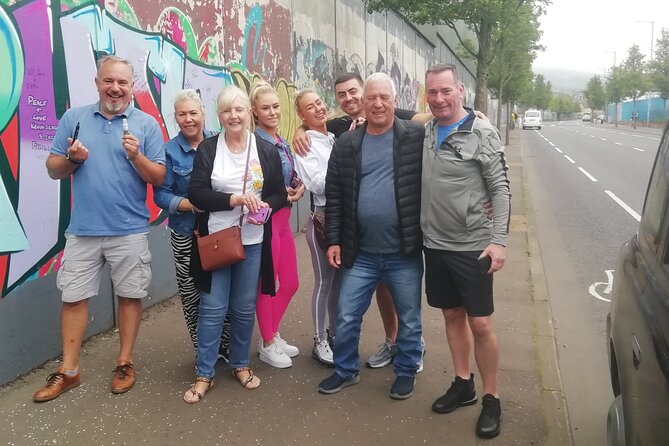
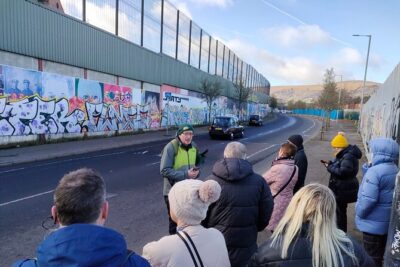
You pass through the Peace Gates to reach the largest of Belfast’s many walls dividing communities. The guide explains how these barriers came to shape daily life and why division did not vanish simply because open conflict declined.
You have around 20 minutes here. You can take photographs, ask questions, and write your own message of peace on the wall. The chance to leave a note gives the stop a small personal act, but the setting remains serious. This is not a monument from a distant war. It is part of a city where separation and identity still matter.
The wall has hosted messages from public figures such as Bill Clinton and the Dalai Lama. Adding your own words may feel modest, but it gives you a way to respond rather than only observe.
I would approach this stop with care. Avoid treating the wall as a novelty or a backdrop without thinking about what it represents. Your guide can explain the practical and political meaning of the barrier, as well as the hopes for peace that have gathered around it.
The Peace Wall also makes the value of a taxi clear. You are not simply driven past it. You stop, cross through the gates, and have time to take in the place. Since the tour is private, you can ask about the difference between a peace wall, a neighborhood boundary, and the political identities represented on either side.
Same city, a completely different kind of day:
- Titanic Belfast Entrance Ticket: Titanic Visitor Experience Including SS Nomadic
★ 4.5 · 3,698 reviews - Cab Tours Belfast Famous Black Taxi Tours
★ 5.0 · 3,633 reviews - Giant’s Causeway Day Trip from Belfast
★ 5.0 · 3,480 reviews - A History of Terror – Belfast City Centre Walking Tour
★ 5.0 · 2,883 reviews
Entering the Shankill Road
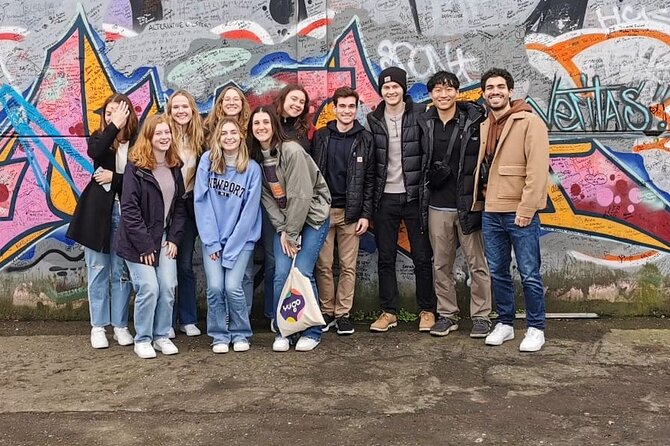
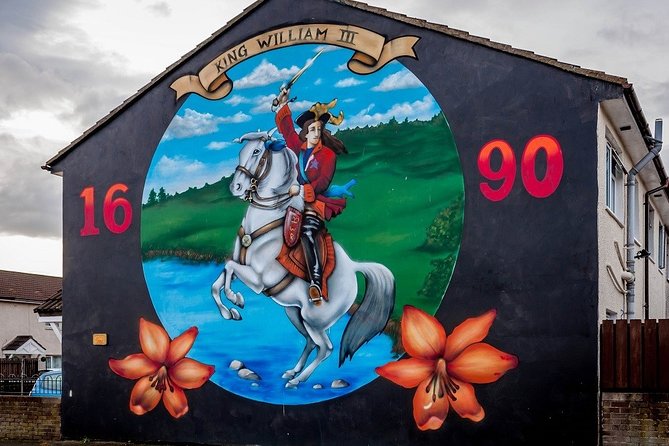
From the Falls Road and Peace Wall, the taxi enters the Shankill Road, a Protestant, British, Unionist, and Loyalist community.
This shift is essential. A tour that shows only republican murals would give you a partial picture of Belfast. Shankill Road offers a different set of symbols, memories, and political loyalties. Your guide points out important buildings and murals, with several photo stops during the 15-minute visit.
The language around these identities can be unfamiliar, so ask for plain explanations. Protestant refers to religious tradition, while British, Unionist, and Loyalist describe overlapping but distinct views about national identity and Northern Ireland’s constitutional place. They should not be treated as interchangeable labels.
The Shankill stop is shorter than the two 20-minute mural and Peace Wall visits. That means you may see fewer images than you hoped, especially if traffic or questions take time. One guest found the tour excellent but wished for more murals, a fair point for anyone booking mainly for photography.
Still, the short visit has a clear purpose. It completes the contrast between the two communities and keeps the hour focused. You are not asked to decide which side is right. You are given the chance to see how each side presents its past.
The best guides make room for complexity. Tony is praised for offering a balanced account and sharing parts of his own story. Jackie is described as friendly, funny, and able to explain the conflict from several viewpoints. That combination of warmth and restraint can make a difficult subject easier to approach without making it less serious.
What the private taxi format changes
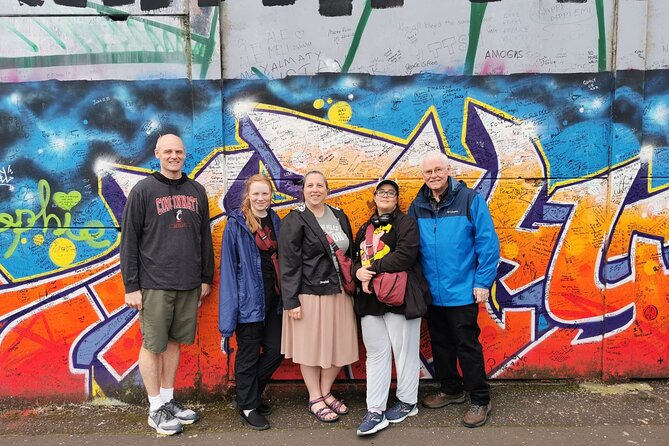
A taxi is a practical choice for this route. The main locations are spread across Belfast, and a vehicle lets you cover Falls Road, Divis Street, the Peace Wall, and Shankill Road in a short period.
You do not need to organize several bus connections or guess which streets are appropriate for finding a particular mural. Pickup and drop-off are available at the Leonardo Hotel, formerly the Jury’s Inn, on Great Victoria Street in the city center.
The activity is private, so only your group takes part. That is particularly useful for this subject. You can ask a delicate question without worrying about a large group, pause for clarification, or tell the guide that you prefer more history, more personal accounts, or more time for photos.
The guides also appear willing to help beyond the formal route. Jimmy dropped one group at its next destination and offered tips for visiting a museum. Michael adjusted the experience for people who had already seen some of the standard sights. These are small touches, but they show how a private ride can work as both a tour and a useful orientation to Belfast.
The trade-off is that a taxi has limited space and you will spend much of the hour seated. If your main aim is to photograph every mural slowly, a walking tour may offer more time in one area. If your aim is to understand the relationship between several neighborhoods, the taxi is more efficient.
Is $48.54 good value for one hour?
At $48.54 per person, the tour is not the cheapest way to look at Belfast’s murals. Its value depends on what you want from the hour.
You are paying for a private vehicle, a certified local guide, door-to-door pickup at the central meeting point, and access to a route that would be hard to understand from photographs alone. For a couple or small group, the private format can be a sensible use of time, especially during a short Belfast visit.
The price includes the guide but not food or drinks. Airport and cruise-port pickups cost extra: £25 from Belfast City Airport, £25 from the Belfast cruise ship port, and £50 from Belfast International Airport. Those charges make the standard city-center meeting point the better-value choice.
I see the tour as good value for first-time visitors who want a clear introduction to the Troubles. It is less compelling if you already know Belfast well and want a long, slow art-focused walk. The strongest return comes from the personal explanation, the cross-community route, and the chance to ask your own questions.
Because the tour runs for about one hour, you can also combine it with a museum visit or another Belfast activity on the same day. Allow extra time around the tour if you want to continue discussing the subject with your guide or follow a recommendation afterward.
Who should book this Belfast mural tour?
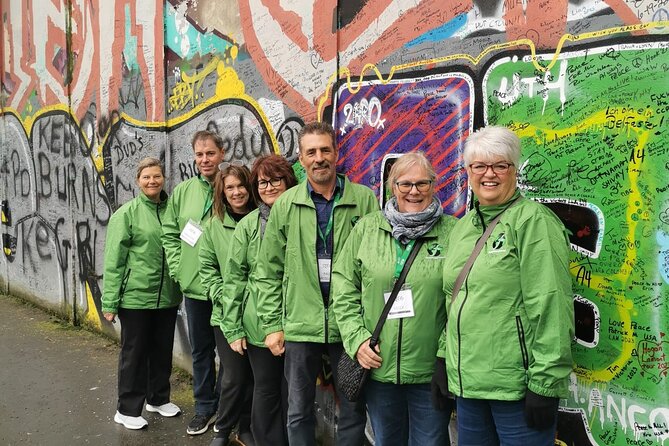
I would recommend it to adults and older children who want historical context, not just sightseeing. One guide tailored the tour for young children and allowed them to leave messages or drawings on the Peace Wall, so families can take part if the subject is introduced with care.
It also suits:
- First-time visitors who need an introduction to Belfast
- People interested in Irish and British political history
- Visitors who prefer private tours and direct conversation
- Cruise passengers or short-break visitors with limited time
- Anyone who wants to see both republican and loyalist areas
- Repeat visitors who want a more personal account of the city
This may not be the right choice if you want a light city tour. The subject includes death, political violence, prison protest, and long-term division. Several guides use humor and friendly conversation, but the material remains emotional.
You should also avoid expecting a final answer to every question. The Troubles cannot be explained fully in 60 minutes, and no single guide can represent every family or community. The goal is to give you a sound starting point and help you see the city with greater care.
Booking details and useful planning tips
The tour is offered in English, with a mobile ticket and pickup available. Standard pickup and drop-off take place at the Leonardo Hotel on Great Victoria Street.
Most people book around 16 days ahead, so reserve earlier if your Belfast dates are fixed. Confirmation is provided at booking, and free cancellation is available up to 24 hours before the start time. Changes or cancellations made inside that 24-hour window are not accepted for a refund.
Service animals are allowed, the tour is near public transportation, and most people can participate. If you need an airport or port pickup, check the extra charge before booking.
I would bring a phone or camera, but keep photography respectful. The murals are public, yet the communities and memories behind them are personal. Use the stops to listen as much as you photograph.
A small practical tip comes from the guiding experience: bring some cash if you may want to tip your driver. Contactless payment was not always available for that purpose.
Should you book it?
Book this tour if you want a concise, personal introduction to Belfast’s political past and would value a guide who can explain both republican and loyalist viewpoints. The route covers the essential places, and the private setting gives you room to ask the questions that a standard sightseeing ride may skip.
I would be cautious only if you need a longer tour or want to focus mainly on mural photography. One hour can feel rushed, and the Shankill Road section in particular may leave you wishing for more time.
For most first-time visitors, I think it is a strong opening activity. You will leave with a clearer sense of why Belfast looks the way it does, why the murals still matter, and why peace in this city is an ongoing process rather than a simple ending.
FAQ
How long does Belfast’s Political Mural Taxi Tour last?
The tour lasts approximately one hour.
What places does the tour visit?
The route includes the Bobby Sands mural near Divis Tower, the International Mural Wall on Divis Street, the Peace Wall, and Shankill Road.
Is this a private tour?
Yes. Only your group participates in the activity.
Where is the standard meeting point?
Pickup and drop-off are at the Leonardo Hotel, formerly the Jury’s Inn, on Great Victoria Street in Belfast city center.
Is pickup available from Belfast airports?
Yes, but extra charges apply. Belfast City Airport pickup costs £25, and Belfast International Airport pickup costs £50.
Can I be picked up at the cruise ship port?
Yes. Pickup from Belfast cruise ship port costs £25.
What language is the tour offered in?
The tour is offered in English.
Can I write a message on the Peace Wall?
Yes. The Peace Wall stop includes an opportunity to write your own message of peace on the wall.
Can I cancel for a full refund?
Yes. You can cancel at least 24 hours before the start time for a full refund. Cancellations or changes made less than 24 hours before the experience are not accepted for a refund.
Just added around Belfast
- This is Belfast Walking Tours. Our history, our culture.★ 5.0 · 7 reviews
- Giants Causeway Private Tour★ 5.0 · 3 reviews
- The Single Cask Whiskey Experience★ 5.0 · 6 reviews
- Epic Escape Room Adventure to Save King’s Landing in Belfast★ 5.0 · 3 reviews
- Belfast City Sightseeing Tour Including Titanic Museum | 6 Hours★ 4.5 · 9 reviews
- 4 Hours Private Belfast City Tours★ 5.0 · 10 reviews
- Private Guided Walking Tour in Belfast★ 3.5 · 3 reviews
- Private Departure Transfer: Hotel to Belfast Airport★ 5.0 · 9 reviews
Belfast Troubles and Mural Tours, compared.
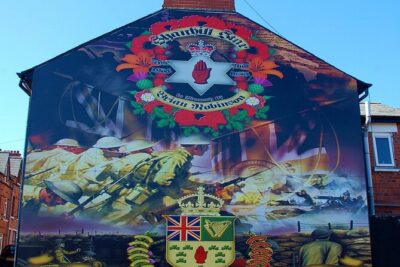
2 Hour Private Belfast Taxi Cab Tour of Troubles & Peace walls
Read our review →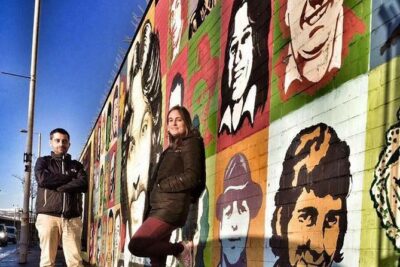
2 hours Belfast Original Drivers The Troubles Black Taxi Tour
Read our review →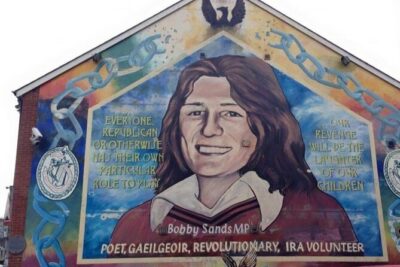
Private Political History & Murals Tour Belfast
Read our review →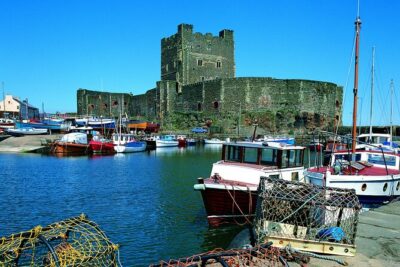
Giant’s Causeway and Belfast City Murals Tour inc Game of Thrones Dark Hedges
Read our review →Browse the lists this tour appears in