
Reviewed · BELFAST TROUBLES AND MURAL TOURS
The Troubles and iconic award winning taxi 2hr private cab tour
The most useful thing about this Belfast tour is its close look at two communities that still live beside one another, yet often tell very different stories about the past. In one private cab, you move from Republican Falls Road to Loyalist Shankill Road, stopping at murals, a former prison, a monastery, and the Peace Wall.
I like the private format, since you can ask direct questions without holding up a busload of people. I also like the chance to hear guides such as David, Ricky, Sean, and Gerard explain events through personal experience, not just dates from a textbook.
The main caution is that this is a serious political tour, not a light city sightseeing ride. One poor experience involved cigarette smoke, a late pickup, and unclear guiding, so it is sensible to confirm your pickup point and tour length before setting off.
Key points before you book
- See both sides of Belfast: Travel through Republican Falls Road and Loyalist Shankill Road in the same cab.
- Personal guides matter: David, Ricky, Sean, and Gerard have been praised for clear storytelling and firsthand understanding of The Troubles.
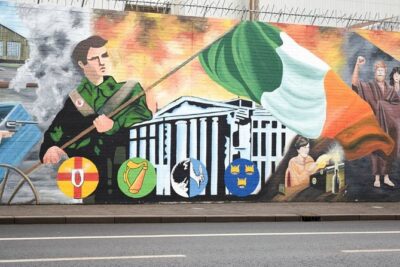
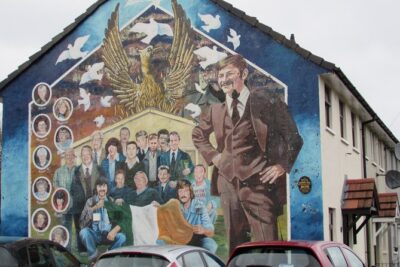
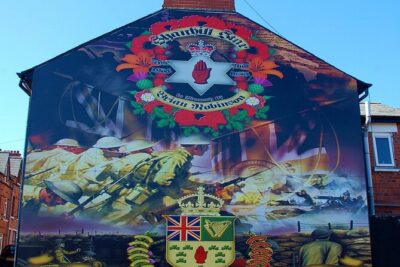
- Murals are the main visual record: Bobby Sands, international causes, British loyalty, and local family stories all appear on walls around the city.
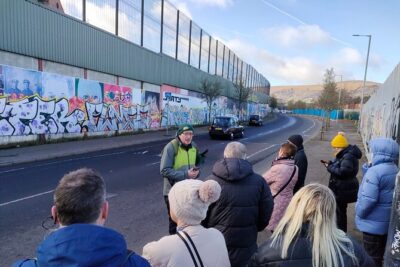
- The Peace Wall is still real: You can see the barriers built from 1969 onward and write your name on one section.
- Central pickup is included: Collection is free within 1 kilometer of Belfast City Hall, with a city-center meeting option.
- Allow for a weighty afternoon: The tour deals with political violence, prison, hunger strikes, identity, and communities still divided today.
Why this cab tour gives Belfast more context
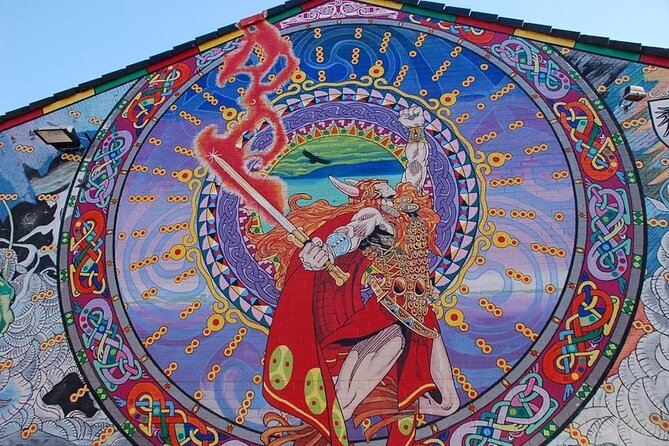
A regular city tour can show you Belfast’s grand buildings and shipbuilding past. This cab ride takes you into neighborhoods where walls, flags, murals, churches, and old prison gates still carry political meaning.
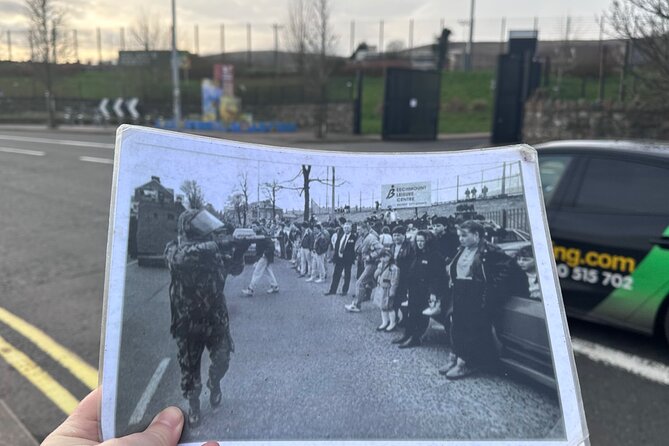
The setting is not a museum arranged for visitors. You see murals on ordinary homes, community buildings, and headquarters. You pass streets where families lived through burning, shootings, imprisonment, and military occupation. That makes the experience direct and sometimes uncomfortable, but it also helps explain why Belfast cannot be understood through a few dates and a quick photo stop.
Your driver is also your guide. That matters here. The best part of the tour is the conversation in the cab, where you can ask how a place was viewed by one community, then hear how the other side understood the same event. David has been praised for bringing the story to life, while Ricky has been valued for explaining the city from someone who lived through The Troubles. Sean and Gerard are also noted for clear, personal accounts that try to give both sides room.
That balance is worth watching closely. The itinerary gives strong attention to Republican history, including the IRA, Bobby Sands, the 1981 hunger strike, and support for international causes. It also spends time on Loyalist identity, the UVF and UDA, murals, and continued loyalty to the British crown. A good guide should make clear when a point is a community belief, a political position, or an established historical fact.
More belfast troubles and mural tours in Belfast:
- Belfast’s Political Mural Taxi Tour
★ 5.0 · 1,180 reviews - Belfast Troubles Tour: Walls and Bridges
★ 5.0 · 853 reviews - Famous 1.5 hour Belfast Murals Tour
★ 5.0 · 477 reviews
Falls Road and Bobby Sands’ mural
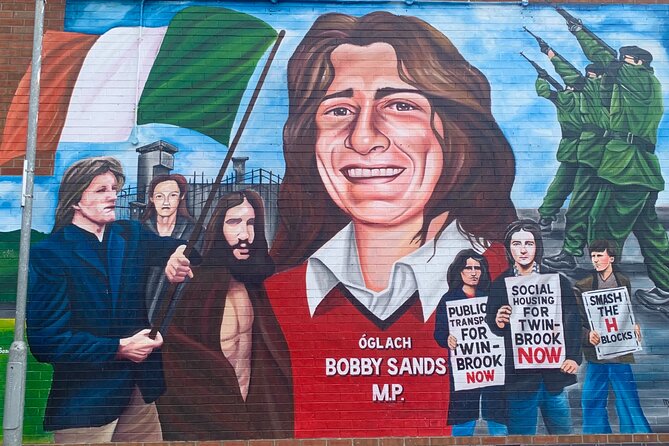
The tour usually begins in the Falls Road area, the center of Belfast’s Republican community. The Bobby Sands mural is the key photo stop. It shows Sands, the IRA volunteer and Member of Parliament who died during the 1981 hunger strike, and it has become one of the city’s most recognized political images.
You will hear about Sands, the hunger strike, and the way Republican communities remember him. This is not just a quick look at painted brick. The mural represents memory, political identity, and the struggle over how the conflict should be described.
Allow about 30 minutes here. That is useful because you have time to listen, ask questions, and take photographs without rushing. Admission is not charged for the stop, though the information provided lists no separate admission ticket as included.
The guide’s viewpoint matters most at this point. You should expect a detailed Republican account, so use the opportunity to ask how Loyalist communities viewed the hunger strike and the IRA campaign. The private setting makes that kind of question easier than it would be on a large group excursion.
Divis Flats and the burning of 1969
Divis Flats marks the start of Falls Road and carries a different kind of story. A welcome mural here presents the area as open to all, while the guide explains the British Army base that occupied the top floors of the flats.
The account includes claims that residents were used as human shields, as well as the burning of Falls Road by Loyalists in 1969. You will also hear a broad explanation of 800 years of Irish and British relations. This stop is brief, around 10 minutes, but it gives physical meaning to the tense streets you are passing through.
Look up at the buildings as the guide talks. Divis is valuable because the story is tied to a real residential setting, not an abstract timeline. The short stop may feel compressed if you want a detailed political discussion, but the cab format lets you continue asking questions between locations.
Clonard Monastery and secret peace talks
Clonard Monastery is important to West Belfast’s Catholic community and gives the tour a quieter pause. The monastery hosted secret peace talks between Gerry Adams and John Hume, two major figures in the political process that helped move Northern Ireland away from open conflict.
You receive about 10 minutes here. The stop helps show that peace did not arrive only through formal public meetings. Private conversations, religious institutions, and discreet contacts all had a part in the process.
Do not expect a long interior visit or a guided religious tour. The value is in the political context and the monastery’s place in local life. It is a small stop, but it connects the murals and street-level conflict to the later effort to find a political path forward.
A few more Belfast trips to weigh up
- Private Black Taxi Belfast City Tour
★ 5.0 · 2,188 reviews - 2 Hour Private Belfast Taxi Cab Tour of Troubles & Peace walls
★ 5.0 · 240 reviews - Private Political History & Murals Tour Belfast
★ 5.0 · 182 reviews - Giants Causeway & Antrim Coast Private Tour
★ 5.0 · 176 reviews
Shankill Road and Loyalist Belfast
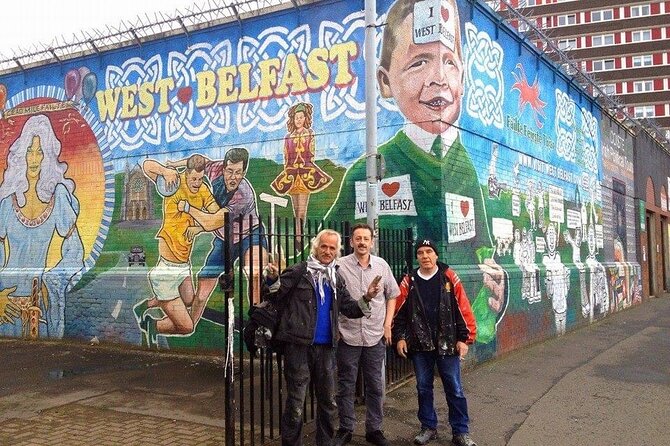
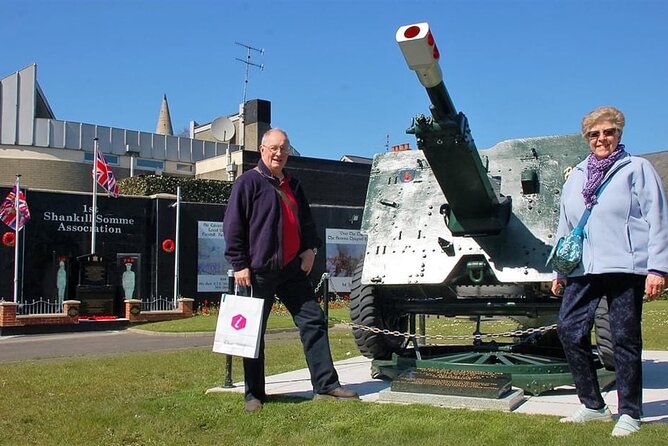
Crossing to Shankill Road is one of the most important moments of the tour. The area is the heart of Belfast’s Loyalist community, with murals on family homes and community buildings showing loyalty to the British crown.
The guide explains the origins and outlook of groups such as the UVF and UDA, along with the area’s long connection to British identity. The tour description places that story within 800 years of British history, while also referring to the Shankill’s roots going back to 455 AD.
You have about 40 minutes here, the longest scheduled stop. That gives the Loyalist side more than a passing glance. You can look at the murals, take photographs, and ask how the images function within a residential neighborhood.
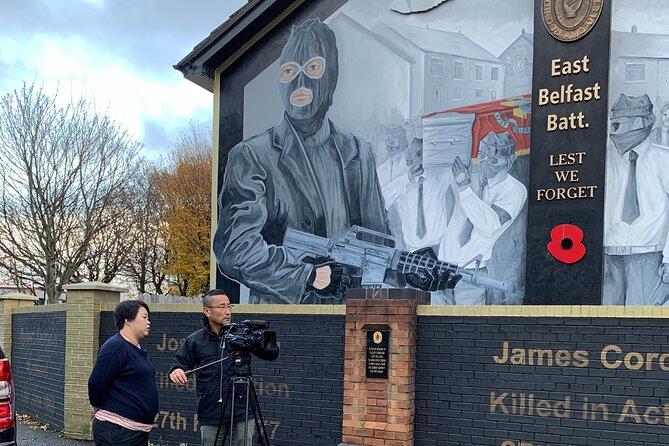
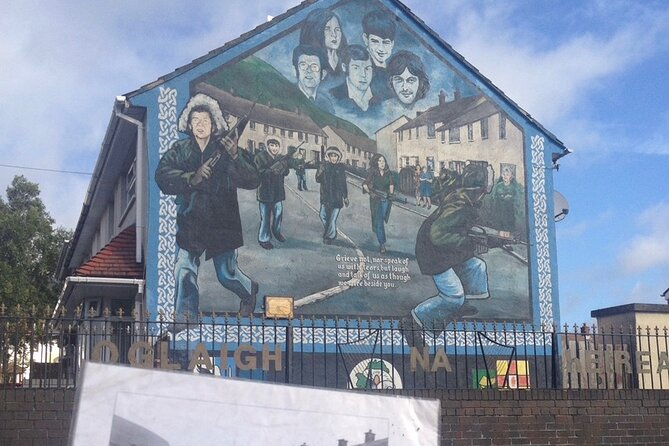
This is also where you should pay attention to language. Loyalist murals are not simply decorations. They can honor local men, display military symbols, mark territory, and express a community’s relationship with Britain. Some may be painted on or beside family homes, so photography should be respectful and discreet.
I value this section because the tour does not leave you with a one-sided walk through Falls Road. Still, the guide’s personal politics can shape the explanation. Several guides have made a point of presenting both communities, but you should listen critically and ask for clarification when a statement sounds partisan.
Crumlin Road Gaol and the old prison system
Crumlin Road Gaol brings the conflict into a former prison. Built in the 1800s, it held political prisoners and remained a place of execution into the 1960s. A tunnel under Crumlin Road connected the jail with the courthouse.
You have around 10 minutes at the site, and the stop is listed as free. That is enough to see the outside and understand its role, but not enough for a full prison tour. If you want to go inside the gaol, check separately because this cab experience does not include a prison admission.
The stop works well as a link between older British rule, the criminal justice system, and the later imprisonment of political suspects. It also reminds you that Belfast’s political story was lived in courtrooms and cells, not only on walls and streets.
International Mural Wall on Divis Street
The International Wall on Divis Street shifts the focus beyond Northern Ireland. More than 40 murals refer to conflicts and oppressed groups around the world, including Palestinian, Kurdish, and Cuban causes supported by Republican communities.
The murals can change monthly, so the exact display is not fixed. That makes the stop useful for understanding how Belfast communities connect their own political struggle with causes elsewhere.
You receive about 10 minutes here. This is enough for photographs and a short explanation, though the changing artwork means the experience will vary from one visit to another. The wall also shows that Belfast’s political art is not only about local memory. It is part of an ongoing political conversation.
The Peace Wall and a chance to leave your mark
The Peace Wall is perhaps Belfast’s most instantly recognizable reminder that peace and separation are not the same thing. Many of these barriers were built from 1969 onward to reduce violence between communities. More than 30 walls and barriers still exist around the city.
You have about 10 minutes to see the wall and write your name on it. That small act can feel light compared with the history around you, but it gives you a physical connection to the site.
The wall is also a good place to ask what has changed and what has not. The open passages and visitor messages can suggest normal city life, while the barrier itself shows that the division has not simply disappeared. Your guide can explain how the walls fit into daily life today.
Falls Road Library and the hunger strike story
The Falls Road Library sits opposite the former Black and Tans base. Nearby, a Bobby Sands and IRA volunteer mural appears on the side of Sinn Féin headquarters.
This stop returns to the 1981 hunger strike and gives the guide a chance to explain its political effect in greater detail. You will hear about Sands, the Republican prisoners, and why the hunger strike remains central to the area’s memory.
The stop lasts about 15 minutes and is free. It is another place where a photograph can be taken quickly, but the explanation is more important than the image. If you have read little about the hunger strike, ask the guide to separate the immediate prison dispute from the wider political campaign and later public memory.
Shankill murals and the graveyard
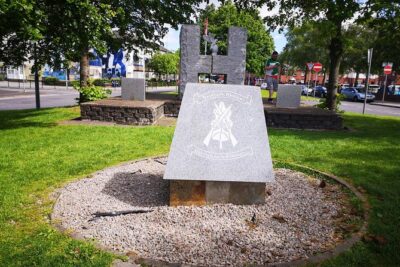
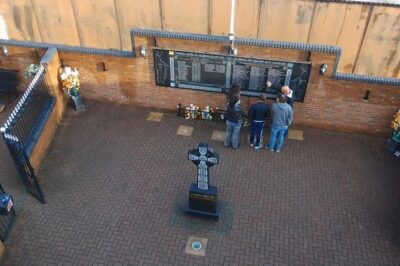
The final listed stop is Shankill Graveyard, where murals and memorials reflect Protestant identity and loyalty to Britain. You have about 15 minutes to take photographs and hear more about the upper and lower Shankill areas.
This return to the Loyalist side helps balance the earlier Falls Road stops. It also gives the tour a useful ending, since you have now seen how both communities use public images to honor their dead, tell their story, and mark their place in the city.
The word graveyard signals the tone. This is not a cheerful photo circuit. You are looking at places shaped by loss and political memory, so respectful behavior matters.
Is $120.64 per person good value?
At $120.64 per person, this is not the cheapest way to see Belfast’s murals. The value depends on your group size and what you want from the experience.
For a private group, the price buys a driver-guide, central pickup, transport between neighborhoods, and roughly two hours of focused explanation. You are not paying only for a taxi ride. You are paying for access to a local account of difficult events, plus the chance to ask questions without a fixed bus commentary.
The tour is also booked well ahead on average, around 36 days before the date. That suggests planning ahead is sensible, especially if your Belfast visit is short. Since the experience operates as a private activity, only your group takes part, which can make the cost easier to justify for families or small groups splitting the fare.
The main value question is depth. Two hours is enough to cover a lot of ground, but the itinerary includes nine stops. Several are only 10 minutes long, so you will get a broad introduction rather than a slow, detailed visit at every site.
Pickup, timing, and practical points
Free pickup is offered within 1 kilometer of Belfast City Hall. If you are outside that area, the stated meeting point is the front gates of Belfast City Hall. The cruise ship shuttle bus stops outside Visit Belfast, across from City Hall, which can make that meeting point practical for some passengers.
Pickup from a cruise ship port, airport, or train station is not included. A surcharge may apply for those locations, and the information provided says it must be paid in cash on the day. Cruise ship passengers should not assume direct port collection is available.
The advertised duration is about two hours. One past booking involved confusion between a shorter tour and a longer political tour, followed by a much longer private experience after the company owner took over. That was an unusual case, but it is a useful reason to confirm exactly what you have booked, especially if your day includes a train, flight, or ship departure.
Children must be accompanied by an adult. Service animals are allowed, and most people can take part. Mobile tickets are accepted, the tour is offered in English, and confirmation is sent at booking.
Free cancellation is available until 24 hours before the start time. Changes or cancellations inside that window are not accepted for a refund. The tour also requires a minimum number of people, so a cancellation by the operator may result in another date or a full refund.
Who will get the most from this experience?
I would choose this tour if you want Belfast’s modern political story explained through places you can see. It suits first-time visitors who would struggle to connect the murals, walls, prison, and neighborhoods on their own.
It is especially useful for:
- Couples or families who prefer a private cab to a large bus.
- People interested in political history and local identity.
- Visitors who want to compare Republican and Loyalist viewpoints.
- Cruise passengers who can reach the City Hall meeting point.
- Anyone who wants a guide willing to answer direct questions.
I would be more cautious if you want a relaxed sightseeing outing, dislike political discussion, or need every stop to include a long visit. The material is serious, and the quality depends heavily on the individual guide and the condition of the cab.
The strongest experiences come from guides who explain personal views while still making room for the other community. David, Ricky, Sean, and Gerard have each been praised for clear storytelling, personal experience, and efforts to present an equitable account. One poor report described cigarette odor and unclear commentary, so if the vehicle or presentation is not acceptable, raise the issue early.
Should you book the Belfast Troubles cab tour?
Book it if you want a compact, personal introduction to Belfast’s divided neighborhoods and you are willing to listen carefully to difficult stories. The route covers the major political sights efficiently, and the private setting gives you room to ask the questions that a standard sightseeing tour may avoid.
For the best experience, meet near City Hall, confirm the two-hour duration and pickup details, and treat the murals and memorials with respect. I would also ask your guide to explain where a community viewpoint ends and a broader historical account begins.
This is a strong choice for an informed first look at The Troubles, especially when your time in Belfast is limited. It is not a substitute for a longer museum visit or a full prison tour, but it can give you the street-level context needed to understand the city.
FAQ
How long is the Belfast Troubles cab tour?
The advertised duration is approximately two hours.
Where is pickup included?
Free pickup is offered within a 1 kilometer radius of Belfast City Hall. You can also arrange to meet at the front gates of City Hall.
Can cruise ship passengers use the pickup service?
Direct pickup from cruise ship ports is not included. The cruise ship shuttle bus leaves passengers outside Visit Belfast, across from City Hall, where you can meet the cab.
Is the tour private?
Yes. Only your group takes part in the activity.
Which Belfast sights are visited?
The route includes the Bobby Sands Mural, Divis Flats, Clonard Monastery, Shankill Road, Crumlin Road Gaol, the International Mural Wall, the Peace Wall, Falls Road Library, and Shankill Graveyard.
Is admission to Crumlin Road Gaol included?
The stop at Crumlin Road Gaol is free, but the experience does not include admission for a full interior prison visit.
What is the cancellation policy?
You can cancel for a full refund up to 24 hours before the experience begins. Cancellations and changes made less than 24 hours before the start time are not accepted for a refund.
Just added around Belfast
- Giants Causeway Private Tour★ 5.0 · 3 reviews
- This is Belfast Walking Tours. Our history, our culture.★ 5.0 · 7 reviews
- The Single Cask Whiskey Experience★ 5.0 · 6 reviews
- Epic Escape Room Adventure to Save King’s Landing in Belfast★ 5.0 · 3 reviews
- Belfast City Sightseeing Tour Including Titanic Museum | 6 Hours★ 4.5 · 9 reviews
- Private Guided Walking Tour in Belfast★ 3.5 · 3 reviews
- 4 Hours Private Belfast City Tours★ 5.0 · 10 reviews
- Private Departure Transfer: Hotel to Belfast Airport★ 5.0 · 9 reviews
Belfast Troubles and Mural Tours, compared.
2 Hour Private Belfast Taxi Cab Tour of Troubles & Peace walls
Read our review →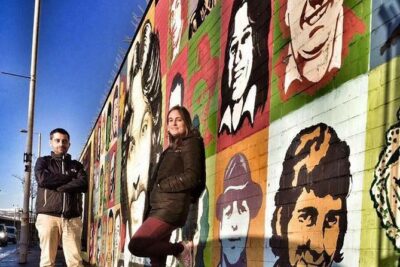
2 hours Belfast Original Drivers The Troubles Black Taxi Tour
Read our review →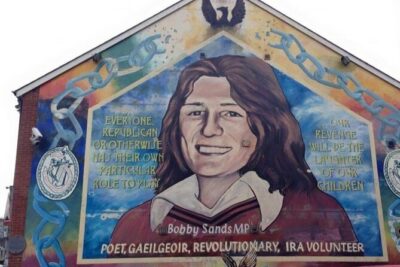
Private Political History & Murals Tour Belfast
Read our review →Browse the lists this tour appears in