
Reviewed · BELFAST TROUBLES AND MURAL TOURS
Private Belfast Troubles Cab Tour Adventure 2hrs Personal Guide
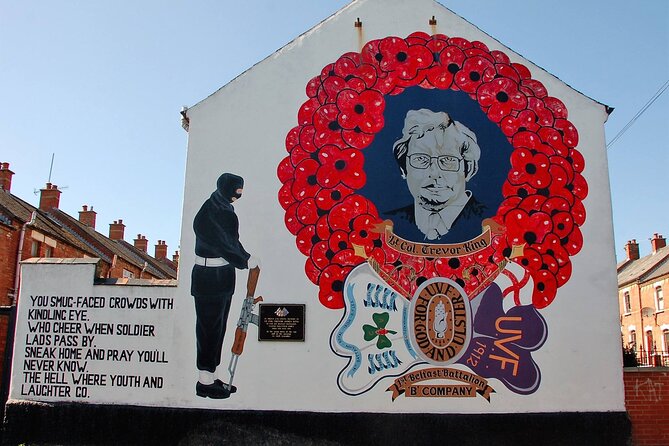
Belfast’s past is written across its walls. On this private two-hour cab tour, you move between the Republican Falls Road and loyalist Shankill Road, stopping at murals, memorial gardens, churches, court buildings, and the Peace Wall. The most valuable part is the local guide who explains what happened here, and why these places still matter.
I like the private format, since you can ask direct questions and adjust the conversation to your interests. I also like the chance to hear personal local knowledge rather than depend on a recorded commentary. The main caution is that the subject is painful and political, and the tour can feel rushed if the guide tries to cover too much.
Key points to know before booking
- Two communities in two hours: Compare Republican Falls Road with loyalist Shankill Road and see how Belfast’s divisions shaped daily life.
- Local guides matter: Brendan, Brendon, Sean Mc, and Stevie have been praised for clear explanations, calm discussion, and personal attention.
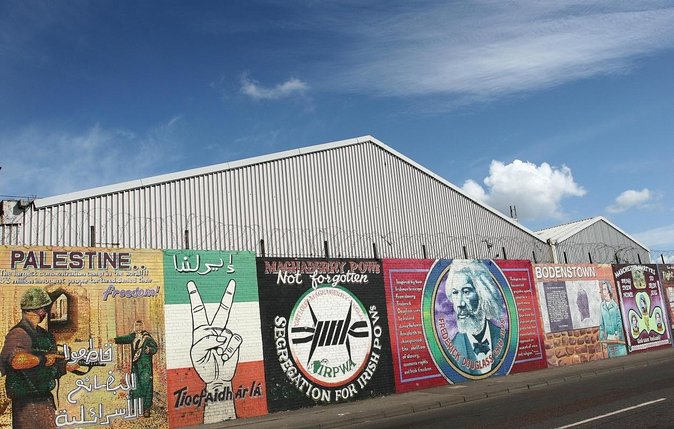
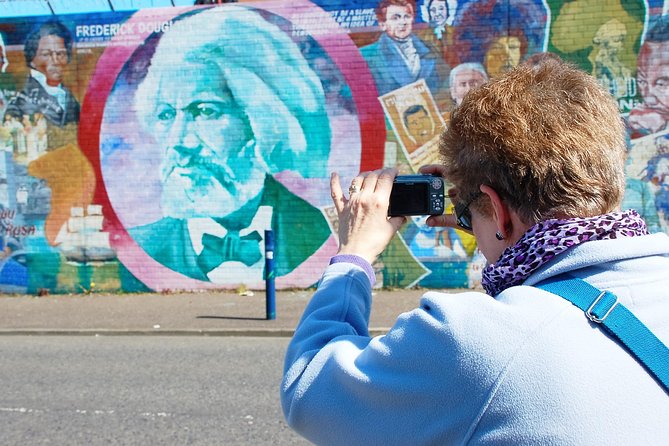
- The Peace Wall is hands-on: You can write your name and a message of hope on the wall, alongside messages from figures such as Bill Clinton and the Dalai Lama.
- Expect serious subject matter: Memorial gardens, prison history, hunger strikes, killings, and political murals make this an emotional outing.
- Private does not always mean leisurely: The advertised route contains many stops, but the two-hour limit means some visits may be brief.
- Check the vehicle: This is sold as a Belfast cab tour, but at least one booking used a Mercedes people carrier rather than a traditional black taxi.
Why this Belfast tour is worth your time
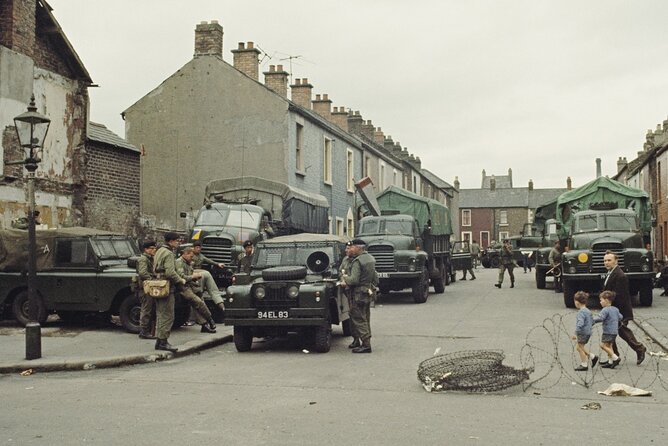
I think this is one of the quickest ways to understand why Belfast can feel like several cities at once. In a short distance, you pass from one political tradition to another, with walls, flags, murals, memorials, and neighborhoods that still carry the marks of the Troubles.
A map alone cannot explain that shift. Your guide can point out where political groups formed, where civilians were killed, where prisoners were held, and how peace efforts developed. That local voice is the heart of the experience.
The tour is private, so your group has the vehicle and guide to itself. That makes it easier to ask difficult questions without worrying about a busload of strangers. It also gives you some control over the pace, although the number of planned locations means you should not expect a slow, museum-style visit.
The experience is recommended by 96 percent of customers and has a 4.8 rating from 55 reviews. The strongest praise focuses on guides who explain both sides, answer questions, and speak with compassion rather than turning the Troubles into a simple good-versus-bad story.
More belfast troubles and mural tours in Belfast:
- Belfast’s Political Mural Taxi Tour
★ 5.0 · 1,180 reviews - Belfast Troubles Tour: Walls and Bridges
★ 5.0 · 853 reviews - Famous 1.5 hour Belfast Murals Tour
★ 5.0 · 477 reviews
Starting at the Falls Road
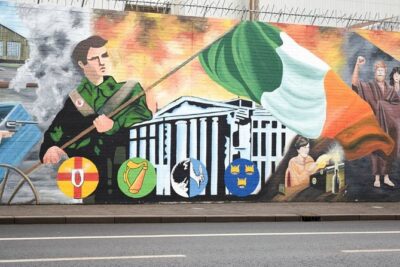
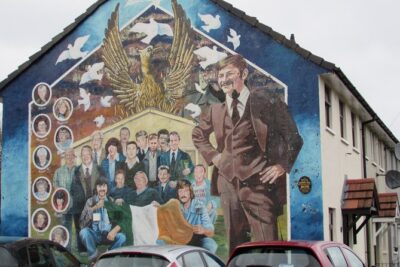
The tour begins near the foot of Falls Road, at a colorful welcome mural associated with the Provisional Irish Republican Army and the early conflict with the British Army. This is a useful opening because it places you in a neighborhood where the political struggle was fought on narrow residential streets, not just in government buildings.
The Falls area also connects with the story shown in the Oscar-winning film In the Name of the Father, starring Daniel Day-Lewis and Emma Thompson. The film centers on Gerry Conlon and the Guildford Four, while the tour points toward the Divis area linked with Conlon’s life.
You are given about 10 minutes here. That is enough for an introduction and photographs, but not enough for a long walk through the neighborhood. Keep your questions ready. A private guide can add much more context if you show interest in a particular mural or event.
The tour also refers to memorials for Republican volunteers, civilians from the Lower Falls, and Republican prisoners who died between 1916 and 1970. These memorials can be difficult to interpret without local explanation, since the wording reflects a particular community’s point of view.
The Peace Wall and Belfast’s unfinished peace
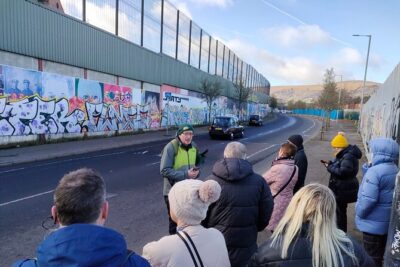
The Peace Wall is the emotional center of the tour. It still separates parts of Belfast, and your guide explains how the division affected movement, housing, identity, and everyday life.
You can write your name and a message of hope on the wall. The surface also carries messages from public figures, including former US President Bill Clinton and the Dalai Lama. This small act gives you a way to respond to the place rather than simply photograph it.
Allow about 20 minutes here. That is enough to read some of the writing, take photographs, and discuss why a wall built as a security measure remains in place after the peace process.
You should also expect a complicated message. The wall can feel like a symbol of progress because the communities are no longer at open war, yet its continued presence shows that separation and mistrust have not vanished. A good guide will help you hold both ideas at the same time.
St Peter’s Cathedral and the Falls Road setting
St Peter’s Cathedral sits in the Divis Street area near Falls Road. Built from the 1860s in the French Gothic style, it serves as the Roman Catholic cathedral for the Diocese of Down and Connor.
The cathedral is part of the tour’s wider picture of community life. Belfast’s political divisions were also tied to religion, neighborhood identity, family background, and competing ideas about the future of Northern Ireland.
The tour information says your guide may bring you inside if you ask. That is worth doing if the cathedral is open and the timing works, but do not assume there will be an extended interior visit. The stated stop is mainly part of the drive and commentary.
This is a good place to ask your guide to separate religious identity from political allegiance. They overlap in Belfast’s history, but they are not identical.
A few more Belfast trips to weigh up
- Private Black Taxi Belfast City Tour
★ 5.0 · 2,188 reviews - 2 Hour Private Belfast Taxi Cab Tour of Troubles & Peace walls
★ 5.0 · 240 reviews - Private Political History & Murals Tour Belfast
★ 5.0 · 182 reviews - Giants Causeway & Antrim Coast Private Tour
★ 5.0 · 176 reviews
Crumlin Road Gaol and the old courthouse
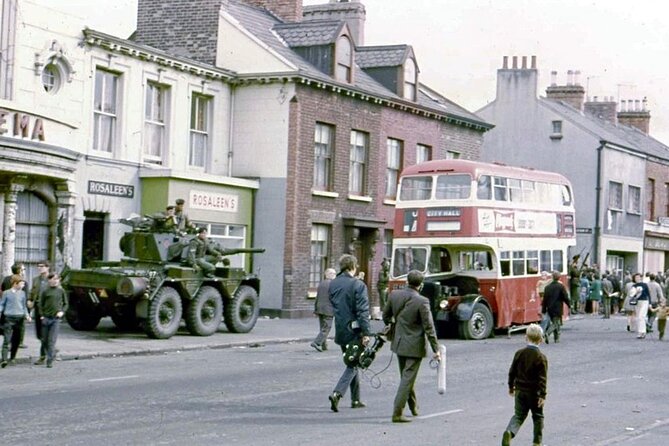
Across from Crumlin Road Gaol is the old courthouse, connected with political prisoners who received sentences ranging from five years to life. The tour also explains how some prisoners were transported between the jail and courthouse, and how escapes formed part of the area’s story.
The jail itself is described through the hanging jail section, where 17 people lost their lives. The route includes an outside view of Crumlin Road Gaol and a photo stop at the courthouse rather than a full prison visit.
That distinction matters. If you want to tour the inside of the jail, this experience is not a substitute for a dedicated prison admission. Here, the value is seeing the buildings in relation to one another and hearing how the legal and prison systems operated during the conflict.
The subject is grim, but the setting helps make it real. You are not just hearing dates in a cab. You are looking at the route prisoners, police, soldiers, lawyers, and families knew well.
Clonard Monastery and the peace process
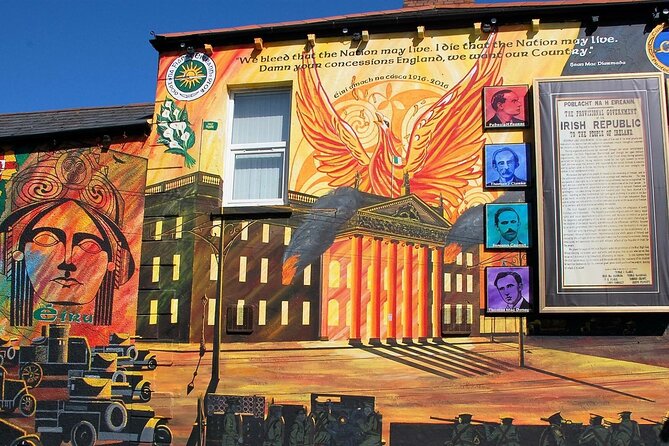
Clonard Monastery, built in 1911 in French Gothic style, is home to Redemptorist priests. It is also linked with the early years of the peace process.
The monastery became associated with secret listening and surveillance, including British intelligence bugging during talks involving Gerry Adams, John Hume, and Father Alec Reid. That connection shows how religious buildings sometimes became quiet meeting places in a conflict where formal negotiations were not always possible.
The stop is listed at about 10 minutes, with the option to ask your guide to bring you inside to see the building. Again, ask early if this matters to you. The schedule is compact, and a short exterior stop may be all that fits.
I find this one of the more revealing locations because it moves the story beyond shootings and murals. It shows the patient, uncertain work that helped move Belfast toward peace.
Bobby Sands and the politics of memory
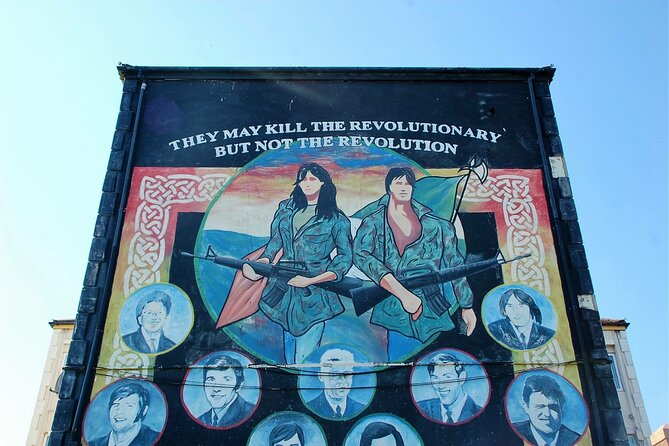
The Bobby Sands mural is one of Belfast’s most photographed political images. It is associated with the IRA hunger striker and MP and is located near Sinn Féin headquarters.
The mural is visually striking, but it is not neutral decoration. Sands remains a powerful figure in Republican memory, while his death during the 1981 hunger strike is viewed very differently across Northern Ireland and Britain.
Your guide can help explain why murals remain such important public statements. They honor people, claim territory, teach community history, and signal political identity. In Belfast, a mural may function as a memorial, a history lesson, and a neighborhood boundary marker at the same time.
The scheduled stop is about 10 minutes. That should give you time for photographs and a short explanation. If you want a longer conversation about Sands, the hunger strikes, or Sinn Féin, use the private format and ask.
Crossing to loyalist Shankill Road
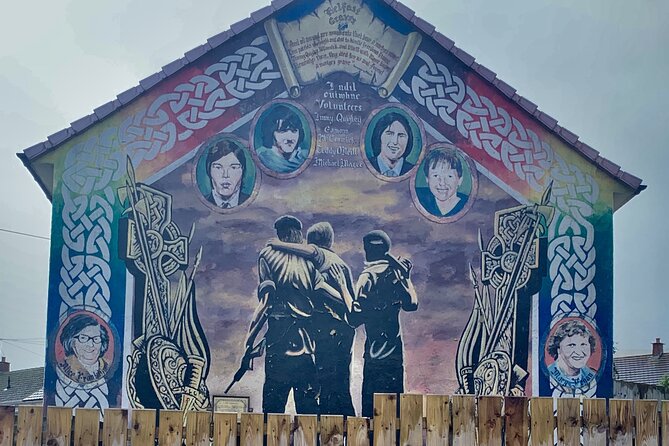
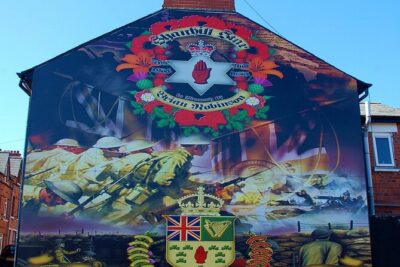
The move to Shankill Road is essential. Seeing only the Falls Road would give you a partial account of Belfast, so the tour includes the main loyalist area and discusses the origins of the Ulster Defence Association and Ulster Volunteer Force.
The guide also connects Shankill with Irish and British regiments that fought in the First and Second World Wars, and later fought against Republicanism. This helps explain why British identity, military service, remembrance, and loyalty to the United Kingdom remain important themes in the area.
Two Shankill stops are listed at about 20 minutes each. That may sound generous for a two-hour tour, especially when combined with the Falls Road, Peace Wall, jail, monastery, cathedral, and memorial gardens. In practice, the guide may combine some locations or keep certain stops brief.
One specific event discussed is the 1975 Bayardo Bar attack on Aberdeen Street. An IRA unit targeted the loyalist pub because it was said to be frequented by members of the UVF. Four Protestant civilians and one UVF member were killed, and more than 50 people were injured.
This is exactly the kind of event that requires care. The tour should make clear that civilians were among the dead and that political explanations do not excuse the human cost. You may find the Shankill section particularly valuable because it prevents the tour from presenting only one community’s suffering.
Clonard Martyrs Memorial Garden
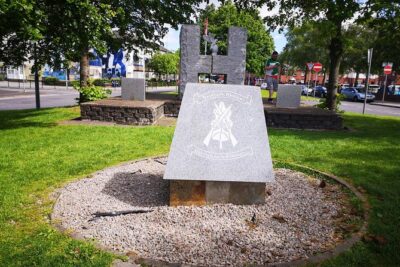
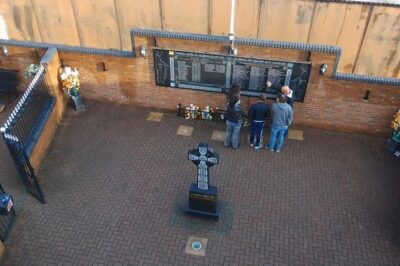
The Clonard Martyrs Memorial Garden commemorates Republican volunteers from C Company of the Second Battalion, Belfast Brigade, as well as civilians from Greater Clonard and Republican prisoners who died between 1916 and 1970.
Like the other memorials, this garden presents a community memory. Listen closely to the wording and ask how different people in Northern Ireland might understand the same names and events.
The memorial garden is listed at about 10 minutes. It is a quiet place to pause after the busier streets and murals. You may find that the guide’s explanation matters more here than the photograph itself.
What the guides add
The best part of this experience depends on the person in the driver’s seat. Brendan, Brendon, Sean Mc, and Stevie are named by customers as guides who provided detailed explanations, answered questions, and adjusted the tour to personal interests.
Sean Mc was praised for thoughtful answers and a careful approach to a difficult period. Stevie was noted for showing both sides of the conflict. Brendan and Brendon were described as friendly, informative, and easy to talk with.
Those details point to what you should want from a Troubles tour: not just a list of incidents, but context, restraint, and room for questions. You do not need a guide who tells you what to think. You need one who can explain why different communities remember the past in different ways.
The experience also seems to work best when you participate. Ask about a mural. Ask how the Peace Wall affects local life. Ask which parts of the story are disputed. A private tour gives you the chance to turn a standard route into a conversation.
Timing, vehicle, and pickup details
The tour lasts about two hours and offers pickup and drop-off within one kilometer of Belfast City Hall. You choose a departure time between 7 a.m. and 4 p.m., which is useful if you are fitting the tour around a museum, walking tour, or afternoon departure.
The experience is in English and comes with a mobile ticket. Transport is by private vehicle, and only your group takes part.
Although the provider is Belfast Famous Black Taxi Tours, one booking used a Mercedes people carrier rather than a traditional black cab. That may not affect the commentary, but it matters if the classic black taxi is a major reason you are booking. Confirm the vehicle before paying if that detail is important to you.
The compact schedule is both a strength and a weakness. You cover a lot without spending half a day on one subject, but you may stop at only three main locations if the guide spends a long time explaining photographs and events. That can be worthwhile, but it means the printed list of stops should not be treated as a promise of lengthy visits at every place.
Is $122.64 per person good value?
At $122.64 per person, the tour is not the cheapest way to see Belfast. For a private group, though, the price buys more than transport. You are paying for a local guide, a focused route, flexible questions, and access to a subject that is hard to understand from a sightseeing bus.
The value improves with more people in your group because the price is attached to a private experience rather than a large shared coach. It also makes more sense if you want political and social context, not just a quick look at famous murals.
The value is weaker if you expect a traditional black cab, a slow itinerary, or a neutral academic lecture. The tour is personal and community-based. That can make it vivid, but it also means the tone may depend heavily on your guide.
Free cancellation is available up to 24 hours before the start time. Poor weather can lead to a new date or a full refund. Children must have an adult with them, and service animals are allowed.
Who should book this tour?
I would choose this tour if you have a serious interest in the Troubles, modern Northern Ireland, political murals, or the peace process. It is also a smart first look at Belfast because it gives you a clear geographic sense of the Falls and Shankill communities.
It suits couples, families with older children, and small groups who want to ask plenty of questions. Most people can participate, and the vehicle pickup makes it easier than trying to find each location on foot.
I would think twice if you want a light sightseeing outing. The tour includes deaths, prison sentences, hunger strikes, bombings, and memorials. It is not a cheerful city highlights tour with a few colorful walls added for decoration.
I would also be cautious if you dislike strong political viewpoints. The route presents Republican and loyalist areas, but every guide brings personal experience and interpretation. Listen actively, ask for clarification, and remember that a community memorial is an expression of memory, not a complete history of the conflict.
Should you book it?
Book this private Belfast cab tour if you want the city’s Troubles history explained on the streets where it happened, with time for direct questions and a guide who can compare both sides of the divide.
Before booking, confirm the vehicle, ask how many stops your two hours will include, and tell the guide which subjects matter most to you. If you approach the tour with respect and patience, it offers a direct, human introduction to Belfast’s recent past. If you want a polished, neutral presentation with long visits at every stop, choose a longer or more formal history tour instead.
FAQ
Where does the Belfast Troubles cab tour take place?
The tour takes place in Belfast, including Falls Road, Shankill Road, the Peace Wall, Clonard, the Crumlin Road Gaol area, and nearby historical sites.
How long does the tour last?
The tour lasts approximately two hours.
What time can I book the tour?
You must select a departure time between 7 a.m. and 4 p.m.
Is hotel pickup available?
Yes. Hotel pickup and drop-off are offered within one kilometer of Belfast City Hall.
Is this a private tour?
Yes. Only your group participates in the activity.
What language is the tour offered in?
The tour is offered in English.
Will I visit inside Crumlin Road Gaol?
The route includes an outside view of Crumlin Road Gaol and a photo stop at the courthouse. An interior prison admission is not included.
Can I visit inside Clonard Monastery?
The tour information says you can ask your guide to bring you inside to view the monastery, but an interior visit should not be assumed as guaranteed.
What is the cancellation policy?
You can cancel for a full refund up to 24 hours before the experience starts. Changes or cancellations made less than 24 hours in advance are not accepted for a refund. If poor weather causes the tour to be canceled, you will be offered another date or a full refund.
Just added around Belfast
- Giants Causeway Private Tour★ 5.0 · 3 reviews
- This is Belfast Walking Tours. Our history, our culture.★ 5.0 · 7 reviews
- The Single Cask Whiskey Experience★ 5.0 · 6 reviews
- Epic Escape Room Adventure to Save King’s Landing in Belfast★ 5.0 · 3 reviews
- Belfast City Sightseeing Tour Including Titanic Museum | 6 Hours★ 4.5 · 9 reviews
- Private Guided Walking Tour in Belfast★ 3.5 · 3 reviews
- 4 Hours Private Belfast City Tours★ 5.0 · 10 reviews
- Full-Day Private Tour of Giants Causeway with Pick Up★ 4.5 · 11 reviews
Belfast Troubles and Mural Tours, compared.
2 Hour Private Belfast Taxi Cab Tour of Troubles & Peace walls
Read our review →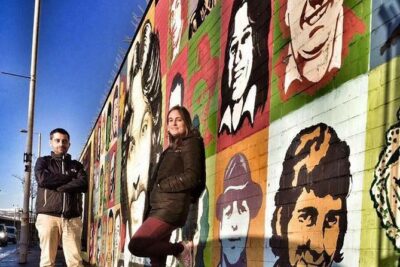
2 hours Belfast Original Drivers The Troubles Black Taxi Tour
Read our review →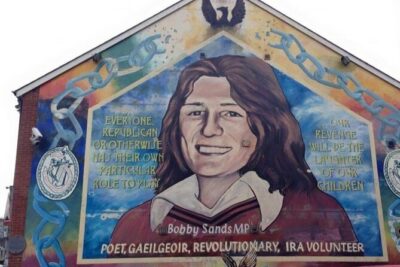
Private Political History & Murals Tour Belfast
Read our review →Browse the lists this tour appears in