
Reviewed · BELFAST TROUBLES AND MURAL TOURS
Original Private Belfast Troubles and Peace Cab/Taxi Tour 2 Hours
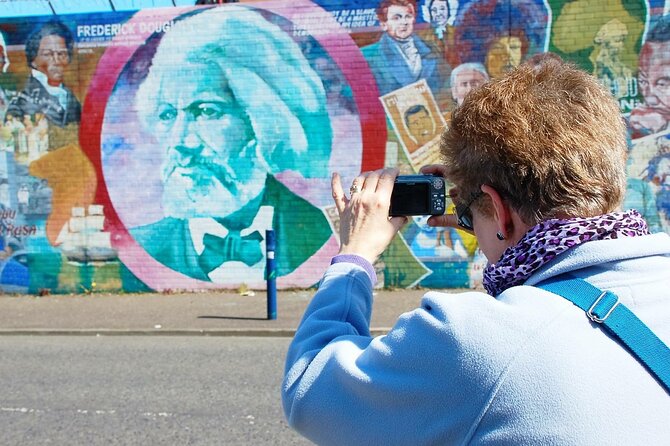
Belfast’s political story is painted across its walls. On this private black taxi tour, you move through Falls Road, Shankill Road, Bombay Street, and the Peace Wall while your driver explains what these streets meant during the Troubles. The most valuable part is the firsthand local perspective, not simply the murals themselves.
I like the door-to-door pickup within 1 kilometer of Belfast City Hall, and I like having your own taxi rather than sharing a large coach. Guides named Brendan, Brennan, Ricky, and John are praised for clear storytelling and for explaining both Republican and Loyalist viewpoints. The main drawback is time: two hours goes quickly, and some stops may feel brief if you want to photograph every mural.
Key points to know before booking
- You visit both sides of Belfast’s divide: Falls Road and Shankill Road are covered together, giving you a broader picture than a one-sided political tour.
- The guide’s personal experience matters: Drivers such as Brendan and Brennan describe living through the Troubles, adding human detail to the dates and political terms.
- Your black taxi is private: Only your group takes part, so you can ask direct questions and request certain stops, including Clonard Monastery.
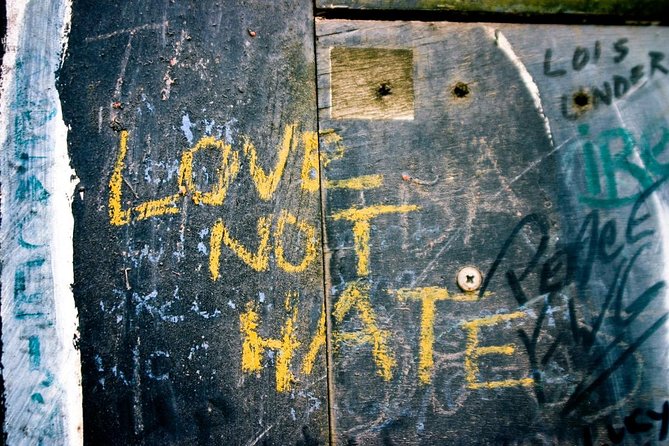
- The Peace Wall is interactive: You can write your name or a peace message on the barrier, alongside messages from figures including Lady Gaga, Morgan Freeman, and President Clinton.
- Pickup is convenient but limited: Central hotels within 1 kilometer of City Hall are included. Other pickup points require a cash surcharge.
- Two hours is an introduction, not a full Belfast history course: Expect a focused look at political murals, neighborhoods, and memory rather than a broad city tour.
Why a black taxi is the right way to see Belfast’s political streets
Belfast’s murals are not scattered museum pieces. They sit on gable ends, long walls, and residential streets where political identity remains part of the local setting. A black taxi lets you see several areas in a short time without trying to connect them on foot or work out the history by yourself.
Because the tour is private, you can ask why a particular mural matters, how a neighborhood changed, or what a symbol means. That makes a real difference here. The subject includes Republican and Loyalist groups, British Army involvement, prison history, sectarian division, and peace efforts. A guide who lived through the period can explain how those events affected ordinary streets.
The named guides connected with this experience include Ricky, John, Brennan, and Brendan. Your actual driver will depend on availability, so you should not book expecting one particular person unless the operator confirms it. What you should expect is a local driver-guide who takes you between the main political sites and explains the story from personal experience.
The private format also suits families and small groups. Children must be accompanied by an adult, and most people can participate. This is not a formal museum visit or a walking lecture. You stay in the taxi for much of the tour, with several chances to get out for photographs and a closer look.
More belfast troubles and mural tours in Belfast:
- Belfast’s Political Mural Taxi Tour
★ 5.0 · 1,180 reviews - Belfast Troubles Tour: Walls and Bridges
★ 5.0 · 853 reviews - Famous 1.5 hour Belfast Murals Tour
★ 5.0 · 477 reviews
Falls Road and the International Mural Wall
The tour begins with central Belfast pickup, either at your hotel within the free pickup zone or at the front gates of Belfast City Hall. From there, it heads toward the Republican side of the city, including Divis Street and Falls Road.
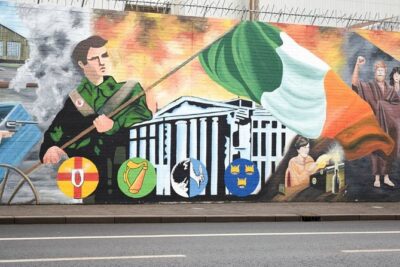
The International Mural Wall presents political causes supported by Republican communities, including Cuba, Palestine, and the Kurds. It is a useful first stop because it shows that Belfast’s murals are not only about local events. They also connect Northern Ireland’s conflict with wider struggles around the world.
You are given about 10 to 15 minutes at the mural wall. That is enough to get out, take photographs, and hear an explanation, but it is not a long art walk. If you like reading every panel and studying the artwork closely, you may want to ask the guide to allow extra time if the schedule permits.
The wall can also feel politically charged. It is best approached as a place of community expression and memory, not as neutral public decoration. The guide’s job is especially important here, since the images and slogans may mean little without context.
Bobby Sands and the Falls Road story
On Falls Road, the tour reaches the Bobby Sands mural and other Republican murals hand-painted on local walls. Bobby Sands is one of the most recognized names connected to the Troubles, and the mural has become a major symbol of Republican memory.
The guide explains the importance of Falls Road and describes what it was like to drive through Belfast’s streets during the most dangerous years. This personal angle is one of the strongest reasons to choose this tour over a self-guided mural walk. A map can show you where the murals are, but it cannot explain how the streets felt to people who lived through the violence.
The tour also connects Falls Road with the wider public memory of the conflict, including the area’s association with the film In the Name of the Father. You should expect a serious discussion rather than a light sightseeing stop. The subject includes loss, imprisonment, hunger strikes, and armed conflict.
Give yourself room to listen. It is easy to focus on taking a photograph and miss the explanation that gives the image meaning.
Bombay Street and the origins of a long conflict
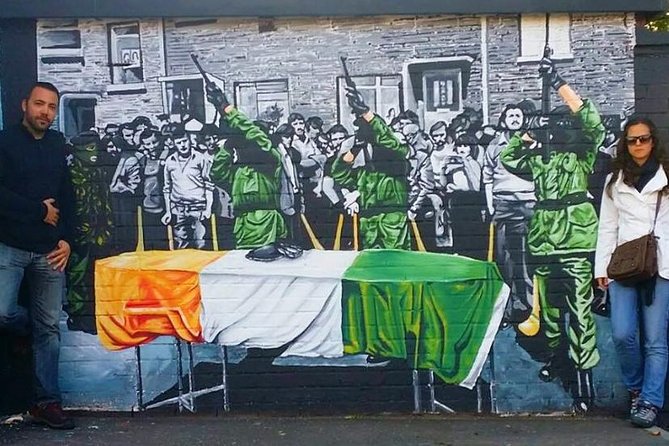
Bombay Street is a particularly important stop because it was burned in 1969 during loyalist violence and is described as the birthplace of the Provisional IRA. The narrow streets here help you understand how closely political identity, housing, and neighborhood boundaries were tied together.
This part of the tour is not about grand monuments. Its value comes from seeing an ordinary residential area linked to a major turning point. The guide explains how the local community experienced the attacks and how the conflict developed over more than 25 years.
You may spend around 15 minutes here, so the stop is brief. Still, it gives useful shape to the story. Instead of hearing only about organizations and political agreements, you see the kind of street where families faced the consequences.
The wording used in discussions of the conflict can vary by community. That is another reason to listen carefully and ask questions. A good guide should distinguish between Republican and Loyalist aims, community identity, armed groups, and the wider civilian population.
A few more Belfast trips to weigh up
- 2 Hour Private Belfast Taxi Cab Tour of Troubles & Peace walls
★ 5.0 · 240 reviews - 2 hours Belfast Original Drivers The Troubles Black Taxi Tour
★ 5.0 · 227 reviews - World Famous Belfast City Centre Black Cab/Taxi Tour 2 Hours
★ 4.5 · 177 reviews - Original Drivers Belfast Taxi/Cab Tour 2 hour private adventure
★ 5.0 · 74 reviews
Writing on Belfast’s Peace Wall
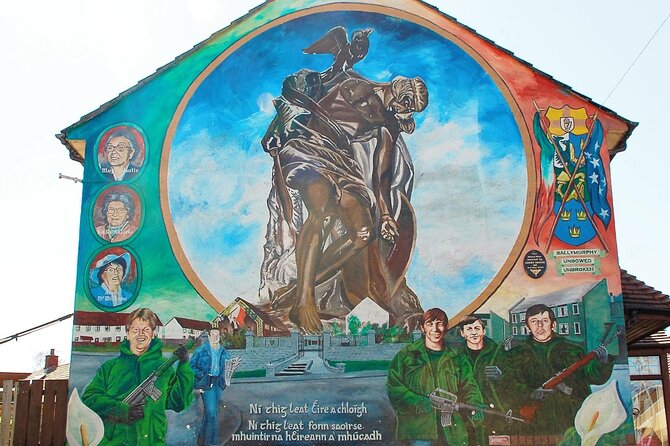
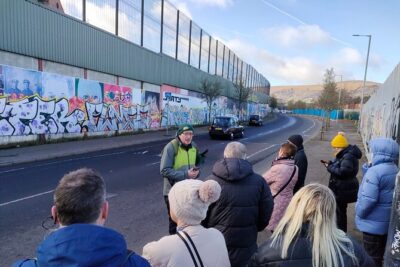
The Peace Wall is one of the clearest physical reminders that Belfast’s communities remain divided by barriers built during the conflict. The tour visits one of the city’s largest walls and gives you time to get out and write your name or a message of peace.
That small act makes the stop more personal. You are not simply looking at a barrier from a taxi window. You can see messages left by people from around the world, including Lady Gaga, Morgan Freeman, and President Clinton.
At the same time, the wall is not a simple feel-good attraction. It represents both the desire for peace and the fact that separation has remained part of daily life. The tour is strongest when it lets you hold both ideas at once.
Plan for about 15 minutes here. It is enough for photos and writing, but you might want more time if the wall is busy or you want to read many of the messages. The tour’s private setup makes it easier to pause briefly, though the total two-hour schedule still places limits on lingering.
Shankill Road, loyalist murals, and the other side of the story
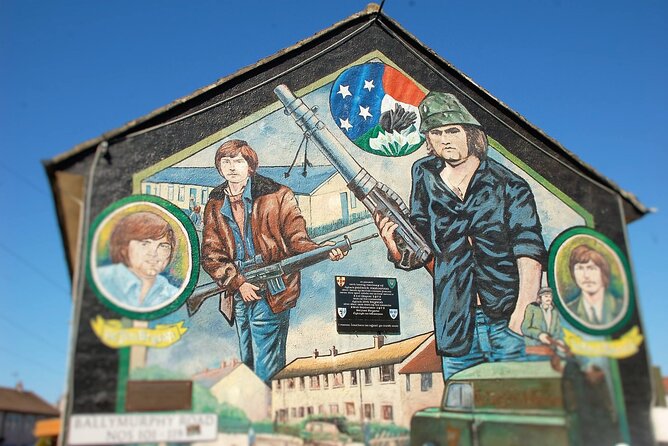
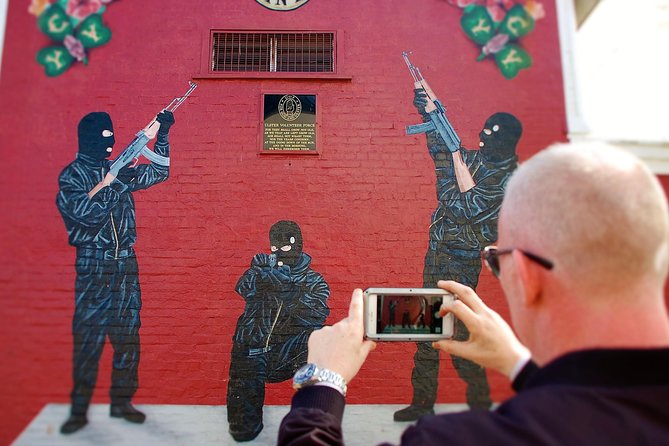
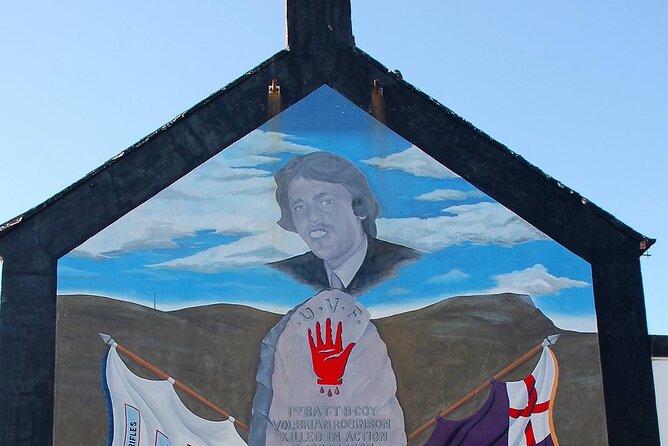
The move to Shankill Road is essential. A tour that only covers Falls Road would give you a narrow view of Belfast’s political past. On Shankill Road, the guide explains the area’s Loyalist identity and the role of groups including the UVF and UDA.
The discussion covers the conflict from the perspective of people who fought against the IRA and saw their community as under threat. That balance is repeatedly praised as a major strength of the experience. Guides including Brennan and Brendan are described as explaining both sides while also speaking openly about their own connection to the conflict.
That does not mean every visitor will find the material comfortable. You may hear direct accounts of violence, fear, prison, and political loyalty. The best approach is to listen without treating murals as simple proof that one community was right and the other was wrong.
The tour allows about 30 minutes on Shankill Road, one of the longer stops. You have time to leave the taxi and photograph political murals on the gable walls. The area includes Lower and Upper Shankill, so the guide can give you a sense of how the district extends beyond one famous street corner.
Belfast Gaol, Saint Peter’s Cathedral, and optional additions
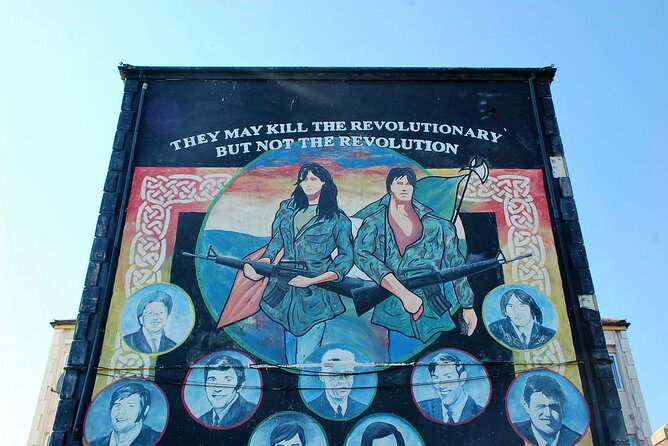
The tour information also includes Belfast Gaol, a prison built in the 1800s that operated as a hanging jail until the 1960s. It held Republican, UVF, and UFF prisoners and was known for successful escapes.
The prison adds another layer to the story. Murals show public memory on the streets, while the gaol points to the legal and penal system that dealt with political prisoners. The supplied schedule does not give a separate time or clearly confirm that every group enters the prison, so treat it as a possible viewing or added part of the route rather than a guaranteed interior visit.
Saint Peter’s Cathedral is another possible stop. Built in the 1800s, it is described as an impressive piece of craftsmanship, with an altar made from local women’s wedding rings. A local priest also wrote the Republican song The Foggy Dew.
The guide can bring you to Clonard Monastery if you request it. The monastery is more than a church building in this context. It is connected with the peace process and stands near the dividing line between the communities. The tour information allows around 15 minutes for this stop, but the wording suggests it depends on your request and available time.
If these places matter to you, ask about them at the start. With a two-hour tour and several main stops, the driver may need to adjust the route.
How the two-hour schedule works
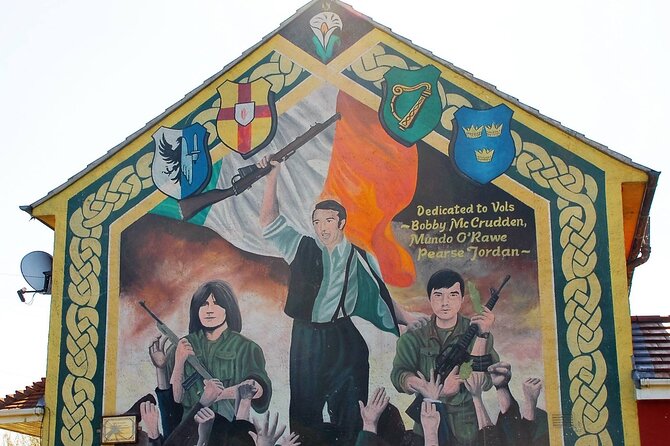
The tour is advertised as approximately two hours, but the listed stops add up to more than that if every location receives its full suggested time. The route also includes driving between neighborhoods, pickup, questions, and possible optional stops.
In practice, think of the schedule as a flexible outline rather than a minute-by-minute program. You will see the major areas, but you may not spend the full suggested time at every point. The repeated mention of the International Mural Wall also suggests that the exact order can change.
I would treat this as a concentrated introduction to Belfast’s Troubles sites. It works well near the beginning of a Belfast stay because it gives you context for streets and symbols you may encounter later. If you want extensive photography or a detailed examination of every mural, a longer experience would suit you better.
The private taxi format helps. You do not need to wait for a large group, and your guide can adjust the conversation to your interests. Still, two hours cannot cover every political event, neighborhood, or peace agreement.
What $122.09 per person gets you
At $122.09 per person, this is not the cheapest way to see Belfast. The value depends heavily on group size and how much you want a personal guide.
For one person, or a couple, the price reflects a private vehicle, a local driver-guide, central pickup, and access to several neighborhoods that are difficult to understand through photographs alone. For a family or group sharing the private taxi, the cost can make more sense because everyone receives the same guide and does not pay for separate admission to a collection of attractions.
There is no major paid attraction included in the stated package. The value is in the transport, interpretation, access to both communities, and the guide’s firsthand account. If you are only looking for a quick ride past murals, the price may feel high. If you want help making sense of Belfast’s political geography, it is easier to justify.
The tour has a 4.9 rating from 90 reviews and is recommended by 97 percent of customers. The strongest praise centers on storytelling, local experience, balanced treatment of both sides, and the chance to ask questions in a private setting. Those are the features I would use to judge the price, not the number of stops alone.
Pickup, meeting point, and practical details
Free pickup is offered within 1 kilometer of Belfast City Hall. You can also meet at the front gates of City Hall on Donegall Square North. The tour ends back at the meeting point.
Pickup from outside that zone can be arranged for an additional charge. Airport, train station, and cruise ship pickup are not included, and any surcharge is paid in cash on the day. Ask for the price before booking if you are staying outside central Belfast, since the included pickup area is quite limited.
The experience is offered in English and uses a mobile ticket. Confirmation arrives when you book. Children must be with an adult, and most people can take part.
Because it is a private activity, only your group joins the taxi. That is useful for sensitive questions and makes the experience more comfortable for people who prefer not to discuss political history in a large group.
You can cancel for a full refund up to 24 hours before the start time. Changes or cancellations inside that 24-hour window are not accepted for a refund, and the cutoff follows local Belfast time.
Who should book this Belfast taxi tour?
I would recommend it most strongly to first-time visitors who want a clear introduction to the Troubles and do not want to navigate Belfast’s political areas alone. It also suits anyone interested in oral history, public art, community identity, or the links between local streets and international causes.
Families can take part, though parents should decide if their children are ready for serious material about violence and imprisonment. The private setting helps because you can ask the guide to explain terms in a way that fits your group.
Photographers should enjoy the many chances to get out, but should not expect long, unhurried sessions at every mural. History enthusiasts may want to combine this with a museum or a separate visit to Belfast Gaol, since the taxi tour focuses on the streets and the guide’s account.
I would be more cautious if you want a neutral sightseeing ride with little political discussion. This tour is built around the Troubles, and the subject is direct. It is also not the best choice if your main goal is Belfast’s general architecture, shopping, or waterfront.
Should you book the Original Private Belfast Troubles and Peace Cab Tour?
Book it if you want Belfast explained through its neighborhoods, walls, and personal memories. The visit to both Falls Road and Shankill Road is especially useful, and the private black taxi gives you room to ask questions about a difficult subject.
The main tradeoff is pace. Two hours offers a strong introduction, but not a complete account of the conflict or enough time to study every mural. Confirm the pickup charge if you are outside central Belfast, and ask at the beginning about Clonard Monastery, Belfast Gaol, and how much photography time you prefer.
For a focused first look at Belfast’s divided past, this is a practical and worthwhile choice. Its greatest strength is not the vehicle. It is the chance to hear local stories while standing in the streets where those stories unfolded.
FAQ
How long is the Original Private Belfast Troubles and Peace Cab Tour?
The tour lasts approximately two hours.
Where does the tour start?
It starts at Belfast City Hall, Donegall Square North, Belfast BT1 5GS, or with included pickup within 1 kilometer of City Hall.
Does the tour include hotel pickup?
Yes, pickup is offered from central hotels within 1 kilometer of Belfast City Hall. Pickup from other areas requires an additional cash surcharge.
Is airport, train station, or cruise port pickup included?
No. Pickup from airports, train stations, and cruise ship ports is not included and requires a surcharge paid in cash on the day.
Is this a private tour?
Yes. Only your group takes part in the activity.
What language is the tour offered in?
The tour is offered in English.
Can I visit Clonard Monastery?
The guide can bring you to Clonard Monastery if you request it. Ask about it at the start because the tour lasts approximately two hours.
Can I cancel for a full refund?
Yes. You can cancel at least 24 hours before the experience begins for a full refund. Cancellations or changes made less than 24 hours before the start time are not accepted for a refund.
Just added around Belfast
- Giants Causeway Private Tour★ 5.0 · 3 reviews
- This is Belfast Walking Tours. Our history, our culture.★ 5.0 · 7 reviews
- The Single Cask Whiskey Experience★ 5.0 · 6 reviews
- Epic Escape Room Adventure to Save King’s Landing in Belfast★ 5.0 · 3 reviews
- Belfast City Sightseeing Tour Including Titanic Museum | 6 Hours★ 4.5 · 9 reviews
- Private Guided Walking Tour in Belfast★ 3.5 · 3 reviews
- 4 Hours Private Belfast City Tours★ 5.0 · 10 reviews
- Private Giants Causeway Tour Tour For Up to 15 People★ 4.0 · 5 reviews
Belfast Troubles and Mural Tours, compared.
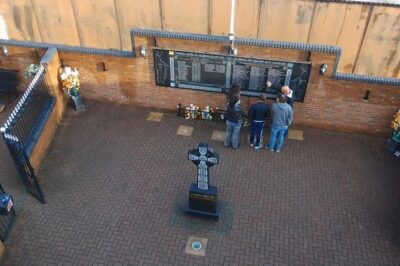
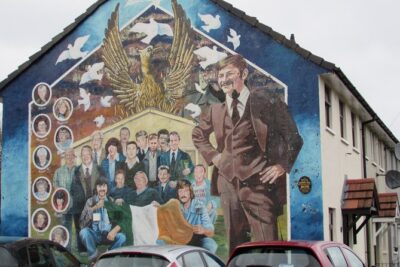
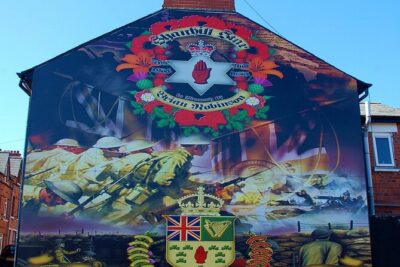
2 Hour Private Belfast Taxi Cab Tour of Troubles & Peace walls
Read our review →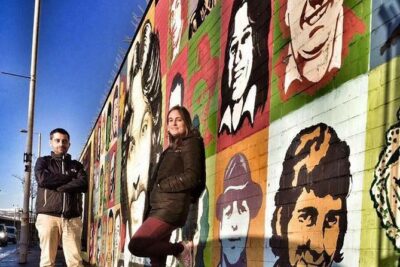
2 hours Belfast Original Drivers The Troubles Black Taxi Tour
Read our review →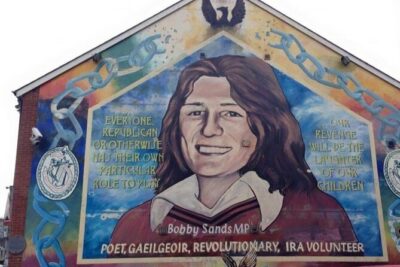
Private Political History & Murals Tour Belfast
Read our review →Browse the lists this tour appears in